
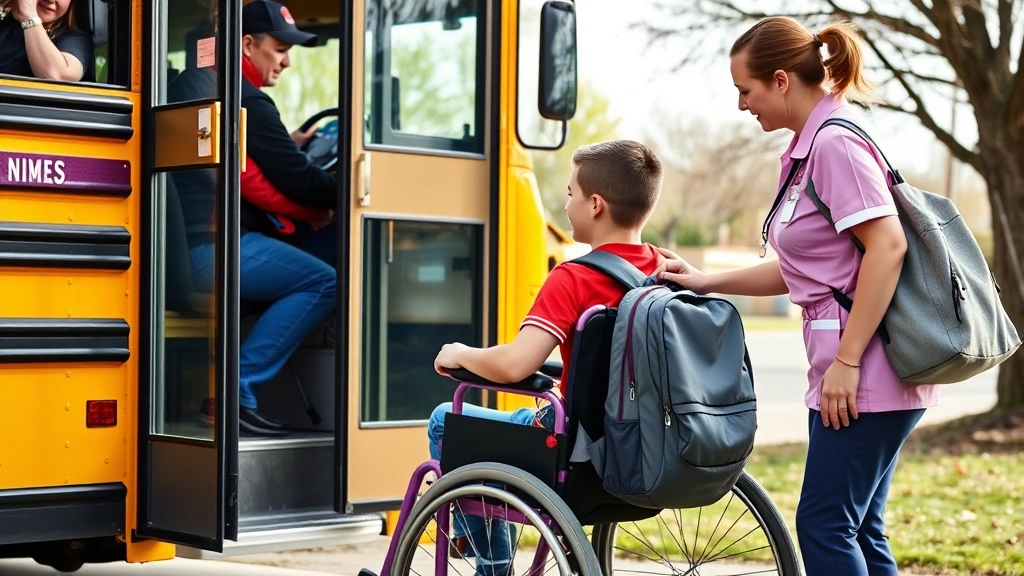
School Travel: Medical Equipment Letter Tips
When students with medical conditions need to travel for school activities—whether field trips, athletic competitions, academic conferences, or study abroad programs—proper documentation of medical equipment is essential. A medical equipment travel letter serves as official verification that a student requires specific devices for health and safety, helping schools, airlines, transportation providers, and destination facilities understand accommodation needs and prevent delays or denials at critical moments.
This comprehensive guide explains how to obtain, structure, and optimize a medical equipment travel letter for school purposes. Whether your student uses mobility devices, oxygen equipment, insulin pumps, feeding tubes, respiratory support, or other medical apparatus, understanding the documentation process empowers you to advocate effectively and ensure seamless travel experiences.
Why Medical Equipment Travel Letters Matter for Students
Students who depend on medical equipment face unique barriers during school travel. Without proper documentation, they may encounter:
- Airport security delays – TSA agents unfamiliar with medical devices may hold up boarding processes
- Equipment confiscation – uninformed staff may attempt to remove or restrict necessary medical apparatus
- School liability concerns – administrators may deny travel without clear medical verification
- Accessibility denials – transportation providers may claim they cannot accommodate equipment
- Insurance complications – carriers may dispute coverage without proper medical authorization
A medical equipment travel letter is an official document from a licensed healthcare provider that verifies medical necessity, describes the equipment, explains functional limitations, and authorizes continued use during travel. This letter transforms uncertainty into clarity, giving schools, airlines, and other institutions the confidence to support your student’s needs.
Unlike general medical documentation of disability, a travel-specific letter focuses on portable equipment and mobility requirements relevant to transportation and temporary lodging environments.
Key Components of an Effective Medical Equipment Letter
A strong medical equipment travel letter includes specific, detailed elements that satisfy school policies, airline regulations, and accessibility standards:
- Healthcare Provider Credentials – Full name, medical license number, specialty, practice address, phone, and email. This establishes authority and allows schools to verify the provider’s legitimacy.
- Patient Identification – Student’s full legal name, date of birth, and student ID number. Use the exact name appearing on identification documents to prevent travel confusion.
- Diagnosis and Medical Necessity Statement – Brief, clear explanation of the condition requiring equipment (e.g., “Type 1 diabetes requiring insulin infusion pump”). Avoid overly technical language while maintaining medical accuracy.
- Detailed Equipment Description – Specific brand, model, dimensions, weight, and function of each device. Include serial numbers if applicable. This prevents confusion at security checkpoints and helps transportation providers prepare appropriate accommodations.
- Functional Limitation Explanation – How the student’s condition affects mobility, independence, or safety without the equipment. Example: “Without continuous oxygen support, the student experiences significant oxygen desaturation and cannot safely participate in physical activities.”
- Travel-Specific Requirements – Power supply needs, temperature control, handling instructions, frequency of use, and any activities the equipment enables (e.g., “pump allows student to participate in sports and outdoor activities”).
- Safety and Handling Instructions – Brief guidance for school staff or transportation workers (e.g., “Do not disconnect from power source” or “Device must remain upright during transport”).
- Emergency Contact Information – Healthcare provider’s after-hours contact and emergency protocols for equipment malfunction.
- Provider Signature and Date – Original signature (not electronic signature in some cases), printed name, and license number. Many institutions require wet signatures for official documentation.
- Letterhead – Official medical practice letterhead adds credibility and allows verification of provider identity.
The letter should be concise but comprehensive—typically one to two pages. Schools and transportation providers have limited time to review documentation, so clarity and organization are essential.

Equipment-Specific Documentation Requirements
Different medical devices require tailored documentation approaches:
Mobility Equipment (Wheelchairs, Walkers, Canes)
Letters should specify whether equipment is manual or motorized, weight capacity, dimensions, and whether it requires charging. For motorized devices, include battery life and charging time. Mention whether the student can safely transfer without the device or if it’s essential for independent movement.
Oxygen and Respiratory Equipment
Include oxygen saturation requirements, liters per minute (LPM) prescribed, duration of use per day, and whether portable concentrators or tanks are needed. Specify whether the student can safely breathe without supplemental oxygen during short periods. Address TSA regulations regarding oxygen tanks, which have specific restrictions on aircraft.
Insulin Pumps and Continuous Glucose Monitors (CGM)
Explain that these devices contain needles, tubing, or adhesive patches that may alarm security systems. Request that TSA agents not disconnect the pump from the student’s body. Note that the device cannot be placed in checked luggage due to temperature sensitivity.
Feeding Tubes and Nutritional Support Equipment
Describe the tube type (nasogastric, gastrostomy, etc.), feeding schedule, formula requirements, and whether the student can eat orally. Include instructions for handling during travel, such as keeping formula at specific temperatures.
Seizure Monitoring and Response Devices
Specify the device type, what alerts it provides, and what actions school staff should take if it activates. Include emergency medication requirements (e.g., rescue medication in backpack).
Communication and Augmentative Devices
If the student uses AAC (augmentative and alternative communication) devices, explain functionality, power requirements, and whether the device is essential for the student’s ability to communicate needs during travel.
Obtaining Your Medical Equipment Travel Letter
The process of securing a quality medical equipment travel letter requires proactive communication with your student’s healthcare team:
Step 1: Request from Your Treating Provider
Contact your student’s primary care physician or specialist managing the condition requiring equipment. Request a “medical equipment travel letter for school” or “functional limitation verification letter.” Provide the travel dates, destination, and specific equipment involved. Many providers can generate this letter within 2-5 business days if you provide clear guidance.
Step 2: Provide Detailed Information
Help your provider by supplying:
- Exact travel dates and destinations
- Type of transportation (bus, airplane, train)
- School contact information and trip purpose
- Specific equipment brand, model, and serial numbers
- Any previous travel complications or special accommodations
Step 3: Use Telehealth Services for Faster Access
If your regular provider is unavailable or slow to respond, disability verification letter telehealth services can provide rapid medical equipment documentation. Licensed providers can complete thorough evaluations and generate letters within 24-48 hours, which is especially helpful for last-minute travel or students without established care relationships.
Step 4: Request Multiple Copies
Ask your provider to generate 3-5 original copies with wet signatures. Schools, airlines, and destination facilities may each require their own copy, and having extras prevents delays if documents are lost.
Step 5: Verify Letter Quality
Before your travel date, review the letter against the key components list above. If critical information is missing, contact your provider immediately for a revised version. Do not attempt to add information yourself—additions to medical letters compromise their credibility.
Presenting Your Letter to Schools and Transportation
Strategic presentation of your medical equipment letter maximizes its effectiveness:
Timing – Submit the letter to school administrators at least 2-3 weeks before travel. This allows time for questions, clarifications, or additional accommodations planning. For international travel, submit even earlier (4-6 weeks).
Recipients – Provide copies to:
- School nurse or health coordinator
- Trip organizer or chaperone
- Transportation company (if contracted separately)
- Airline (if flying)
- Destination school or facility
- Your student’s backpack (copies to carry)
Presentation Format – Include the letter in a professional folder or envelope labeled “Medical Documentation.” Attach a brief cover letter from you explaining the equipment and requesting specific accommodations. This personal touch demonstrates professionalism and helps school staff understand your expectations.
Backup Documentation – In addition to the travel letter, bring:
- Equipment photos
- Manufacturer documentation
- Emergency medication lists
- Provider contact information
- Insurance information
This comprehensive package ensures staff have all necessary information to support your student confidently.
Common Challenges and Solutions
Challenge: School Denies Medical Equipment as “Unnecessary”
Some schools may question whether equipment is truly essential, especially if the student occasionally functions without it. Solution: Request a meeting with the school nurse and administrator. Bring your functional limitation verification letter and explain the risks of equipment deprivation during travel (fatigue, medical emergency, inability to participate). Offer to provide emergency contact information and clarify that the letter represents medical judgment, not parental preference.
Challenge: Letter Doesn’t Address Specific School Concerns
Schools may ask questions your letter doesn’t answer (e.g., “Can the student use the bathroom independently with this equipment?” or “What if the equipment breaks during the trip?”). Solution: Proactively contact your healthcare provider and request an addendum addressing school-specific questions. Alternatively, prepare a supplemental document from yourself explaining how you and the school can manage these scenarios.
Challenge: Airline or Transportation Refuses to Accept Letter
Some transportation providers have rigid policies or unfamiliar staff. Solution: Before travel, contact the airline or transportation company’s medical equipment department directly. Provide your letter and ask what additional documentation they require. Get the name and reference number of the staff member you speak with. If they still refuse, request escalation to a supervisor or contact the Department of Transportation or ADA.gov for guidance on your rights.
Challenge: Provider Refuses to Write Letter or Charges Excessive Fee
Some providers claim they don’t write travel letters or charge $500+ for documentation. Solution: Politely explain that the letter is medically necessary for safe travel and request a reasonable fee (typically $50-150). If your provider refuses, seek a general disability confirmation letter from an alternative licensed provider who specializes in medical documentation. Telehealth providers often respond faster and charge transparent fees.

International Travel Considerations
Traveling internationally with medical equipment requires additional documentation and planning:
Language Requirements – Some countries require medical letters in their official language. Request your healthcare provider provide the letter in English and the destination country’s primary language, or hire a certified medical translator.
Equipment Legality – Certain medical devices (particularly those containing controlled substances or sharp objects) may be restricted in some countries. Research destination country regulations on your equipment. Contact your embassy or consulate for clarification.
Customs Documentation – Medical equipment may require customs declarations. Your letter serves as proof of medical necessity, preventing equipment from being confiscated at border crossings. Bring original prescriptions and equipment receipts as backup.
Insurance and Emergency Care – International travel insurance should cover your student’s medical equipment and pre-existing conditions. Request that your healthcare provider document your student’s condition and treatment plan in writing, as international healthcare providers may need this information for emergency care.
Supply and Medication Coordination – For equipment requiring regular supplies (pump cartridges, feeding formula, adhesive patches), confirm availability at the destination or arrange shipment in advance. Include supply requirements in your medical equipment letter so schools understand the scope of accommodation needed.
FAQ
How long is a medical equipment travel letter valid?
Most letters are valid for 12 months from the date of signature. If your student’s condition or equipment changes, request an updated letter. For multi-year school programs, obtain a new letter annually or when equipment changes.
Can I write my own medical equipment letter if my provider won’t?
No. A parent-written letter has no legal or medical standing and will likely be rejected by schools and transportation providers. A licensed healthcare provider’s signature is essential. If your provider refuses, seek a second opinion from another qualified provider or use a telehealth medical documentation service.
Do I need a separate letter for each trip?
Not necessarily. A general medical equipment travel letter can be used for multiple trips within its validity period. However, if trip circumstances change significantly (e.g., international vs. domestic, different duration), request an updated letter addressing the new scenario.
What if my student’s condition or equipment changes mid-school-year?
Contact your healthcare provider immediately and request an updated letter. Inform the school’s nurse and relevant staff of the change. Updated documentation prevents miscommunication and ensures new equipment receives appropriate accommodation.
Can my student travel if I don’t have a medical equipment letter?
Technically, yes—but it’s risky. Without documentation, your student may face security delays, equipment confiscation, or school denial of participation. A letter transforms your student’s needs from “parent’s claim” to “medical fact,” significantly reducing friction and ensuring safety protocols are in place.
How do I know if my letter is strong enough?
A strong letter includes all components listed in Section 2, uses clear language (avoiding jargon), addresses travel-specific needs, and comes from a licensed provider with verifiable credentials. Have the school nurse review it before travel. If they have questions, that signals the letter needs clarification—request an addendum from your provider.
What should I do if the school loses or misplaces my letter?
This is why multiple copies are essential. Provide copies to school administration, the nurse, the trip coordinator, and keep copies in your files and your student’s backpack. If the school loses the letter, request they contact your healthcare provider directly for verification, or provide a new copy immediately.
Can I use a letter from my student’s previous school or state?
If the letter is recent (within 12 months) and addresses equipment still in use, it may be acceptable. However, new schools often prefer letters from current providers in their state or region. When changing schools, request an updated letter from your student’s current healthcare provider.
Do airlines have specific requirements for medical equipment letters?
Yes. Airlines often have detailed policies on equipment, power supplies, and documentation. Contact your airline’s medical equipment department before travel and ask what documentation they require. Some airlines require their own forms completed by providers. Plan ahead to allow time for this additional step.
What if my healthcare provider charges too much for a letter?
Standard medical documentation fees range from $50-150. If your provider charges significantly more, explain the hardship and request a reduced fee or payment plan. Alternatively, telehealth disability documentation services often provide transparent, affordable pricing ($100-200) with rapid turnaround. Some providers offer the letter at no charge as part of ongoing care—ask.
Should I mention my student’s disability diagnosis in the letter?
The letter should mention the condition requiring equipment (e.g., “Type 1 diabetes”) but doesn’t need to detail your student’s broader disability status or prognosis. Focus on equipment necessity and functional limitations during travel. This keeps the letter focused and protects your student’s privacy.