Legal Guide: Medical Equipment Travel Letters
Traveling with medical equipment can feel overwhelming, especially when you’re unsure about legal requirements, airline policies, and documentation standards. A medical equipment travel letter is a critical document that verifies your medical necessity, protects your rights under federal law, and ensures smooth passage through security checkpoints and international borders. This comprehensive guide walks you through everything you need to know about obtaining, using, and understanding medical equipment travel letters.
Whether you’re flying with oxygen concentrators, CPAP machines, insulin pumps, mobility devices, or other essential medical equipment, proper documentation is your first line of defense against delays, confiscation, or denial of travel. Understanding your legal rights and the role of medical equipment travel letters empowers you to travel with confidence and dignity.
What Is a Medical Equipment Travel Letter?
A medical equipment travel letter is an official document written by a licensed healthcare provider that confirms you have a medical condition requiring specific equipment for treatment or mobility. The letter serves as evidence that your equipment is medically necessary, not a prohibited item or security threat. It typically includes your diagnosis (or functional limitation description), the specific equipment you use, why it’s essential for your health, and a healthcare provider’s professional recommendation that you be permitted to travel with it.
This letter becomes especially important when traveling by air, crossing international borders, or navigating security checkpoints where medical devices might otherwise be questioned or confiscated. A well-crafted medical equipment travel letter can prevent hours of delays, unnecessary stress, and potential denial of travel rights.
The legal authority for requiring this documentation comes from multiple federal regulations and airline policies designed to balance security with disability rights. Your letter essentially bridges the gap between security requirements and your medical needs, ensuring both are respected.
Legal Framework and Regulations
Several federal laws protect your right to travel with medical equipment. The Americans with Disabilities Act (ADA) guarantees equal access to transportation and prohibits discrimination based on disability. The Air Carrier Access Act (ACAA) specifically mandates that airlines accommodate passengers with disabilities, including those traveling with medical equipment and mobility devices.
The Transportation Security Administration (TSA) operates under the Department of Homeland Security and has established specific protocols for medical devices at security checkpoints. While TSA agents can screen your equipment, they cannot prohibit it based solely on security concerns if it’s medically necessary. However, they can require documentation to verify medical necessity.
The ADA.gov official website provides comprehensive guidance on disability rights in transportation. The Department of Transportation has published specific passenger rights regarding medical equipment and mobility devices.
Your medical equipment travel letter provides the legal documentation that supports your rights under these federal frameworks. It’s not just a courtesy—it’s a legally defensible record of your medical necessity.
Why You Need One for Air Travel
Airlines and TSA agents encounter thousands of items daily. Without proper documentation, medical equipment can be misidentified as prohibited items, leading to confiscation, missed flights, or humiliating interrogations. A medical equipment travel letter immediately establishes legitimacy and medical necessity.
Specific scenarios where this letter proves invaluable include:
- Oxygen concentrators and tanks — Compressed oxygen is heavily regulated; your letter explains why you need it
- CPAP and BiPAP machines — These look like unusual electronics; documentation clarifies their medical purpose
- Insulin pumps and glucose monitors — Needles and small devices can raise security questions
- Mobility devices with batteries — Lithium batteries have strict regulations; your letter justifies their necessity
- Nebulizers and inhalers — Liquid medications and aerosol devices require explanation
- Dialysis supplies and feeding tubes — Specialized medical equipment needs clear documentation
International travel dramatically increases the need for this documentation. Different countries have varying regulations, and a professionally written letter from a U.S. licensed healthcare provider carries significant weight globally.
What Should Be Included
An effective medical equipment travel letter contains several essential components:
- Healthcare provider letterhead — Official documentation from a licensed physician, nurse practitioner, or physician assistant
- Your identification — Full name, date of birth, and patient ID if applicable
- Medical condition or functional limitation — The diagnosis or functional limitation requiring the equipment (can be general for privacy)
- Specific equipment details — Exact name, model, and specifications of each device you’re traveling with
- Medical necessity statement — Clear explanation of why this equipment is essential for your health and safety
- Usage frequency — How often and when you need the equipment (continuously, as-needed, during sleep, etc.)
- Duration of travel — Confirmation that you’ll need the equipment throughout your trip
- Provider signature and credentials — Licensed provider’s signature, license number, and contact information
- Date issued — Recent letter (typically within 6-12 months of travel)
- Provider contact information — Phone number and fax for verification purposes
The letter should be printed on official medical letterhead and signed in ink by the provider. Avoid vague language; specific details about your equipment and medical need strengthen the letter’s legal standing.
How to Obtain Your Letter
Start by contacting your primary care physician or the specialist managing your medical condition. Many providers are familiar with medical equipment travel letters and can prepare one quickly. If your provider is unfamiliar, you can provide guidance based on the components listed above.
If your regular healthcare provider is unavailable or unfamiliar with travel documentation, several alternatives exist. Telemedicine providers can issue travel letters after reviewing your medical records and conducting a brief consultation. Some specialized services focus specifically on disability documentation and can connect you with licensed providers who understand travel requirements.
For more comprehensive disability documentation, consider consulting with providers experienced in this area. You might also explore general disability confirmation letters that can complement your travel documentation.
Timing is crucial—request your letter at least 2-3 weeks before your travel date. This allows time for revisions if needed and ensures you have the document well before your flight.
International Travel Considerations
International travel with medical equipment requires additional planning. Different countries have varying regulations regarding medical devices, medications, and equipment importation. Your medical equipment travel letter becomes even more critical in this context.
Before international travel, research the destination country’s specific regulations. Some countries require additional permits for medical equipment, particularly oxygen systems and controlled medications. Your healthcare provider may need to issue separate documentation for international customs and border control.
Consider obtaining a letter that includes:
- Equipment description in both English and the destination language (or arrange professional translation)
- Confirmation that the equipment is for personal medical use only
- Statement that you’ll be transporting the equipment back to the United States
- Certification of medical necessity under international standards
- Emergency contact information for your healthcare provider
The TSA’s “What Can I Bring?” tool helps clarify U.S. regulations. For international specifics, contact the embassy or consulate of your destination country and ask about medical equipment importation rules.
TSA and Security Procedures
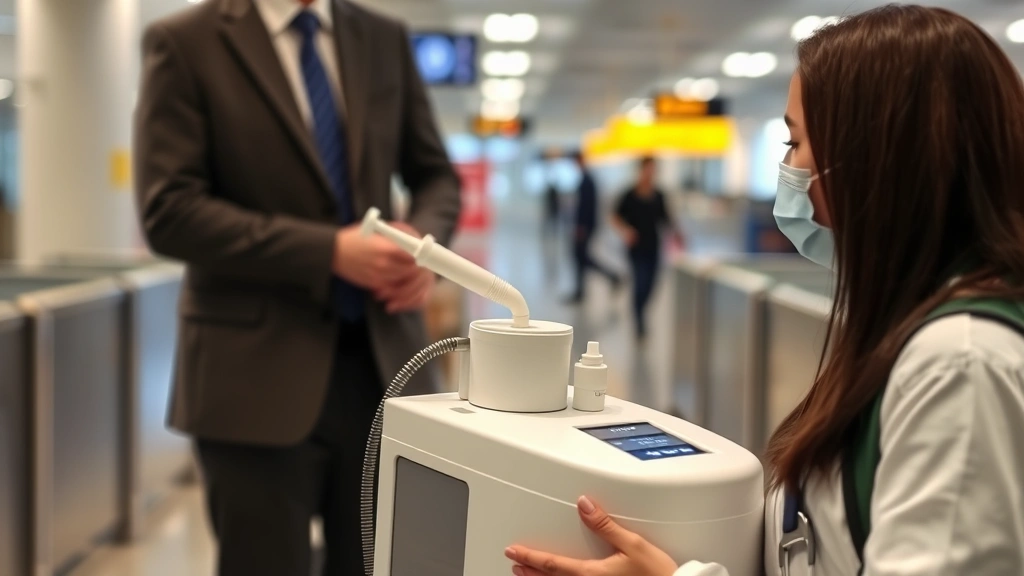
Understanding TSA procedures helps you navigate security checkpoints confidently. TSA agents are trained to recognize medical devices, but they may still need to inspect your equipment. Having your medical equipment travel letter accessible makes this process smoother.
At airport security, you should:
- Inform TSA agents — Clearly state that you’re traveling with medical equipment and provide your letter
- Keep equipment accessible — Pack it where you can easily remove it for inspection without damage
- Request a private screening — You have the right to request screening in a private area if you’re uncomfortable with public inspection
- Bring extra supplies — Pack backup batteries, tubing, and other components in case of damage during inspection
- Know your rights — TSA cannot prohibit medically necessary equipment based on security concerns alone
Your medical equipment travel letter provides the legal foundation for these rights. TSA agents can request documentation, and your letter satisfies that request, allowing the screening process to proceed efficiently.
If you face resistance or denial at security, calmly reference the Department of Transportation’s passenger rights and request to speak with a TSA supervisor. Document the incident and contact the airline’s disability services department afterward.
For more details on functional limitation verification, which complements travel documentation, consult with your healthcare provider.
Preparing for Smooth Travel
Beyond obtaining your letter, several preparation steps enhance your travel experience. Create copies of your medical equipment travel letter—keep one in your carry-on, one in your checked baggage, and one with you separately. Digital copies on your phone provide backup access if physical copies are lost.
Contact your airline before traveling. Many airlines have disability services departments that can pre-arrange accommodations for passengers with medical equipment. Some airlines offer priority boarding, extra time for security, or dedicated assistance with your equipment.
Inform your airline about specific equipment requirements: oxygen concentrators need electrical outlets; CPAP machines may require voltage converters for international travel; insulin pumps need protection from extreme temperatures. Your medical equipment travel letter supports these requests by documenting necessity.
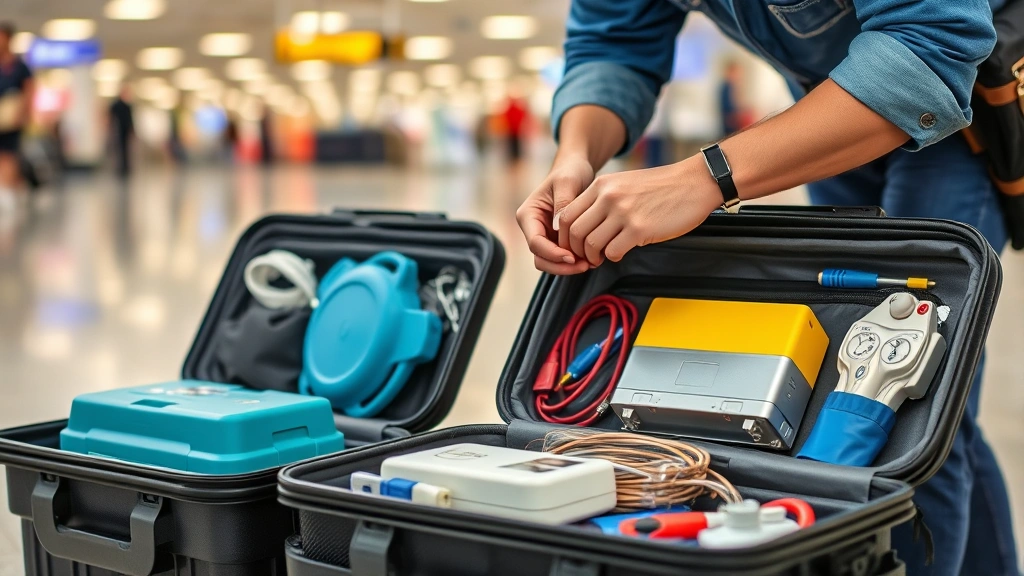
Pack your equipment carefully. Medical devices are sensitive and can be damaged by rough handling. Use protective cases and clearly label everything. Some travelers place a copy of their medical equipment travel letter directly on equipment cases for easy identification.
For comprehensive ADA disability verification documentation, consider working with providers experienced in travel-specific needs.
Insurance and Financial Considerations
While medical equipment travel letters themselves are typically inexpensive (many providers issue them at no cost or for a small fee), they can save you significant money by preventing equipment loss, damage claims, or travel disruptions. Some travel insurance policies specifically cover medical equipment; your letter may be required to file claims.
If your healthcare provider charges for the letter, it’s often tax-deductible as a medical expense. Keep receipts and documentation for tax purposes. Some disability organizations and patient advocacy groups offer resources for obtaining travel letters at reduced cost.
When Your Letter Is Questioned
Occasionally, TSA agents or airline staff may question your letter’s validity. Remain calm and professional. Your letter from a licensed U.S. healthcare provider is a legal document. If questioned, you can:
- Provide your provider’s contact information for verification
- Reference the Air Carrier Access Act (49 U.S.C. § 41705)
- Request to speak with a supervisor
- Document the interaction (names, badge numbers, times)
- File a complaint with the Department of Transportation if you experience discrimination
Federal law is clearly on your side. A medical equipment travel letter from a licensed provider is legally sufficient documentation of medical necessity.

FAQ
How long is a medical equipment travel letter valid?
Most letters are valid for 6-12 months from the date issued. However, TSA and airlines may accept older letters if your medical condition hasn’t changed. If your equipment, dosage, or condition has changed, request an updated letter to avoid complications.
Can I use a telemedicine letter for travel?
Yes. Letters from licensed providers obtained through telemedicine are legally valid, provided the provider is licensed in your state and the letter includes all required components. Ensure the telemedicine provider is familiar with travel documentation requirements.
What if my healthcare provider refuses to write a travel letter?
Most providers understand the importance of travel documentation. If yours refuses, explain the purpose and provide the template of required components. If they still decline, seek a second opinion from another licensed provider or contact a disability services organization for referrals.
Do I need separate letters for different medical equipment?
One comprehensive letter can cover multiple pieces of equipment, provided they’re all medically necessary and used for the same condition. A single letter listing oxygen concentrator, backup batteries, and tubing is typically sufficient. However, if equipment serves different medical conditions, separate letters may be clearer.
Is my medical equipment travel letter required for domestic flights?
While not legally mandated for domestic U.S. flights, having one prevents confusion and speeds security screening. It’s highly recommended for any travel involving medical equipment, especially if the equipment might be unfamiliar to security personnel.
Can airlines deny boarding based on medical equipment?
No. Federal law prohibits airlines from denying boarding to passengers with medically necessary equipment. However, they can require documentation (your medical equipment travel letter) to verify necessity. If an airline denies boarding based on medical equipment, this constitutes discrimination under the Air Carrier Access Act.
What if I’m traveling to a country with strict medical regulations?
Research the destination country’s regulations well in advance. Contact the embassy or consulate for specific requirements. Your healthcare provider may need to issue additional documentation or certifications meeting that country’s standards. Some countries require equipment registration or import permits.
Should I carry my medical equipment on the plane or check it?
Always carry essential medical equipment on the plane. Checked baggage may be exposed to extreme temperatures and rough handling that damage sensitive devices. Your medical equipment travel letter supports your right to carry equipment in the cabin as a medical necessity.
Do I need vaccination records or health certificates for medical equipment travel?
Medical equipment travel letters are separate from health or vaccination documentation. Depending on your destination and current health requirements, you may need both. Your healthcare provider can issue both documents if necessary.
How much does a medical equipment travel letter cost?
Costs vary widely. Many providers issue travel letters at no charge or for a minimal fee ($25-$100). Some telemedicine services charge $100-$300 for a comprehensive travel letter. Specialized disability documentation services may charge more but offer expertise in travel-specific language and requirements.