
Jury Duty Exemption: Get a Doctor’s Letter Guide
Jury duty is a civic responsibility, but for individuals with serious medical conditions, disabilities, or health concerns, serving on a jury can pose significant physical, mental, or medical risks. If your health condition makes jury service unsafe or impossible, a doctor-signed jury duty exemption letter may be your path to legitimate postponement or exemption from court-ordered jury service.
This comprehensive guide explains how to obtain a medical exemption letter from your healthcare provider, what courts require to grant exemptions, and how to present your documentation effectively. Whether you’re managing a chronic illness, recovering from surgery, or dealing with a disability that affects your ability to sit through lengthy trials, understanding the process can help you navigate jury duty obligations while protecting your health.
Understanding Jury Duty Medical Exemptions
Jury duty is a fundamental civic obligation in the United States legal system. However, courts recognize that not everyone can safely or reasonably serve on a jury. Federal and state courts have established processes for individuals to request exemption or postponement based on medical hardship, and a doctor-signed medical letter is often the most compelling evidence courts will accept.
Each court jurisdiction has slightly different rules about medical exemptions, but most follow similar principles: the medical condition must be serious enough to prevent you from fulfilling jury duties, and the exemption must be supported by professional medical documentation. A letter from your treating physician carries significant weight because it comes from someone with direct knowledge of your health status.
Unlike simply requesting postponement (which delays jury service), an exemption removes you from the jury pool entirely. Courts take medical exemptions seriously because they understand that forcing someone with a severe medical condition to sit through a trial could endanger their health, disrupt court proceedings, or result in an unfair trial if jurors cannot focus on the case.
The key distinction is that you cannot simply claim a medical condition and expect exemption—you need professional medical documentation that establishes the legitimate functional limitations preventing jury service.
Medical Conditions That Qualify for Exemption
Courts generally recognize exemptions for medical conditions that create genuine hardship or safety concerns. Common conditions that may qualify include:
- Severe chronic pain conditions – fibromyalgia, arthritis, or back disorders that make prolonged sitting impossible
- Mobility disabilities – conditions requiring wheelchair use, crutches, or assistive devices where courthouse accessibility is limited
- Cognitive or neurological conditions – dementia, severe ADHD, traumatic brain injury, or conditions affecting concentration and memory
- Mental health conditions – severe anxiety, PTSD, agoraphobia, or other conditions triggered by crowded, high-stress environments
- Cancer treatment or recovery – active chemotherapy, radiation, or recovery periods requiring medical appointments
- Cardiac conditions – heart disease, arrhythmias, or conditions where stress poses medical risk
- Respiratory conditions – severe asthma, COPD, or conditions worsened by environmental triggers
- Autoimmune or immunocompromised conditions – conditions making exposure to illness in public spaces dangerous
- Pregnancy complications – high-risk pregnancies requiring frequent monitoring or bed rest
- Recent surgery or medical procedures – recovery periods where mobility is restricted or medical appointments are frequent
The specific condition matters less than the functional impact on your ability to serve. Your doctor’s letter should focus on what you cannot do (sit for extended periods, concentrate in stressful environments, manage courthouse accessibility) rather than simply naming your diagnosis.
How to Request a Letter from Your Doctor
Obtaining a doctor-signed jury duty exemption letter requires a straightforward conversation with your healthcare provider. Here’s how to approach it:
Step 1: Schedule an Appointment
Contact your primary care physician, specialist, or mental health provider and request an appointment. Let the office know you need medical documentation for jury duty exemption—this helps them allocate time and ensures the right provider handles your request.
Step 2: Prepare Your Information
Before your appointment, gather relevant documents: your jury summons, information about the court’s location and trial length (if known), and notes about how your condition specifically impacts your ability to serve. Be specific about functional limitations—for example, “I cannot sit for more than 20 minutes without severe pain” rather than vague statements.
Step 3: Explain Your Situation Clearly
During your appointment, explain that you’ve received a jury summons and that your medical condition makes jury service unsafe or impossible. Discuss specific challenges: can you sit for extended periods? Can you handle the stress of a courtroom? Do you have frequent medical appointments? Are there accessibility concerns? Your doctor needs concrete information to justify the exemption.
Step 4: Ask for a Formal Letter
Request that your doctor provide a formal, signed letter on medical letterhead rather than a brief note. This letter will be submitted to the court and must meet specific requirements (detailed below). Many doctors’ offices can provide this within a few business days.
If your doctor is reluctant or unfamiliar with jury duty exemption letters, you might reference EEOC guidelines on medical documentation or offer to provide the court’s specific requirements. Most healthcare providers are accustomed to writing letters for various legal and administrative purposes.
For individuals who may struggle to navigate this process independently, medical accommodation letter services can connect you with licensed healthcare providers experienced in writing court-ready medical documentation.
What Your Doctor’s Letter Must Include
A compelling jury duty exemption letter contains specific elements that courts require. While requirements vary slightly by jurisdiction, most courts expect:
- Physician letterhead – printed on official medical practice stationery with contact information
- Your full name and date of birth – to ensure the letter matches your jury summons
- Statement of physician-patient relationship – confirming the doctor has treated you and knows your medical history
- Duration of treatment – how long the doctor has been treating you (ideally several months minimum)
- Medical diagnosis or condition – the specific health issue(s) preventing jury service
- Functional limitations – clear explanation of what you cannot do: sit for extended periods, handle stress, access courthouse facilities, etc.
- Specific impact on jury service – how these limitations make jury duty unsafe, impossible, or would compromise the trial
- Medical evidence – reference to test results, imaging, medication regimens, or treatment plans supporting the limitation
- Duration of limitation – is this temporary (recovery from surgery) or ongoing (chronic condition)?
- Physician signature and credentials – signature, printed name, medical license number, and date
- Contact information – phone number where the court can reach the physician if needed
The letter should be professional and concise—typically one page. Avoid emotional language; focus on medical facts and functional limitations. Courts are skeptical of letters that seem designed to help someone avoid civic duty rather than documenting genuine medical hardship.
Example language: “Ms. Smith suffers from severe fibromyalgia and cannot sit for more than 30 minutes without experiencing significant pain. A typical jury trial requires 6-8 hours of daily sitting. Given her current condition, jury service would be medically inadvisable and would likely require medical intervention during proceedings.”
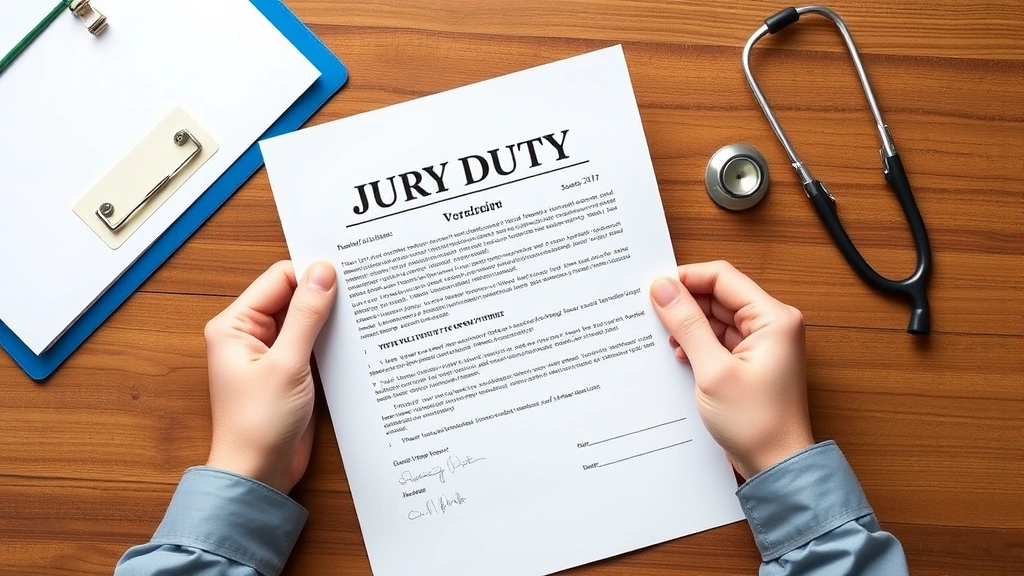
Submitting Your Exemption to the Court
Once you have your doctor’s letter, the submission process is critical. Here’s how to proceed:
Find Court Requirements
Check your jury summons for specific instructions about medical exemptions. Most summons documents include a deadline for submitting exemption requests and an address or email where documentation should be sent. Court websites also typically have detailed information about jury duty accommodations and exemptions.
Review Deadlines
Courts have strict deadlines for exemption requests—often 10-14 days before your scheduled jury date. Submit your documentation well before the deadline. Late submissions may not be considered, even if your medical condition is legitimate.
Prepare Your Submission Package
Include:
- A cover letter briefly explaining your request (“I am requesting medical exemption from jury service due to a documented medical condition that prevents me from safely serving”)
- Your doctor’s signed letter
- A copy of your jury summons (with juror number highlighted)
- Your contact information
Submit via Required Method
Follow the court’s specified submission method—email, mail, or online portal. Keep copies of everything you submit. Consider sending by certified mail or email with read receipt if mailing physical documents, so you have proof of submission.
Follow Up
If you don’t receive a response within a week of the deadline, contact the court’s jury management office to confirm your exemption was received and processed. Courts are sometimes disorganized; following up ensures your documentation didn’t get lost.
For guidance on court-ready medical documentation, professional accommodation letter services can help you understand what courts expect and ensure your letter meets all requirements.
Common Mistakes to Avoid
Many people sabotage their own jury duty exemption requests by making preventable errors:
- Submitting a letter from a non-treating provider – Courts want letters from doctors who know you and your medical history. A letter from an online doctor or someone who just met you carries less weight.
- Vague or generic language – “I have health issues” won’t work. Courts need specific functional limitations: “I cannot sit for more than 20 minutes” or “I have severe anxiety in crowded public spaces.”
- Missing deadlines – Submit well before the deadline. Late requests are often automatically denied.
- Exaggerating or appearing dishonest – Courts see many frivolous exemption requests. If your letter seems exaggerated or inconsistent with what the court observes, your credibility is destroyed. Stick to the truth.
- Not following court instructions – If the court specifies format, submission method, or required information, follow it exactly. Courts reject non-compliant submissions.
- Forgetting to include contact information – Courts may need to contact your doctor to verify the letter’s authenticity. Missing contact details can result in rejection.
- Submitting a letter that’s too old – A letter from a doctor visit six months ago may be questioned. Letters should be current (within 2-3 months of submission) to reflect your current medical status.
- Using informal language or tone – Your doctor’s letter should be professional and clinical, not casual or emotional.
FAQ
Can I get a jury duty exemption without a doctor’s letter?
Some courts may grant exemptions based on age, caregiver status, or financial hardship without medical documentation. However, medical exemptions specifically require a doctor’s letter. Courts rarely accept exemption requests without professional medical support because they cannot verify the legitimacy of your claim.
Will my employer know I requested a jury duty exemption?
No. Jury duty exemption requests are confidential. Your employer only learns about jury duty if you tell them. However, if you need time off for medical appointments related to your condition, that’s a separate matter covered by FMLA or ADA protections.
How long does it take to get approved for a jury duty exemption?
Most courts respond within 2-4 weeks of receiving your documentation. Some courts respond faster. You should receive written notification of approval or denial before your scheduled jury date. If you don’t hear back within a week of the deadline, contact the jury office.
What if my doctor refuses to write an exemption letter?
If your treating physician won’t write the letter, ask why. If they’re unfamiliar with the process, provide court requirements. If they genuinely believe jury service won’t harm your health, they’re unlikely to write a letter—and the court would probably reject it anyway. Consider seeking a second opinion from another healthcare provider if you believe your condition warrants exemption.
Can I request a postponement instead of a full exemption?
Yes. If your medical condition is temporary (active cancer treatment, post-surgery recovery), request postponement to a future date when your health improves. Postponements are often easier to obtain than permanent exemptions. Your doctor’s letter can specify: “Mr. Johnson is currently undergoing chemotherapy and cannot serve until treatment concludes in six months. A postponement to [date] is recommended.”
Will the court contact my doctor to verify the letter?
Sometimes. Courts may call to confirm your doctor wrote the letter and to verify your medical situation. This is why your doctor must provide accurate information and be willing to stand behind it. If the court calls and your doctor says something contradicting the letter, your exemption will be denied.
What happens if I ignore my jury summons?
Ignoring a jury summons is contempt of court and can result in fines ($100-$1,000 depending on jurisdiction) or jail time. Always respond to a jury summons—either by serving, requesting postponement, or submitting a medical exemption. Never simply ignore it.
Can I appeal if my exemption request is denied?
Appeals processes vary by court, but most allow you to request reconsideration if you have new medical information. If your exemption is denied, contact the jury office to understand why and whether you can submit additional documentation. You might also request to speak with a judge about your medical situation.
Is getting a jury duty exemption letter the same as getting a medical accommodation letter for work?
No, they’re different documents. A jury duty exemption letter addresses your ability to serve on a jury. A work accommodation letter addresses your ability to perform job functions. However, if your condition affects both areas, you might need separate letters tailored to each context. Work accommodation letters follow different legal frameworks (ADA, FMLA) than jury duty exemptions.
What if my jury date is approaching and I haven’t submitted an exemption yet?
Contact the court immediately and explain your medical situation. Ask if you can submit a late exemption request. While courts prefer timely submissions, they sometimes consider late requests, especially if you have legitimate medical documentation. Contact the jury management office by phone rather than waiting for mail delivery—speed matters.
Moving Forward with Confidence
A doctor-signed jury duty exemption letter is a legitimate tool for protecting your health when jury service would pose genuine medical hardship. The process is straightforward: communicate clearly with your doctor about your functional limitations, ensure the letter includes specific court-required elements, and submit it before the deadline.
Remember that courts take these requests seriously and expect honest, well-documented medical information. A compelling letter from a treating physician who knows your medical history and can articulate specific functional limitations is far more persuasive than vague claims or letters from providers unfamiliar with your case.
If you’re uncertain about the process or need guidance on obtaining proper medical documentation, Arvix Health provides medical accommodation letter services that connect you with licensed healthcare providers experienced in court-ready documentation. Whether your condition is temporary or chronic, getting the right medical support ensures your exemption request has the strongest possible foundation.
Your health comes first. If jury service would genuinely harm your wellbeing, pursuing a legitimate medical exemption is the responsible choice—both for yourself and for the integrity of the judicial system, which depends on jurors who can fairly and fully participate in proceedings.
For additional information on medical accommodations and legal protections, consult ADA.gov, the Job Accommodation Network (JAN), or your local disability rights organization. Many courts also provide detailed guidance on their websites about jury duty accommodations and exemption processes.