
Medical Eligibility for Handicap Placard: Doctor’s Insight
A handicap placard is one of the most valuable accommodations available to individuals with mobility limitations, offering convenient access to designated parking spaces that reduce physical strain and enable greater independence. However, obtaining a legitimate handicap placard requires meeting specific medical eligibility criteria established by your state’s Department of Motor Vehicles (DMV) or equivalent authority. Understanding these requirements—and knowing what documentation your healthcare provider must verify—is essential for a successful application.
This comprehensive guide explains the medical conditions that qualify for handicap placards, how physicians assess eligibility, what documentation you’ll need, and how to navigate the application process with confidence. Whether you’re experiencing a temporary or permanent mobility challenge, this resource will help you understand your rights and options.
What Is a Handicap Placard and Why It Matters
A handicap placard (also called a disabled parking permit or accessibility permit) is an official credential that allows individuals with qualifying disabilities to park in designated accessible spaces closer to building entrances. These spaces are wider, feature adjacent access aisles, and are strategically located to minimize walking distance—critical accommodations for people with mobility impairments, chronic pain, respiratory conditions, or other disabilities that affect physical endurance.
The placard system is regulated by state DMVs and must comply with Americans with Disabilities Act (ADA) standards. Placards are not simply given out; they require medical certification that the applicant meets objective eligibility criteria. This protects the integrity of the system and ensures spaces remain available for those with genuine medical needs.
Beyond parking convenience, a valid handicap placard provides legal protection. It documents your medical status, which can be relevant for workplace accommodations, housing requests, or other situations requiring disability verification. For many people, the placard represents independence—the ability to participate in community activities without excessive physical burden.
Medical Conditions That Qualify for Handicap Placards
Most states follow similar medical eligibility guidelines, though specific criteria vary slightly by jurisdiction. Your physician must determine whether your condition meets at least one of these broad categories:
- Inability to walk 200 feet without stopping to rest: This is the most common criterion. Conditions like severe arthritis, heart disease, chronic obstructive pulmonary disease (COPD), and advanced cancer frequently qualify under this standard.
- Inability to walk without assistance of another person or assistive device: Individuals using wheelchairs, walkers, canes, or crutches typically meet this criterion. Your doctor must document the functional limitation and the need for the device.
- Severe respiratory, cardiac, or arthritic condition: Even if you can walk 200 feet, severe conditions affecting your heart, lungs, or joints may qualify if they significantly limit exertion tolerance.
- Extreme limitation of limb function: Paralysis, amputation, or severe loss of limb mobility qualifies, as does significant loss of upper extremity function affecting your ability to operate a vehicle or access buildings independently.
- Totally blind or have a visual acuity of 20/200 or worse in the best eye with corrective lenses: Vision-related disabilities that substantially impair mobility or spatial awareness qualify.
- Intellectual disability, mental illness, or developmental disability requiring an attendant: Some states include cognitive or psychiatric conditions if they necessitate constant supervision or accompaniment in public settings.
- Dwarf status (under 4’10”): Short stature can qualify due to difficulty reaching standard facilities and increased safety risks in parking areas.
It’s important to recognize that eligibility is not subjective. Your doctor cannot simply decide you deserve a placard because you “prefer” not to walk far. The condition must objectively meet the state’s medical criteria, and your physician has a professional and legal responsibility to certify only legitimate cases.
How Physicians Evaluate Medical Eligibility
When you request a handicap placard application from your doctor, they will conduct a thorough evaluation to determine whether your medical condition meets state criteria. This process involves several key steps:
Medical History and Diagnosis Confirmation
Your physician reviews your medical history, current diagnoses, and treatment history. They verify that your condition is documented in your medical record and has been monitored over time. For example, if you claim severe arthritis limits your walking, your doctor will check whether you have a formal arthritis diagnosis, imaging studies, lab work, and a documented treatment plan.
Functional Assessment
The doctor assesses your actual functional limitations, not just your diagnosis. Two people with the same condition (e.g., osteoarthritis) may have vastly different functional abilities. Your physician will ask:
- How far can you walk before experiencing pain, shortness of breath, or fatigue?
- Do you use assistive devices (cane, walker, wheelchair)?
- How does your condition affect daily activities like shopping, attending appointments, or visiting family?
- Have your limitations changed over time?
- What treatments or medications are you using, and how effective are they?
Documentation Review
Physicians examine objective evidence: recent imaging (X-rays, MRIs), laboratory results, medication lists, specialist reports, and treatment records. This documentation supports the physician’s clinical judgment and protects both the doctor and the patient from questions about eligibility legitimacy.
Standardized Criteria Application
Your doctor applies your state’s specific medical eligibility criteria to your documented functional limitations. If you meet one or more criteria, they complete the official physician certification form required by your DMV.
Required Documentation From Your Doctor
To obtain a handicap placard, you’ll need official documentation from your healthcare provider. Requirements vary by state, but typically include:
Physician Certification Form
Each state provides a specific form (often called an “Application for Disabled Person Parking Permit” or similar) that your doctor must complete. This form includes:
- Your diagnosis or list of conditions
- Documentation that your condition meets state-specific medical criteria
- Your doctor’s signature, license number, and contact information
- The expected duration of the disability (temporary or permanent)
- Any restrictions (e.g., hand controls required for vehicle operation)
Medical Records or Letter
Some states require a physician letter or supporting medical documentation. This might include:
- A detailed letter from your doctor explaining your medical condition and functional limitations
- Recent medical records demonstrating your diagnosis and current treatment
- Test results or specialist reports confirming your condition
- A disability verification letter if your state requires additional confirmation
Proof of Identity and Residency
While not physician documentation, you’ll need government-issued ID and proof of your state residency to complete the DMV application. Your doctor’s certification is the medical component; the DMV handles identity verification.
If obtaining documentation from your regular physician is difficult or delayed, you may explore general disability confirmation letter services that connect you with licensed physicians who can evaluate your medical records and provide necessary certifications.
The Application Process Explained
Once you have your physician’s certification, the application process is straightforward:
Step 1: Gather Required Materials
Collect your physician’s completed certification form, government-issued ID, proof of residency, and your vehicle registration. Some states require additional documents for temporary placards or specialized permits.
Step 2: Submit Your Application
Most states allow you to apply online, by mail, or in person at your local DMV office. Online applications are fastest and increasingly available. Include all required documentation and pay any applicable fees (typically $10-$25 for permanent placards).
Step 3: DMV Review and Approval
The DMV reviews your physician’s certification against state criteria. If everything is in order, your application is approved. Processing typically takes 1-3 weeks for mail applications and may be immediate for online submissions.
Step 4: Receive Your Placard
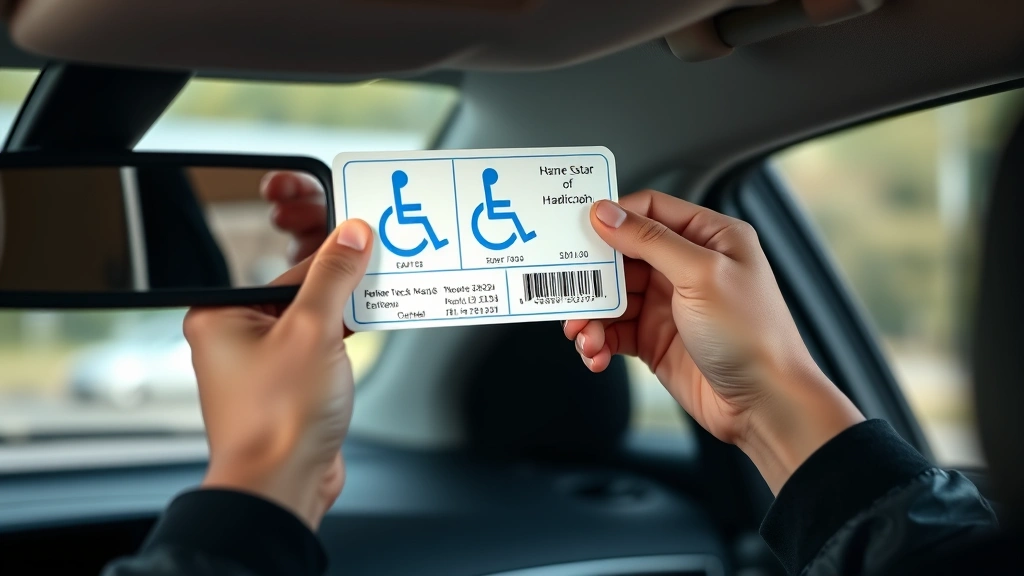
Your placard is mailed to you or available for pickup. It includes your name, photograph (in some states), expiration date, and a unique identification number. Display it on your rearview mirror or dashboard when parked.
For temporary placards (usually valid 6 months to 2 years), you’ll need to reapply with updated physician certification when your placard expires. Permanent placards typically require renewal every 5-10 years, depending on your state.
Understanding these accessibility requirements helps ensure your placard remains valid and protects your rights to accessible parking.
Common Mistakes to Avoid
Several common errors can delay or derail your handicap placard application:
- Incomplete physician certification: Missing signature, license number, or date makes the form invalid. Always verify your doctor has completed every required field before submitting.
- Inconsistent information: If your application lists a different diagnosis or functional limitation than your physician’s form, the DMV will request clarification, causing delays.
- Expired medical documentation: Some states require recent physician evaluations (within the last 6-12 months). Don’t submit certification based on outdated medical records.
- Failure to disclose temporary status: If your condition is temporary (post-surgery recovery, pregnancy-related mobility issues), clearly indicate this. Temporary placards have different renewal requirements.
- Applying without meeting criteria: Attempting to obtain a placard for a condition that doesn’t meet your state’s medical criteria wastes time and may result in denial or legal consequences.
- Misusing a placard: Using someone else’s placard, displaying it when not driving the permit holder, or parking in accessible spaces without a valid placard can result in fines, towing, and legal penalties.
If your application is denied, you have the right to appeal and request reconsideration with additional medical documentation. Understanding your state’s disability rights protections can help you navigate the appeals process.
Special Circumstances and Temporary Placards
Handicap placards aren’t limited to permanent disabilities. Many states offer temporary placards for individuals recovering from surgery, managing acute illness, or experiencing pregnancy-related mobility limitations. Your physician can certify temporary eligibility with an expected duration (e.g., “6 weeks post-surgery” or “duration of pregnancy”).
If you’re experiencing a temporary medical need, don’t hesitate to request a temporary placard. This provides legitimate accommodation during your recovery without requiring permanent disability status. Once your condition improves, the placard simply expires—no action needed.
Some states also offer specialized placards for specific conditions, such as:
- Wheelchair-accessible van permits: For individuals requiring vehicle modifications to operate hand controls or wheelchair lifts
- Attendant-only permits: For individuals who cannot drive but require accessible parking to receive care from an attendant
- Double-width space permits: For individuals requiring extra space due to wheelchair dimensions or assistive equipment
Your physician can advise whether you qualify for specialized accommodations beyond a standard placard.
Connecting Your Placard to Broader Disability Accommodations
A handicap placard is often the first step in accessing comprehensive accommodations. The medical documentation supporting your placard can be leveraged for other needs:
- Workplace accommodations: Your disability verification can support requests for accessible parking at work, flexible scheduling, or other disability-related workplace adjustments.
- Housing accommodations: If you need accessible housing features, your medical documentation strengthens requests for ground-floor units, accessible parking, or other modifications.
- Service animal or ESA documentation: If you have a service animal or emotional support animal, your disability verification supports related housing or travel accommodations.
- Legal accommodations: Your documented disability may qualify you for court accommodations, jury duty exemption, or other legal protections.
Consider your handicap placard as part of a broader framework of disability accommodations. Keeping comprehensive medical documentation helps you advocate effectively across all areas of your life.

Working With Your Healthcare Provider
The relationship between you and your physician is essential for obtaining a legitimate handicap placard. To facilitate this process:
- Be honest about your limitations: Describe your actual functional abilities, not what you wish were true. Exaggerating or minimizing symptoms undermines your credibility and your physician’s professional judgment.
- Provide comprehensive medical history: Share all relevant diagnoses, treatments, medications, and specialist evaluations. This documentation supports your physician’s certification.
- Request the placard application early: Allow your doctor time to complete the form thoroughly. Rushing the process increases errors.
- Ask clarifying questions: If you don’t understand why your physician believes you do or don’t meet criteria, ask. Clear communication prevents misunderstandings.
- Follow treatment recommendations: Physicians are more confident certifying disability when patients actively manage their conditions. Compliance with treatment strengthens your application.
If your regular physician is unavailable or unfamiliar with your condition, you may need a specialist’s evaluation. A rheumatologist for arthritis, cardiologist for heart disease, or pulmonologist for respiratory conditions can provide detailed functional assessments supporting your placard application.
FAQ
How long does it take to get a handicap placard?
Processing times vary by state. Online applications may be approved within days, while mail applications typically take 1-3 weeks. Once approved, the placard is mailed to you. Total time from physician certification to placard in hand is usually 2-4 weeks.
Can I get a handicap placard for arthritis?
Yes, if your arthritis significantly limits walking distance or requires assistive devices. Your physician must document that your condition meets your state’s specific criteria, typically demonstrating inability to walk 200 feet without stopping to rest or requiring a cane, walker, or other assistance.
What if my doctor won’t certify me for a placard?
Your physician has professional discretion and legal responsibility to certify only legitimate cases. If you believe your condition genuinely qualifies, discuss specific medical criteria with your doctor and provide additional documentation. You may also request a second opinion from a specialist. However, you cannot force certification if your condition doesn’t meet objective criteria.
Can I use someone else’s handicap placard?
No. Using another person’s placard is illegal and can result in fines, towing, and criminal charges in some jurisdictions. Placards are issued to specific individuals and must be displayed only when that person is present in the vehicle.
How often do I need to renew my placard?
Permanent placards typically expire every 5-10 years, depending on your state. You’ll receive a renewal notice before expiration. Temporary placards expire at the date specified by your physician and cannot be renewed—you must reapply if your condition persists.
What medical conditions automatically qualify for a placard?
No conditions “automatically” qualify. Each application is evaluated individually based on your functional limitations and your state’s specific criteria. Even common conditions like arthritis require documentation that your specific case meets the standard (e.g., inability to walk 200 feet without stopping).
Can pregnancy qualify for a temporary handicap placard?
Yes. Many states recognize pregnancy-related mobility limitations as qualifying for temporary placards, particularly in the third trimester or with complications. Your obstetrician can complete the certification form indicating the expected duration (typically through delivery).
What if I disagree with my doctor’s determination?
You have the right to appeal a denial through your state DMV. Request reconsideration with additional medical documentation, specialist evaluations, or functional assessments. You may also seek a second opinion from another physician. Document your functional limitations thoroughly to support your appeal.
Are handicap placards valid in all states?
Yes. The ADA requires all states to honor valid handicap placards issued by any other state. Your placard works nationwide, so you can access designated parking wherever you travel. However, specific placard designs and requirements vary by state.
How much does a handicap placard cost?
Most states charge $10-$25 for permanent placards and $5-$15 for temporary permits. Some states waive fees for seniors or low-income individuals. Check your state DMV website for current pricing and fee waiver eligibility.