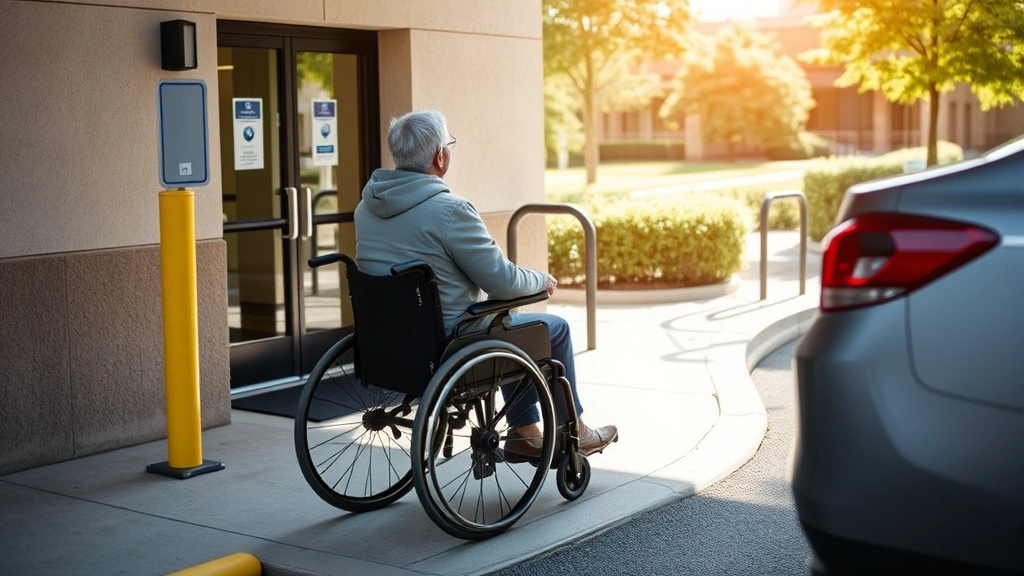

Mobility Parking Certification: Doctor’s Guide
Mobility impairment parking certification is a critical accommodation that enables individuals with disabilities to access essential services, employment, healthcare, and community resources. A handicap parking placard or license plate provides reserved parking spaces closer to building entrances, reducing the physical strain and pain associated with walking long distances. For patients with conditions affecting mobility—such as arthritis, spinal cord injuries, cerebral palsy, multiple sclerosis, or severe cardiovascular disease—this certification can mean the difference between independence and isolation.
As a healthcare provider, you play a vital role in the certification process. This guide explains the medical, legal, and practical considerations for evaluating patients for mobility parking certification, documenting functional limitations, and issuing letters that meet state and federal standards.
Understanding Mobility Parking Certification
Mobility parking certification refers to the formal medical documentation that qualifies a patient for a disabled parking placard or license plate. These credentials are issued by state departments of motor vehicles (DMVs) and allow individuals to park in designated accessible spaces reserved under the Americans with Disabilities Act (ADA). The certification must originate from a licensed healthcare provider and clearly establish that the applicant meets specific functional criteria related to mobility impairment.
The purpose of mobility parking is not merely convenience—it is a reasonable accommodation that addresses documented functional limitations. Patients with mobility impairments often experience increased pain, fatigue, shortened walking distance tolerance, and heightened fall risk. The ability to park closer to destinations directly impacts their capacity to work, attend medical appointments, shop for groceries, and participate in community life. Without this accommodation, many individuals face barriers that effectively exclude them from public spaces and employment opportunities.
Your role as a certifying physician includes three core responsibilities: (1) conducting a thorough clinical evaluation, (2) documenting objective and subjective evidence of mobility impairment, and (3) issuing certification that withstands DMV review and potential legal challenge. Understanding the legal framework and state-specific requirements ensures your certifications are honored and your patients receive timely approvals.
Medical Eligibility Criteria
The ADA and most state regulations recognize several categories of medical conditions that may qualify for mobility parking certification. These include:
- Severe arthritis or rheumatic disease: Conditions causing chronic joint pain, stiffness, and reduced range of motion that limit walking tolerance and speed
- Spinal cord injury or disease: Including paraplegia, quadriplegia, and conditions affecting gait and balance
- Cerebral palsy: Motor control disorders affecting walking and coordination
- Multiple sclerosis and other neurological conditions: Affecting mobility, balance, and fatigue tolerance
- Cardiovascular or pulmonary disease: Severe conditions limiting exertion tolerance and oxygen availability
- Orthopedic impairments: Including amputations, hip/knee disease, and chronic fractures
- Metabolic or endocrine disorders: Such as severe diabetes with neuropathy or amputation
- Cognitive or mental health conditions: In rare cases where they substantially limit mobility or create safety risks
- Temporary mobility impairments: Including recovery from surgery or serious injury (time-limited certification)
Importantly, diagnosis alone does not warrant certification. A patient with osteoarthritis, for example, may have mild symptoms managed with medication and physical therapy, requiring no parking accommodation. Another patient with the same diagnosis may experience severe functional limitation. The key determinant is whether the condition substantially limits the patient’s ability to walk or stand for prolonged periods, as documented through clinical assessment and functional testing.
When evaluating eligibility, consider the patient’s baseline functional capacity, the impact of their condition on activities of daily living (ADLs), their response to current treatment, and whether accommodation would meaningfully improve their access to essential services. Document whether symptoms are stable, progressive, or fluctuating, as this affects the appropriate certification duration.
Functional Limitation Assessment
Functional limitation assessment is the clinical foundation of mobility parking certification. Rather than relying on diagnosis, you must objectively measure and document how the patient’s condition affects their walking, standing, and mobility in real-world contexts.
Walking Distance Tolerance: Assess the maximum distance the patient can walk without significant pain, fatigue, shortness of breath, or other limiting symptoms. Most state regulations recognize severe impairment when patients can walk 50-100 feet or less, though specific thresholds vary. Use the Six-Minute Walk Test (6MWT) or timed walking tests to document objective data. Note the patient’s gait pattern, use of assistive devices, and symptoms that emerge during walking.
Standing Tolerance: Evaluate how long the patient can stand without support before symptoms worsen. Patients with severe mobility impairment often cannot stand for more than a few minutes. Document whether standing tolerance is affected by pain, balance problems, weakness, or other factors.
Pain and Symptom Assessment: Use validated pain scales (0-10 numeric rating scale, visual analog scale) to quantify pain intensity during ambulation. Document whether pain is immediate, progressive, or delayed. Note other symptoms such as dyspnea, dizziness, palpitations, or neurological symptoms that limit mobility.
Assistive Device Use: Record whether the patient requires canes, crutches, walkers, wheelchairs, or other devices for safe mobility. Assistive device dependence is strong evidence of functional limitation and typically qualifies for certification regardless of walking distance tolerance.
Impact on Activities of Daily Living: Ask specific questions: Can you shop for groceries independently? Can you walk from a standard parking space to a store entrance? Do you need to use a wheelchair or scooter for community outings? Can you walk from your car to your workplace? Document the patient’s self-reported functional limitations in concrete, measurable terms.
Incorporate objective data from your examination: gait observation, range of motion testing, strength assessment, balance testing, and vital sign response to activity. Patients with genuine mobility impairment will demonstrate measurable functional deficits on clinical examination. This objective evidence protects both you and your patient by establishing medical necessity for the certification.

Documentation and Letter Requirements
Your certification letter must meet specific content requirements established by state DMVs and federal guidelines. While requirements vary by state, most require:
- Physician credentials: Your name, license number, contact information, and specialty. Many states require board certification in relevant specialties (e.g., orthopedics, rheumatology, neurology, internal medicine) for certain conditions.
- Patient identification: Patient name, date of birth, driver’s license number (if available), and current address. The letter must match the DMV application exactly.
- Specific diagnosis: The primary medical condition causing mobility impairment. Vague diagnoses like “chronic pain” are often rejected; specific conditions such as “severe osteoarthritis of bilateral hips and knees” are preferred.
- Functional limitations: Explicit statements about the patient’s walking distance tolerance, standing tolerance, pain levels, and need for assistive devices. For example: “Patient can ambulate a maximum of 75 feet before experiencing severe pain and fatigue. She requires a walker for safe mobility and cannot negotiate standard parking lot distances without significant symptom exacerbation.”
- Basis for certification: Reference your clinical findings, examination results, imaging or test results, and functional assessment tools used. This demonstrates the medical foundation for your certification.
- Certification statement: A clear statement that the patient meets criteria for mobility parking accommodation under ADA standards. For example: “Based on clinical evaluation and functional assessment, [Patient Name] has a severe mobility impairment that substantially limits her ability to walk and stand. She meets criteria for disabled parking accommodation.”
- Certification duration: Permanent, temporary (with specific end date), or renewable (with recommended reassessment interval). Most states require reassessment every 4-6 years for permanent certifications.
- Your signature and date: Original signature (not stamped or electronic signature, unless your state permits). Some states require notarization.
Consider using a structured template or form that aligns with your state’s DMV requirements. Many states provide official physician certification forms designed to streamline the process. Arvix Health offers functional limitation verification letters that provide comprehensive documentation of mobility impairment, suitable for DMV submission.
Additionally, when patients require broader workplace or housing accommodations related to their mobility impairment, a disability letter for workplace accommodation can document functional limitations in employment contexts, complementing parking certification.
State and Federal Compliance
Mobility parking certification operates within a complex regulatory framework. The Americans with Disabilities Act (ADA) establishes the federal standard for accessible parking, and the ADA Accessibility Guidelines provide detailed specifications for parking space design and signage. However, each state’s DMV establishes its own physician certification requirements, eligible conditions, and application procedures.
Key compliance considerations include:
- State-specific forms and procedures: Obtain your state’s official physician certification form from the DMV website. Using the correct form expedites processing and reduces rejection rates.
- Licensing requirements: Some states restrict certification authority to physicians (MDs/DOs), while others allow nurse practitioners, physician assistants, or other licensed providers. Verify your authority to certify in your state.
- Specialty restrictions: Certain states require certification by physicians in specific specialties for specific conditions. For example, cardiac conditions may require cardiology certification, and orthopedic conditions may require orthopedic or rheumatologic certification.
- Fraud prevention measures: States have implemented increased scrutiny of mobility parking certifications due to abuse. Ensure your documentation is thorough and defensible. Be prepared to explain your clinical reasoning if your certification is audited.
- Reciprocal recognition: If a patient relocates, their placard typically remains valid in their new state for a specified period. However, permanent certification may require new state certification.
Consult your state’s DMV website for the most current requirements. The National Highway Traffic Safety Administration (NHTSA) maintains links to state-specific resources. When in doubt, contact your state DMV directly to clarify requirements for complex cases.
Common Pitfalls and Best Practices
Pitfall 1: Relying on diagnosis without functional assessment. Stating “patient has arthritis” is insufficient. Specify the severity, location, and functional impact: “Patient has severe osteoarthritis of bilateral knees with pain 8/10 during ambulation, limiting walking to 50 feet before requiring rest.”
Best practice: Always conduct objective functional assessment. Document specific walking distance, standing tolerance, pain levels, and assistive device use. Include examination findings that support the functional limitations you describe.
Pitfall 2: Using vague language or generic statements. Avoid phrases like “patient needs parking accommodation” or “patient has mobility issues.” These do not establish medical necessity.
Best practice: Use specific, measurable language. For example: “Patient can ambulate a maximum of 75 feet before experiencing severe dyspnea and chest discomfort. She uses a rolling walker and cannot negotiate standard parking lot distances. She requires close parking proximity to minimize exertion.”
Pitfall 3: Issuing permanent certifications without clear medical justification. If a condition is progressive or unstable, permanent certification may not be appropriate. Some states are auditing permanent certifications more closely.
Best practice: Use permanent certification for stable, non-improving conditions (e.g., spinal cord injury, amputation, advanced degenerative disease). Use temporary or renewable certification for progressive conditions (e.g., MS, ALS) or conditions that may improve (e.g., post-surgical recovery). Document your reasoning for the certification duration selected.
Pitfall 4: Insufficient documentation of basis for certification. DMV audits may request detailed clinical notes explaining your assessment and findings.
Best practice: Maintain comprehensive clinical documentation in the patient’s medical record. Your certification letter should reference specific examination findings, test results, and functional assessments that support your certification. For example: “Patient completed a six-minute walk test, ambulating 120 feet before stopping due to severe pain and dyspnea. Gait was slow and effortful, requiring bilateral cane use.”
Pitfall 5: Certifying patients without thorough evaluation. Issuing certifications based solely on patient report or without direct examination undermines the credibility of your certification and may expose you to liability.
Best practice: Conduct a thorough, documented evaluation for every patient. Perform relevant physical examination, review medical records, and use objective assessment tools. If you are uncertain whether a patient meets criteria, discuss your concerns with the patient and consider requesting additional testing or specialist consultation before issuing certification.
For patients with complex functional limitations or multiple conditions affecting mobility, a doctor-signed modified physical requirements letter can provide detailed functional capacity documentation that supports parking certification and other accommodations.
FAQ
How long does mobility parking certification remain valid?
Validity depends on whether you issue permanent, temporary, or renewable certification. Permanent certifications typically remain valid for 4-6 years before reassessment is required, though some states allow longer periods. Temporary certifications are valid for a specified period (e.g., 6 months to 2 years), appropriate for post-surgical recovery or acute conditions expected to improve. Renewable certifications require periodic physician reassessment. Check your state’s DMV requirements for specific duration rules.
Can I certify a patient I have never examined in person?
No. Professional standards and state regulations generally require in-person evaluation and examination. Telehealth evaluation may be acceptable in limited circumstances if combined with prior in-person records and objective functional testing, but certification based solely on patient report or remote assessment is ethically and legally problematic. Conduct a direct examination before certifying.
What should I do if a patient requests certification but does not meet criteria?
Discuss your clinical findings with the patient respectfully. Explain that your evaluation does not demonstrate the functional limitations required for certification. Offer alternative accommodations if appropriate (e.g., ergonomic workplace adjustments, modified work schedule). If the patient disagrees, consider offering a second opinion from a colleague or specialist. Do not issue certification if the patient does not meet objective criteria, as this exposes you to fraud liability and undermines the credibility of legitimate certifications.
Can I issue mobility parking certification for mental health conditions?
Most states restrict mobility parking certification to conditions with documented physical impact on walking and standing. Mental health conditions alone typically do not qualify unless they substantially impair physical mobility (e.g., severe agoraphobia preventing parking lot navigation). Consult your state’s DMV guidance on psychiatric conditions. If a patient has comorbid physical and psychiatric conditions, focus your certification on the documented physical functional limitations.
What happens if my certification is audited by the DMV?
DMVs may audit certifications to prevent fraud. Prepare by maintaining comprehensive clinical documentation. Your medical record should include detailed history, physical examination findings, functional assessment results, and specific clinical reasoning for the certification. Respond promptly to audit requests and provide requested documentation. If your certification is questioned, you may request an opportunity to discuss the case with DMV officials. Ensure your documentation is thorough and defensible before issuing any certification.
Should I coordinate mobility parking certification with other workplace or housing accommodations?
Yes. Mobility parking certification often exists within a broader accommodation context. A patient may simultaneously need workplace accommodations (remote work, flexible schedule), housing accommodations (ground floor unit, accessible parking), or other disability accommodations. Ensure your functional limitation documentation is comprehensive enough to support all necessary accommodations. If you issue remote work accommodation letters or other disability documentation for the same patient, ensure consistency in your functional limitation descriptions across all documents.
How do I determine if a temporary or permanent certification is appropriate?
Consider the natural history of the condition. Permanent conditions (spinal cord injury, amputation, advanced arthritis with no expected improvement) warrant permanent certification. Conditions expected to improve (post-surgical recovery, acute injury) warrant temporary certification with a specific end date. Progressive conditions (MS, ALS, Parkinson’s disease) warrant renewable certification with periodic reassessment. Document your reasoning for the duration selected in the certification letter and the patient’s medical record. When in doubt, use a shorter duration and plan for reassessment rather than issuing permanent certification prematurely.
Mobility parking certification is a powerful accommodation that enables individuals with disabilities to maintain independence and access essential services. By conducting thorough functional assessments, documenting objective findings, and adhering to state and federal requirements, you can issue certifications that effectively serve your patients while maintaining professional integrity and legal compliance. Your role as a certifying physician is both a clinical responsibility and an opportunity to meaningfully improve your patients’ quality of life and community participation.