
Remote Work Accommodations: Telehealth Expert Tips
Working remotely offers tremendous benefits for employees managing chronic health conditions, disabilities, and ongoing medical needs. However, securing formal remote work accommodations requires proper documentation and a clear understanding of your rights under the Americans with Disabilities Act (ADA) and other employment laws. A remote work accommodation letter serves as the official bridge between your medical reality and your employer’s obligation to provide reasonable accommodations, ensuring your request is taken seriously and properly documented.
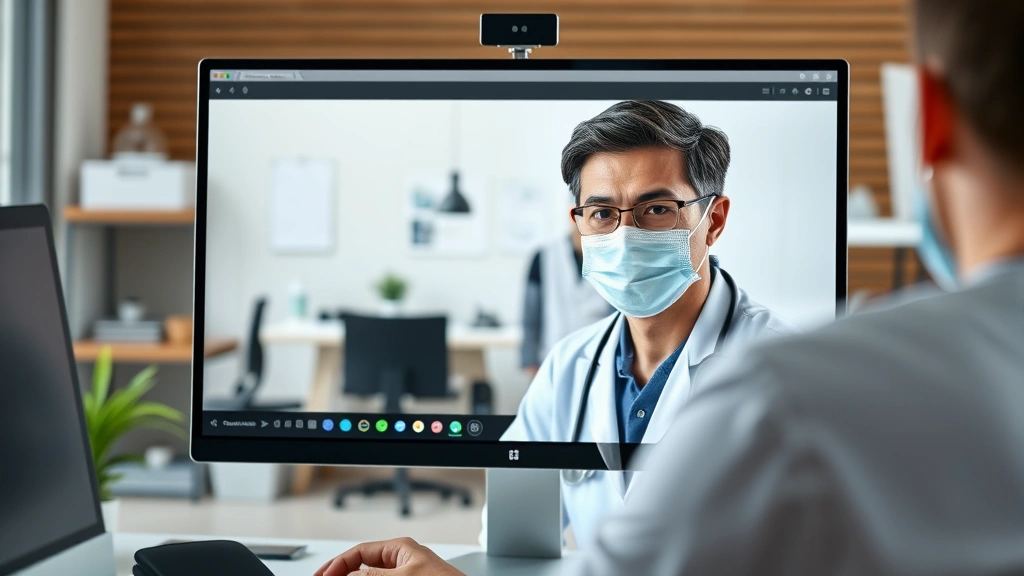
Telehealth has revolutionized how healthcare providers support remote workers seeking accommodations. Virtual medical consultations allow specialists to assess your functional limitations, understand your work environment, and provide evidence-based recommendations without requiring in-person visits. This guide walks you through the entire process of obtaining remote work accommodations, understanding what makes an effective accommodation letter, and leveraging telehealth resources to strengthen your case.
Understanding Remote Work Accommodations Under the ADA
The Americans with Disabilities Act requires employers with 15 or more employees to provide reasonable accommodations to qualified employees with disabilities. Remote work has become increasingly recognized as a legitimate accommodation for individuals with mobility limitations, chronic pain conditions, immunocompromised status, mental health disorders, and numerous other disabilities that make traditional office environments challenging.
Remote work accommodations aren’t simply about working from home—they’re about removing barriers that prevent you from performing essential job functions. Whether you need flexibility due to frequent medical appointments, fatigue management, pain fluctuations, or environmental sensitivities, your accommodation request must be grounded in documented functional limitations and supported by credible medical evidence.
An accommodation letter from a qualified healthcare provider carries significant legal weight. It demonstrates that your request isn’t arbitrary but stems from a legitimate medical condition requiring workplace modifications. This documentation protects both you and your employer by creating a clear record of the accommodation decision.
The Telehealth Advantage for Documentation
Telehealth platforms have democratized access to medical specialists who can evaluate your accommodation needs comprehensively. Rather than waiting weeks for an appointment at a busy clinic, you can connect with experienced healthcare providers within days—sometimes hours—for detailed assessments that directly address your workplace situation.
Telehealth consultations for accommodation documentation offer several distinct advantages:
- Accessibility: Virtual appointments eliminate transportation barriers, reducing pain and fatigue from travel for individuals with mobility limitations
- Flexibility: Schedule consultations around your work and medical appointment calendar without losing productivity
- Comprehensive Assessment: Providers can review your work environment through screen sharing, understand your specific job duties, and tailor recommendations accordingly
- Specialist Input: Access board-certified specialists in your condition area without geographic limitations
- Documentation Speed: Many telehealth providers can generate accommodation letters within 24-48 hours
- Cost-Effectiveness: Virtual consultations typically cost less than in-person visits while providing equally valid medical documentation
When selecting a telehealth provider for accommodation documentation, verify they’re licensed in your state, have experience with accommodation letters, and understand ADA requirements. The provider must have established a legitimate doctor-patient relationship and conduct a thorough evaluation—not simply rubber-stamp your request.

Key Components of an Effective Accommodation Letter
A legally defensible remote work accommodation letter contains specific elements that employers and legal representatives recognize as credible medical documentation. Generic letters lack the detail necessary to justify accommodation decisions, while comprehensive letters demonstrate medical necessity and support reasonable accommodation requests.
Essential Components:
- Provider Credentials: Full name, license number, state of licensure, medical specialty, and contact information establishing the provider’s qualifications
- Patient-Provider Relationship: Dates of treatment, frequency of consultations, and duration of the professional relationship
- Diagnosis and Functional Limitations: Specific medical condition(s) with clear explanation of how each limitation affects work performance
- Workplace Impact Analysis: Detailed description of how commuting, office environments, or in-person collaboration triggers or exacerbates symptoms
- Specific Accommodation Recommendation: Clear statement that remote work (full-time or hybrid) is medically necessary, not optional
- Duration and Prognosis: Timeframe for the accommodation need and whether the condition is temporary or ongoing
- Medical Reasoning: Explanation of why remote work specifically addresses the functional limitations identified
- Flexibility Indicators: Any conditions or modifications that might apply (schedule flexibility, break frequency, equipment needs)
Avoid vague language like “the patient needs to work from home” without explanation. Instead, effective letters state: “Due to [condition], the patient experiences [specific symptoms] when [trigger], resulting in [functional limitation]. Remote work eliminates [trigger], enabling the patient to perform essential job functions including [specific duties].”
Your accommodation letter should also align with other documentation you may have, such as an ADA disability verification letter or FMLA medical certification. Consistency across documents strengthens your overall case and demonstrates genuine medical need rather than preference.
Building Strong Medical Evidence
A remote work accommodation letter is only as strong as the medical evidence supporting it. During your telehealth consultation, come prepared with comprehensive information about your condition and its impact on work performance.
Documentation to Gather Before Your Telehealth Consultation:
- Previous medical records and diagnoses from your regular healthcare providers
- Current medication list with dosages and any side effects affecting work capacity
- Description of your typical work day and specific job duties
- Detailed symptom log showing patterns, triggers, and severity variations
- Any previous workplace accommodations attempted and their effectiveness
- Records of medical appointments, treatments, or therapies you currently receive
- Notes on environmental factors that trigger or worsen symptoms (noise, lighting, temperature, crowds)
During your telehealth visit, be honest and detailed about how your condition affects work. Providers need to understand:
- How commuting impacts your energy, pain, or symptoms
- Whether office environments trigger anxiety, sensory issues, or physical symptoms
- How frequently you need breaks, medical appointments, or rest periods
- Whether your symptoms fluctuate unpredictably, making remote work essential for reliability
- How remote work specifically enables you to manage your condition while maintaining productivity
Medical evidence strengthens your case significantly. If you’ve tracked symptoms in a health app, maintained a pain journal, or documented medical appointments, share this with your telehealth provider. Objective data—even self-reported but detailed—carries more weight than general statements about needing accommodations.
Implementation Strategy and Employer Communication
Obtaining an accommodation letter is just the beginning. How you present it to your employer and engage in the interactive process significantly influences whether your request is approved quickly and without complications.
Step-by-Step Implementation:
- Identify the Right Contact: Determine whether to approach your direct supervisor, HR department, or both. Your company’s accommodation policy should specify the process.
- Submit Formal Request: Provide your accommodation letter in writing, typically to your HR department. Keep copies for your records.
- Include Context: Brief cover letter explaining your request, emphasizing your commitment to job performance and willingness to discuss how remote work supports productivity
- Anticipate Questions: Be prepared to discuss whether hybrid or full-time remote work is necessary, equipment needs, communication preferences, and how you’ll maintain team connection
- Engage in Interactive Process: If your employer requests additional information or proposes modifications, respond promptly and professionally
- Document Everything: Keep records of all communications, dates, and responses throughout the accommodation process
- Follow Up: If you don’t receive a response within reasonable timeframe (typically 5-10 business days), politely follow up in writing
Remember that reasonable accommodations must be effective for you while feasible for your employer. Be flexible about implementation details—perhaps full-time remote work isn’t necessary if hybrid arrangements with reduced office days suffice. This collaborative approach often results in faster approval and stronger working relationships.
Common Remote Work Scenarios and Solutions
Chronic Pain Conditions (Fibromyalgia, Arthritis, Spinal Disorders): Sitting in office chairs, commuting, and navigating physical office spaces can trigger severe pain flares. Remote work enables you to use ergonomic equipment, take movement breaks, and control your environment. Your accommodation letter should emphasize how office-based work exacerbates pain, reducing productivity.
Autoimmune and Immunocompromised Conditions: Exposure to pathogens in shared office spaces poses genuine health risks. Documentation should note vulnerability to infections and explain how remote work reduces exposure while maintaining work capacity. This remains particularly relevant post-pandemic.
Mental Health Conditions (Anxiety, Depression, PTSD): Office environments—particularly open-plan spaces with constant social interaction—can trigger or worsen symptoms. Remote work provides a controlled environment where you can manage anxiety medications, take grounding breaks, and work when you’re most stable. Your telehealth provider should document specific environmental triggers.
Neurological Conditions (Migraine, MS, Seizure Disorders): Sensory triggers in offices (fluorescent lighting, noise, strong scents) commonly precipitate symptoms. Remote work eliminates these triggers while enabling you to manage medications and rest when necessary. Documentation should link specific office factors to symptom exacerbation.
Fatigue-Based Conditions (ME/CFS, Long COVID, Cancer Recovery): Commuting and office presence consume energy needed for essential job functions. Remote work eliminates commute fatigue, reduces symptom triggers, and enables strategic rest breaks. Your letter should explain how reduced commute time directly increases work capacity.
Mobility Limitations (Spinal Cord Injury, Cerebral Palsy, Amputation): Office accessibility, parking limitations, and physical navigation challenges may prevent reliable in-office work. Remote work eliminates these barriers entirely. Documentation should specify which accessibility barriers remote work addresses.
FAQ
Can my employer require in-person medical evaluation instead of accepting a telehealth-based accommodation letter?
Under the ADA, employers can require medical evaluations at their expense, but only if they require the same for all employees requesting accommodations or if your documentation is insufficient. A comprehensive telehealth-based accommodation letter from a licensed provider typically satisfies documentation requirements. However, if your employer questions the provider’s qualifications or evaluation depth, they may request additional information rather than a completely new evaluation.
How specific should my accommodation letter be about remote work arrangements?
Your letter should specify whether you need full-time remote work or whether hybrid arrangements with specific office-day limitations suffice. It should also address reasonable employer concerns: how you’ll maintain communication, handle in-person meetings (if necessary), and demonstrate continued productivity. The more specific your medical reasoning, the easier it is for employers to accommodate you effectively.
What if my employer says remote work isn’t possible for my position?
If your employer claims remote work is impossible, ask them to explain specifically which essential job functions cannot be performed remotely. Often, positions assumed to require in-person presence can be substantially performed remotely with minor modifications. Your accommodation letter should address this by explaining how remote work enables you to perform essential functions, even if some peripheral tasks require occasional office presence. Consider requesting legal consultation if your employer refuses reasonable accommodations without legitimate business justification.
Should I disclose my specific diagnosis to my employer?
You don’t need to disclose your specific diagnosis to receive accommodations. You can request remote work based on functional limitations without revealing the underlying condition. However, your accommodation letter must come from a healthcare provider and explain the functional limitations clearly. Some employers may request diagnosis information as part of their accommodation process—you can ask your provider to provide that information directly to HR while you provide a summary to your supervisor that focuses on functional impact.
How often should I update my accommodation letter?
If your condition is stable and remote work continues to be medically necessary, your accommodation letter remains valid indefinitely unless your employer requests updated documentation. However, if your condition changes significantly, you receive new diagnoses, or your medication regimen changes, consider updating your letter to reflect current medical status. Annual updates provide extra protection if your employer questions the accommodation’s continued necessity.
Can I use an accommodation letter for remote work to support other requests (disability benefits, insurance claims)?
Your accommodation letter establishes medical necessity for workplace modifications, but different processes (disability benefits, insurance claims) may require specialized documentation. A disability verification letter or functional capacity evaluation may be necessary for benefits claims. Consult with benefits administrators about their specific documentation requirements rather than assuming one letter serves all purposes.
What if I’m in a probationary period—can I still request accommodations?
Yes. The ADA applies regardless of employment status or tenure. However, probationary employees should be particularly thoughtful about timing and documentation quality. Request accommodations promptly once your need becomes apparent, provide comprehensive documentation, and demonstrate that the accommodation enables you to meet performance expectations. Employers cannot deny accommodations based on probationary status, but they may evaluate your performance more closely during this period.
How do I handle accommodation requests if I work for a small employer (fewer than 15 employees)?
The ADA applies to employers with 15 or more employees. However, state and local disability accommodation laws often apply to smaller employers. Check your state’s employment laws and consult with your state’s disability rights organization. Even if the ADA doesn’t apply, many states require reasonable accommodations. An accommodation letter documenting medical necessity is valuable regardless of employer size, as it demonstrates good-faith effort to address your needs reasonably.