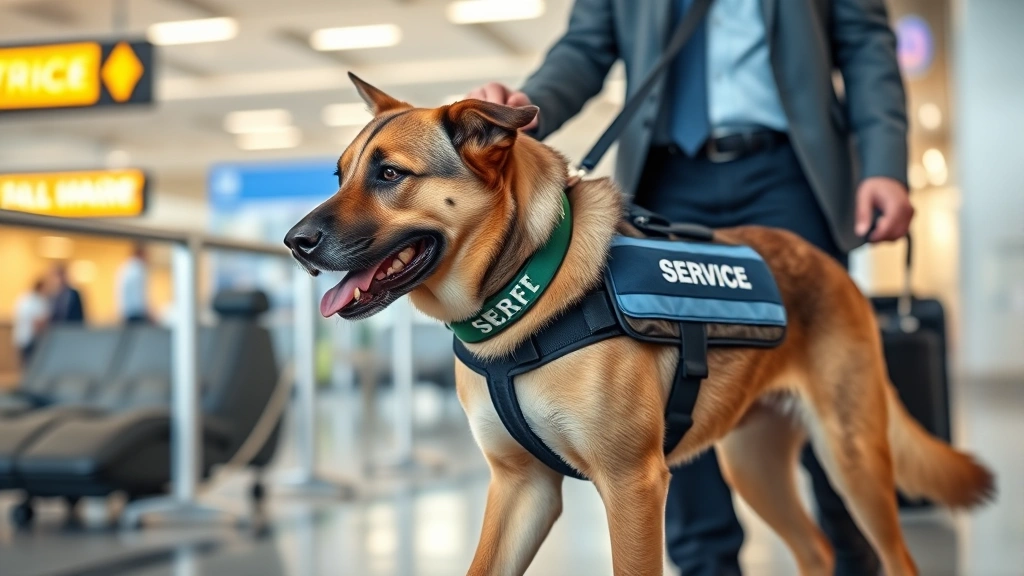
Service Animal Travel: Letter Essentials Explained
Traveling with a service animal requires more than just packing supplies and booking flights. Service animals are specially trained to perform critical tasks for individuals with disabilities, and they deserve the same legal protections and documentation standards whether you’re crossing state lines or boarding an international flight. Understanding what documentation you need—and why—empowers you to travel confidently without unnecessary delays, denials, or complications at airports, hotels, or transportation hubs.
A service animal travel letter is a formal document that verifies your animal’s legitimate status and training. Unlike emotional support animals, which provide comfort through companionship, service animals are task-trained to mitigate specific disabilities. Airlines, hotels, and government agencies have strict rules about what constitutes a service animal, and having proper documentation protects both you and your animal from discrimination while ensuring compliance with the Americans with Disabilities Act (ADA).

What Is a Service Animal Travel Letter?
A service animal travel letter is a professional document issued by a licensed healthcare provider that certifies an animal is a trained service animal rather than a pet or emotional support animal. This letter serves as your primary defense against discrimination and denial of access in travel settings. It documents your disability, explains the specific tasks your service animal performs, and confirms that the animal meets federal standards for service animal status.
The letter differs fundamentally from an emotional support animal letter. While both are accommodation documents, service animals are task-trained to perform work or tasks related to a person’s disability. The ADA recognizes only dogs and, in rare cases, miniature horses as service animals. Emotional support animals, by contrast, provide comfort through their presence alone and have different legal protections under the Fair Housing Act and Air Carrier Access Act.
Your service animal travel letter becomes especially critical when flying. The U.S. Department of Transportation has tightened regulations in recent years, requiring detailed documentation to prevent abuse of service animal designations. A well-crafted letter from a qualified healthcare provider significantly reduces the risk of your animal being denied boarding or access.

Legal Requirements and Standards
Federal law, particularly the ADA and the Air Carrier Access Act (ACAA), establishes clear standards for service animals and their documentation. Understanding these requirements ensures your letter meets all necessary criteria and stands up to scrutiny at checkpoints.
ADA Definition. The ADA defines a service animal as a dog that has been individually trained to perform specific tasks or do work for a person with a disability. The tasks must be directly related to the person’s disability. A dog whose only function is to provide comfort or emotional support does not qualify as a service animal under the ADA, even if prescribed by a mental health professional.
Air Carrier Requirements. Airlines follow the ACAA, which allows service animals to travel in the cabin at no additional charge. However, carriers may require documentation, and as of 2021, the U.S. Department of Transportation permits airlines to request specific information about the animal’s training and behavior. Your letter should address these points proactively.
International Travel. If traveling internationally, requirements become more complex. Different countries have varying standards for service animal recognition. Some nations require additional health certificates, microchipping, or quarantine documentation. The Department of Transportation website provides guidance, but consulting your destination country’s embassy is essential.
State and Local Laws. While federal law provides baseline protections, some states offer additional protections or have specific requirements. Your letter should reference applicable federal law, and you should research any state-specific regulations for your travel destinations.
Essential Components of Your Letter
A comprehensive service animal travel letter includes specific sections that address airline, hotel, and government agency requirements. Missing elements can result in delays or denials, so ensure your letter covers all bases.
Healthcare Provider Credentials. The letter must be written on official letterhead from a licensed healthcare provider—a physician, psychiatrist, psychologist, licensed clinical social worker, or other qualified mental health professional. The provider’s credentials, license number, and contact information should be prominently displayed. This establishes the letter’s legitimacy and allows agencies to verify the provider’s qualifications if needed.
Your Disability Description. The letter should describe your disability in general terms without disclosing sensitive medical details. For example: “The patient has a mobility disability that significantly impacts their ability to ambulate independently” or “The patient has a psychiatric disability that results in severe anxiety in public settings.” This establishes that you have a disability covered under the ADA without requiring you to disclose your specific diagnosis.
Service Animal Tasks. This is the most critical section. List the specific, trained tasks your animal performs. Examples include: “The service dog is trained to perform mobility assistance by bracing during transfers,” “The dog alerts to oncoming seizures and provides protective positioning,” or “The animal is trained to interrupt panic attacks and provide deep pressure therapy.” Be specific and task-focused, not emotion-focused. Vague statements like “provides comfort” will not satisfy modern standards.
Behavioral Attestation. Airlines and hotels increasingly require assurance that your animal is under control and won’t pose safety risks. Your letter should state: “The service animal is fully trained, under the handler’s control at all times via voice commands and/or harness, and does not engage in unprovoked aggressive behavior.” This addresses legitimate safety concerns without compromising your rights.
Training Confirmation. Include a statement confirming the animal has received training from a recognized service dog organization or qualified trainer. You don’t need to name the organization, but stating “The service animal has received comprehensive training to perform the tasks described above” demonstrates legitimacy.
Date and Signature. The letter must be dated and signed by the healthcare provider. Some organizations request that the signature be original (not scanned or printed). Keep multiple copies on hand, as some agencies may retain the original.
Who Can Write Your Service Animal Letter
Not every healthcare provider can legitimately write a service animal letter. The provider must have a direct professional relationship with you and must be licensed and qualified to assess disability and functional limitations.
Qualified Providers. Licensed physicians, psychiatrists, psychologists, licensed clinical social workers (LCSW), licensed professional counselors (LPC), and nurse practitioners can write service animal letters if they have an established therapeutic relationship with you. The key requirement is that the provider knows you clinically, understands your disability, and can attest to the necessity of your service animal.
Establishing a Relationship. The provider must have seen you for your disability within a reasonable timeframe—typically within the past year, though some standards recommend within six months. Telehealth visits count, making it easier to obtain letters if in-person appointments are challenging. However, providers who write letters without establishing genuine clinical relationships may create documents that won’t withstand scrutiny.
Avoiding Predatory Services. Be cautious of online services that offer service animal letters without requiring a clinical assessment. While some telehealth platforms legitimately connect you with licensed providers, others operate as diploma mills, issuing letters without proper evaluation. These letters often fail when presented to airlines or government agencies, potentially resulting in travel denial and legal complications.
Getting Professional Guidance. If you have a service animal but lack documentation, contact your current healthcare provider or seek a referral to a provider experienced in writing accommodation letters. Many disability advocacy organizations can recommend legitimate providers in your area. The Job Accommodation Network (JAN) and ADA.gov both provide resources for finding qualified providers.
How to Request and Obtain Your Letter
Obtaining a service animal travel letter involves clear communication with your healthcare provider. Most providers are willing to write these letters if you explain the purpose and provide guidance on what to include.
Scheduling an Appointment. Contact your provider’s office and request an appointment to discuss your service animal documentation needs. If you already have regular appointments, you can raise this request during your next visit. Be clear that you need a letter specifically for travel purposes, as this helps your provider understand the context and ensure the letter addresses travel-specific concerns.
Providing Information. Before your appointment, prepare a document outlining your service animal’s tasks and your disability. This isn’t a formal request—just a summary to help your provider understand what to include. For example: “My service dog performs mobility assistance by helping me stand from seated positions and provides balance support during ambulation. I also have severe anxiety in crowded settings, and the dog’s presence significantly reduces my anxiety symptoms.” Having this information prepared accelerates the process and ensures accuracy.
Discussing Costs. Some providers write accommodation letters as part of regular care at no additional charge. Others charge a modest fee ($50–$150) for the time required to draft and sign the letter. Ask about costs upfront and whether your insurance might cover the appointment if it’s related to your disability care.
Requesting Multiple Copies. Ask your provider to provide several original, signed copies of your letter. Different agencies may retain copies, and having extras prevents delays if one is lost or damaged. Digital copies are helpful, but some agencies prefer original signatures, so maintain a supply of printed originals.
Timeline Considerations. Request your letter well in advance of your travel dates—ideally at least 4–6 weeks before your trip. This allows time for any revisions, printing, and backup planning if your first letter requires modifications.
Using Your Letter at Different Travel Points
Different travel scenarios require slightly different approaches to presenting your documentation. Understanding how to effectively use your letter at each checkpoint maximizes its impact and reduces friction.
Airline Check-In and Boarding. Present your letter proactively when checking in if your airline has requested service animal documentation. You’re not required to show the letter unless the airline specifically requests it, but providing it upfront can prevent delays or questioning at the gate. Keep the letter in an easily accessible pocket or folder. Airlines may make a copy for their records; provide an extra copy if you have one available.
TSA Checkpoints. The Transportation Security Administration (TSA) does not require service animal documentation at security checkpoints. However, having your letter available can help if TSA officers question your animal’s status. Your service animal can proceed through security with you without removing their harness or vest, and you can request a private screening if needed for your animal’s comfort.
Hotels and Accommodations. When booking hotels, mention your service animal during reservation. Present your letter when checking in if the hotel requests verification. Most major hotel chains have clear service animal policies and won’t require documentation, but having your letter available protects you if an individual staff member questions the animal’s presence. Some hotels may ask for additional pet deposit information; your letter should clarify that service animals are not pets and should not incur additional fees under the ADA.
Rental Cars and Ground Transportation. Rental car companies typically don’t require service animal documentation, but your letter can be useful if issues arise. Rideshare services (Uber, Lyft) have service animal policies; your letter provides documentation if a driver questions your animal or requests cancellation.
International Travel. For international flights, contact your airline’s international service animal desk well in advance. Provide your letter along with any additional documentation your destination country requires. Some countries require health certificates, microchipping records, or vaccination proof. Your letter establishes the animal’s status, while additional documents address health and safety requirements.
Common Travel Scenarios and Solutions
Real-world travel situations often involve complications. Understanding how to handle common scenarios keeps you prepared and confident.
Airline Denial or Questioning. If an airline questions whether your animal qualifies as a service animal, calmly present your letter and explain the specific tasks your animal performs. You’re not required to disclose your diagnosis or detailed medical information. If the airline continues to deny boarding, ask to speak with a supervisor and file a formal complaint with the Department of Transportation. Document the interaction—names, times, and statements—for your complaint. The DOT provides a formal complaint process for service animal access violations.
International Complications. Different countries have different service animal standards. Some require additional health certificates or quarantine periods. Research your destination’s requirements at least 8 weeks before travel. Contact your airline’s international desk and your destination country’s embassy for specific guidance. Your letter establishes your animal’s status under U.S. law, but international travel may require supplementary documentation.
Letter Expiration or Age. While service animal letters don’t have official expiration dates, airlines and agencies may question letters older than one year. If your letter is more than a year old and you haven’t had significant changes in your disability or service animal’s tasks, consider requesting a simple update or renewal letter from your provider. This ensures you have current documentation that won’t raise questions.
Lost or Damaged Letter. If your letter is lost during travel, contact your healthcare provider immediately and request an emergency replacement. Many providers can email a digital copy or provide a replacement within 24 hours. Keep digital copies stored in cloud services and email yourself a backup for emergency access.
Traveling with Multiple Service Animals. If you have more than one service animal, your letter should address both. Each animal should have its own documentation confirming its trained tasks. This is uncommon but legally permissible if both animals are legitimately task-trained and necessary for your disability.
FAQ
Can I use an online service to get a service animal letter?
Online services vary widely in legitimacy. Legitimate telehealth platforms connect you with licensed providers who conduct real clinical assessments via video. Illegitimate services issue letters without proper evaluation. Choose services that require a detailed intake process, schedule a consultation with a licensed provider, and provide credentials verification. If a service offers a letter without an assessment, it’s likely fraudulent.
What’s the difference between a service animal letter and an ESA letter?
A service animal letter documents task training, while an ESA letter documents that an animal provides emotional support. Service animals have broader legal protections under the ADA and can access most public spaces. ESA letters primarily protect housing and air travel but don’t grant public access rights. Airlines increasingly distinguish between the two, so using the correct letter type is critical.
Do I have to show my service animal letter to anyone who asks?
You’re not legally required to show your letter to the public. However, businesses and airlines may legally request documentation. You can decline to show your letter to strangers but should provide it when airlines, hotels, or government agencies request it. Refusing to provide documentation when legally requested can result in denial of service.
How often should I renew my service animal letter?
Service animal letters don’t have official expiration dates, but documentation older than one year may face skepticism. If your disability and your animal’s tasks haven’t changed, a one-year-old letter is still valid. However, updating your letter annually during your regular healthcare appointments ensures you always have current documentation.
Can my letter be denied or challenged?
Yes, your letter can be challenged if the provider’s credentials are questionable, the letter lacks specific task descriptions, or the animal’s behavior contradicts the letter’s attestations. Ensure your letter is detailed, from a clearly credentialed provider, and that your animal’s behavior during travel aligns with the letter’s claims. If your letter is challenged, remain calm, provide the original, and request to speak with a supervisor.
What if I travel frequently? Do I need multiple copies?
Yes, keep multiple printed copies of your original letter. Frequent travelers should maintain at least 5–10 copies, as some agencies retain copies and originals can be damaged. Store digital copies in cloud services for emergency access and email them to yourself for backup.