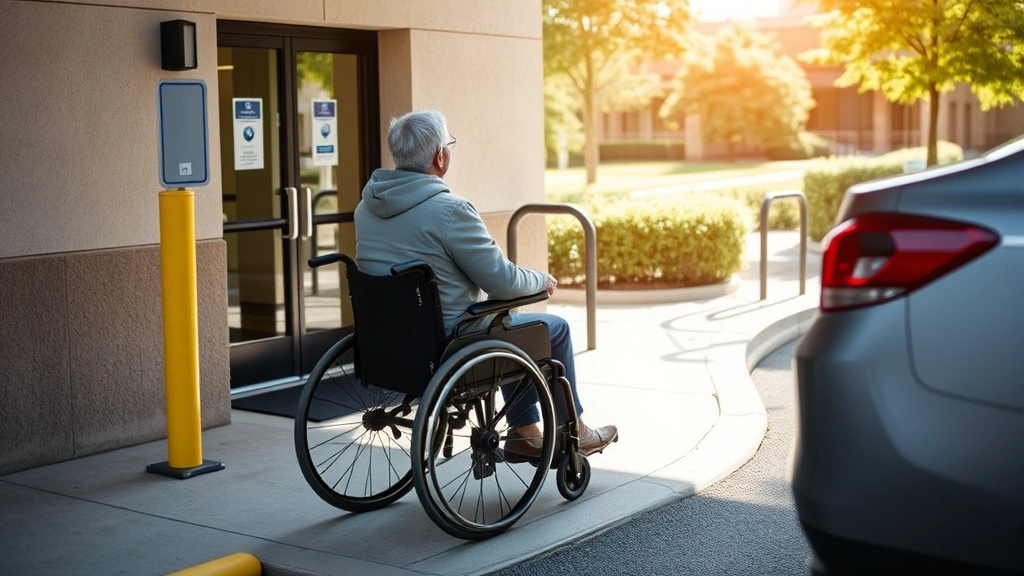
Accessible Parking Letter: Doctor’s Insight
Navigating mobility challenges requires more than determination—it requires proper documentation and legal recognition. An accessible parking letter from a qualified healthcare provider is a critical document that grants individuals with disabilities the right to use reserved accessible parking spaces. Whether you have a temporary injury, chronic pain condition, mobility impairment, or invisible disability, understanding how to obtain and use this documentation can significantly improve your daily quality of life and independence.
Reserved accessible parking spaces exist under the Americans with Disabilities Act (ADA) to ensure that individuals with mobility limitations can access essential services, employment, and community spaces without unnecessary physical strain. However, access to these spaces requires proper medical documentation—specifically, a letter from a licensed healthcare provider that confirms your functional limitations and medical need for proximity parking.
What Is an Accessible Parking Letter?
An accessible parking letter is a formal medical document written by a licensed healthcare provider that certifies your medical need for reserved accessible parking. This letter serves as the foundation for obtaining a handicap parking placard or license plate from your state’s Department of Motor Vehicles (DMV). The letter provides objective medical evidence that your condition significantly limits your ability to walk or ambulate, making proximity parking a necessary accommodation rather than a convenience.
The letter differs from general disability verification because it specifically addresses functional limitations related to parking and walking distances. A qualified doctor evaluates your mobility, endurance, pain levels, and overall functional capacity to determine whether standard parking distances would create an undue hardship or safety risk. The letter becomes the official record that justifies your use of accessible spaces and protects you legally if your placard is ever questioned.
Healthcare providers who can write these letters include medical doctors (MDs), doctors of osteopathy (DOs), nurse practitioners, physician assistants, and other licensed professionals within their scope of practice. The credibility and specificity of the letter directly impact the likelihood of DMV approval and the defensibility of your accommodation if challenged.
Medical Conditions Qualifying for Accessible Parking
A wide range of medical conditions qualify individuals for accessible parking accommodations. The key criterion is whether the condition substantially limits your ability to walk or causes significant pain, fatigue, or functional limitation when walking standard distances.
Mobility and Orthopedic Conditions: Arthritis, spinal cord injuries, cerebral palsy, multiple sclerosis, Parkinson’s disease, and post-surgical recovery all commonly qualify. These conditions affect joint function, muscle strength, and balance, making extended walking distances dangerous or impossible.
Cardiovascular and Respiratory Conditions: Heart disease, chronic obstructive pulmonary disease (COPD), asthma, and pulmonary hypertension limit oxygen availability during physical exertion. Walking long distances can trigger dangerous symptoms and requires proximity to building entrances.
Neurological Conditions: Stroke survivors, individuals with traumatic brain injuries, and those with progressive neurological diseases often experience mobility limitations, fatigue, or cognitive challenges that make navigating large parking areas unsafe.
Chronic Pain Conditions: Fibromyalgia, complex regional pain syndrome, severe migraines, and chronic back pain can make walking distances intolerable. The functional limitation is the pain response, not necessarily visible disability.
Invisible Disabilities: Conditions like lupus, ME/CFS (myalgic encephalomyelitis/chronic fatigue syndrome), and dysautonomia may not be visually apparent but cause profound functional limitations in ambulation and endurance. A comprehensive medical evaluation is essential for documenting these conditions.
Cancer and Treatment-Related Limitations: Active cancer treatment, post-surgical recovery, and cancer-related fatigue significantly impact mobility and warrant accessible parking accommodation.
How Doctors Assess Parking Accommodation Needs
A thorough medical assessment for accessible parking involves more than reviewing your diagnosis. Qualified healthcare providers conduct a functional evaluation to understand how your condition affects your real-world ability to use standard parking.
Functional Capacity Assessment: Your doctor evaluates how far you can safely walk without significant pain, fatigue, or symptom exacerbation. They assess whether you can walk 100 feet, 200 feet, or any distance before experiencing difficulty. This objective measurement forms the basis for determining parking need.
Symptom Review: Doctors examine which symptoms emerge during walking—pain, shortness of breath, dizziness, cognitive confusion, or other functional impairments. Understanding your symptom profile helps the doctor articulate why standard parking distances create undue hardship.
Assistive Device Use: Healthcare providers note whether you use mobility aids like canes, walkers, wheelchairs, or braces. The use of assistive devices provides objective evidence of functional limitation and often automatically qualifies you for accessible parking.
Treatment and Medication Review: Your doctor considers how your current treatments affect mobility and whether your condition is stable or progressive. This context helps justify the duration and necessity of the accommodation.
Medical History and Prognosis: Providers review your medical records to understand the trajectory of your condition and whether the parking accommodation is temporary or long-term. This information influences how your state DMV processes your application.
The Legal Framework Behind Accessible Parking
Accessible parking accommodations are grounded in federal ADA regulations and state-specific laws. Understanding the legal foundation helps you appreciate why medical documentation is non-negotiable and protects your rights.
The ADA requires businesses, government agencies, and public facilities to provide accessible parking spaces in appropriate quantities based on total parking capacity. These spaces must be properly marked, have accessible routes to building entrances, and be reserved exclusively for individuals with valid disabled parking permits or license plates.
HUD (Department of Housing and Urban Development) regulations extend accessibility requirements to residential properties, including apartment complexes and condominiums. Many landlords are required to provide accessible parking or allow residents to designate specific spaces.
State DMVs establish their own specific criteria for issuing handicap parking permits, but all require medical certification. Most states require the doctor’s letter to address specific functional limitations and confirm that the applicant meets state-defined criteria for disability. The letter becomes a legal document that justifies your use of protected spaces.
Misusing accessible parking spaces without proper documentation is illegal and subject to significant fines—often $250 to $500 per violation. Conversely, individuals with valid documentation have full legal protection to use these spaces without harassment or questioning.
How to Request an Accessible Parking Letter
Requesting an accessible parking letter requires a strategic approach that emphasizes the specific functional limitations related to parking and walking distances.
Schedule a Dedicated Appointment: Don’t try to address this during a routine visit. Request a specific appointment focused on disability documentation and accommodation needs. This ensures your doctor has adequate time to conduct a thorough assessment.
Prepare Documentation: Bring medical records, test results, medication lists, and notes about your functional limitations. Document specific examples of how your condition affects your ability to walk distances—pain levels after walking certain distances, frequency of symptom exacerbation, and how parking proximity affects your independence.
Be Specific About Parking Needs: Explain that you need documentation for a handicap parking permit or placard. Clarify whether you need temporary or permanent accommodation and whether your condition is stable or changing. This specificity helps your doctor write a more compelling and legally defensible letter.
Discuss Your State’s Requirements: Ask your doctor if they’re familiar with your state’s specific criteria for accessible parking permits. Some states have detailed requirements about functional limitations that must be addressed in the letter. Providing this information helps your doctor meet your state’s expectations.
Request a Signed, Dated Letter: Ensure the letter includes the doctor’s full credentials, contact information, medical license number, and signature. The letter should be on official letterhead and dated within the timeframe your state requires (typically 6-12 months before DMV submission).
What Should Be Included in Your Letter
A comprehensive accessible parking letter includes specific elements that satisfy DMV requirements and withstand potential scrutiny.
Provider Credentials: The letter must include the doctor’s full name, medical license number, specialty, clinic or hospital name, address, and contact information. This allows the DMV to verify the provider’s legitimacy if needed.
Patient Identification: Your full name, date of birth, and address should appear clearly in the letter for DMV matching purposes.
Medical Diagnosis: The letter should state your specific diagnosis or diagnoses that limit mobility. General statements like “patient has a disability” are insufficient; specific conditions provide credibility.
Functional Limitations: The letter must explicitly describe how your condition limits your ability to walk or ambulate. Examples include: “Patient can walk approximately 50 feet before experiencing severe pain,” or “Patient requires a wheelchair for distances exceeding 100 feet.”
Assistive Devices: If you use mobility aids, the letter should document this. Wheelchair use, cane dependence, or walker reliance provides objective evidence of functional limitation.
Duration of Need: The letter should specify whether the accommodation is temporary (with expected duration) or permanent. This helps the DMV determine permit validity periods.
Medical Certainty Statement: A clear statement that “It is my professional medical opinion that this patient requires accessible parking due to their documented mobility limitations” strengthens the letter’s legal defensibility.
Signature and Date: The letter must be signed and dated by the healthcare provider. Unsigned or undated letters will be rejected by most state DMVs.

Using Your Letter for Handicap Placard Applications
Once you have your accessible parking letter, the next step is submitting it to your state’s DMV or equivalent agency to obtain a handicap parking placard or license plate.
DMV Application Process: Each state has specific procedures, but most require you to complete an application form (often called an Application for Disabled Parking Permit), submit your doctor’s letter, and provide identification. Some states allow online applications; others require in-person visits.
Processing Timeline: Most states process applications within 2-4 weeks. During this time, the DMV may contact your doctor to verify the letter’s authenticity or request clarification about your functional limitations.
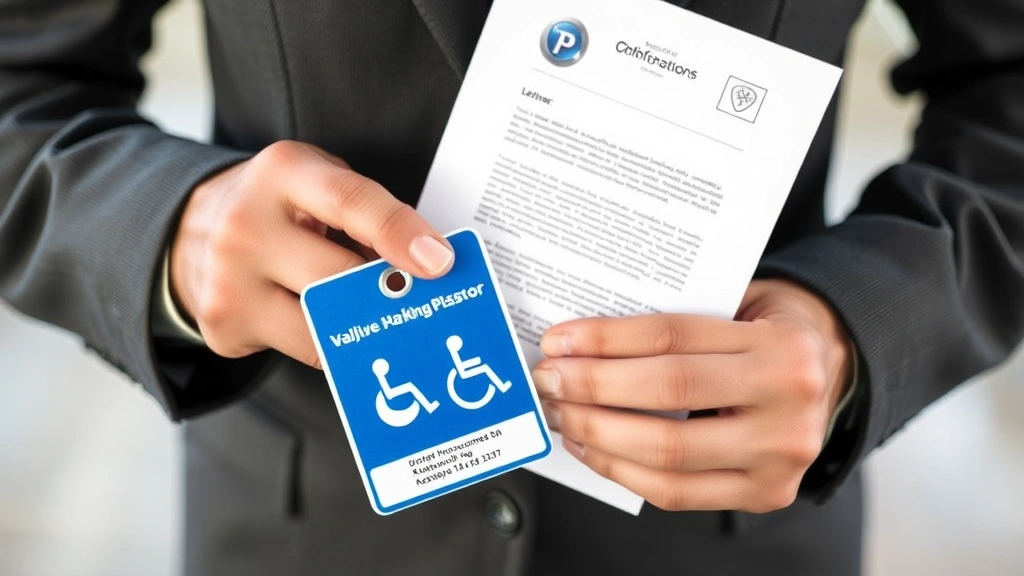
Placard or License Plate: States issue either a temporary placard (typically valid 2-6 months) or permanent placard (valid 4-5 years). Some individuals receive both a placard and special license plates. The placard must be displayed on your rearview mirror or dashboard when using accessible spaces.
Renewal Requirements: Permanent placards eventually expire and require renewal. Your doctor can write an updated letter confirming that your condition persists and continues to warrant accessible parking accommodation. Many doctors maintain renewal letters in your file for easy reissuance.
Portable Documentation: Keep a copy of your doctor’s letter in your vehicle. If questioned about your placard’s validity, you can provide the letter as evidence of medical necessity. This protects you from harassment or fines.
Common Challenges and Solutions
Obtaining an accessible parking letter can sometimes involve obstacles. Understanding common challenges helps you navigate them effectively.
Doctor Reluctance: Some doctors hesitate to write disability documentation letters, fearing legal liability or misuse. Solution: Explain that you’re seeking legitimate medical accommodation and that the letter serves an important legal function. If your primary care doctor refuses, consider consulting a specialist who knows your condition well or seeking evaluation from a disability medicine specialist.
Insufficient Detail: DMV rejection often occurs because the doctor’s letter lacks specific functional limitations. Solution: If your initial letter is rejected, contact your doctor and provide feedback about what information the DMV needs. Request a revised letter with more specific details about walking distances and symptom severity.
State-Specific Requirements: Some states have very particular criteria that must be addressed in the letter. Solution: Before your doctor’s appointment, obtain your state’s specific requirements from the DMV website. Bring these to your appointment and discuss them with your doctor to ensure the letter meets state standards.
Questioning or Harassment: Unfortunately, some individuals face skepticism when using accessible parking, especially if their disability is invisible. Solution: Keep your doctor’s letter accessible in your vehicle. Most people will accept the letter as evidence of medical necessity. If harassment persists, document incidents and contact your state’s disability rights organization or the Job Accommodation Network (JAN) for guidance.
Temporary vs. Permanent Designation: If your doctor writes a letter for temporary parking accommodation but your condition becomes permanent, you’ll need updated documentation. Solution: Maintain regular appointments with your doctor and discuss your condition’s trajectory. When appropriate, request an updated letter designating your accommodation as permanent.
For individuals managing multiple accommodations, such as those who also need housing accommodations like allergen-free housing, coordinating with your healthcare provider ensures all necessary documentation is comprehensive and consistent.
FAQ
How long is an accessible parking letter valid?
Most states require the doctor’s letter to be dated within 6-12 months of your DMV application. However, the letter’s validity doesn’t determine your placard’s validity—the DMV issues placards with their own expiration dates, typically 2-6 years depending on whether the permit is temporary or permanent.
Can I use my accessible parking placard in all states?
Yes. The ADA requires all states to honor handicap parking permits and license plates issued by other states. Your placard is valid nationwide at any location displaying the International Symbol of Accessibility.
What happens if I lose my placard?
Contact your state DMV to request a replacement. You typically don’t need a new doctor’s letter unless your original permit has expired. Replacement processing usually takes 2-4 weeks.
Can my condition change and affect my parking permit?
Yes. If your condition improves significantly, you may no longer qualify for accessible parking. Conversely, if your condition worsens, you can request permit renewal with updated medical documentation. Be honest with your doctor about functional changes so your documentation remains accurate.
What if my doctor refuses to write the letter?
If your primary care doctor declines, seek a second opinion from a specialist familiar with your condition or a disability medicine physician. You can also contact a telehealth disability evaluation service that specializes in accommodation documentation, such as Arvix Health, which connects patients with qualified healthcare providers experienced in writing accommodation letters.
Is accessible parking documentation the same as a service animal letter?
No. A service animal verification letter documents your need for a trained service animal for a specific disability. Accessible parking documentation addresses your functional limitations related to walking and parking distances. These are separate accommodations that may both apply to the same individual.
Can I appeal if my DMV application is denied?
Yes. Most states have an appeals process. If denied, request written explanation of why your application was rejected. Common reasons include incomplete information, insufficient detail about functional limitations, or an expired doctor’s letter. Address these issues in your appeal and resubmit with an updated letter if necessary.
Do I need to disclose my disability to parking attendants?
No. Your placard or license plate is sufficient proof of authorization. You’re not required to explain your disability or show your doctor’s letter to parking attendants or other individuals. Your medical information is private, and your valid permit is your legal authorization.