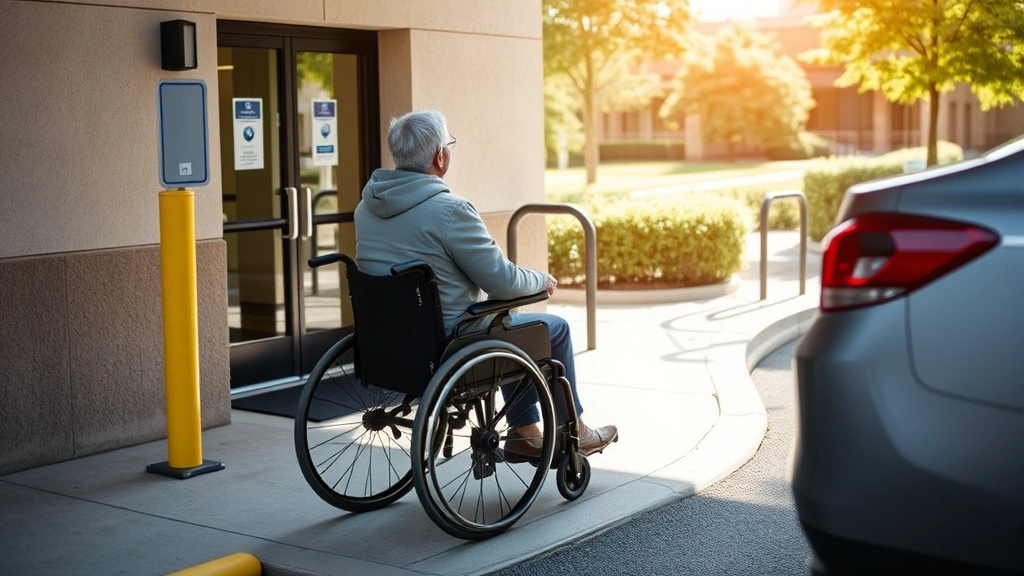
Doctor’s Role in Handicap Placard Certification
A handicap placard is a critical mobility accommodation that allows individuals with disabilities to access reserved parking spaces, reducing physical strain and enabling greater independence. However, obtaining one requires more than a simple request—it demands professional medical documentation that verifies your functional limitations. Your doctor plays an essential role in this certification process, serving as the authoritative voice that confirms your disability meets state and federal standards.
Understanding what your physician needs to document, how to prepare for the certification conversation, and what comes after approval can streamline the entire process. This guide walks you through the doctor’s responsibilities, the medical evidence required, and how to work effectively with your healthcare provider to secure the placard you need.
Understanding Handicap Placard Requirements
Handicap placards, also called disabled parking permits, are issued by state motor vehicle departments to individuals whose disabilities significantly impair mobility or walking ability. These placards grant access to designated accessible parking spaces, reducing the distance individuals must walk and minimizing physical exertion during essential activities like medical appointments, grocery shopping, or workplace visits.
The criteria for placard eligibility vary slightly by state, but all jurisdictions require medical certification. Generally, you qualify if you have a condition that:
- Severely limits your ability to walk 200 feet without stopping to rest
- Prevents you from walking without assistance or a mobility device
- Requires you to use supplemental oxygen or cardiac monitoring
- Causes severe limitation due to an arthritic, neurological, or orthopedic condition
- Results from a terminal illness or permanent disability
Your doctor serves as the gatekeeper for this certification. Without their professional assessment and signature on official state forms, you cannot legally obtain a placard. This isn’t bureaucratic gatekeeping—it’s a necessary safeguard to ensure placards go to individuals who genuinely need them and to prevent fraud that would reduce availability for those with legitimate disabilities.
The role of functional limitation verification in the certification process cannot be overstated. Your doctor must translate your medical condition into specific functional limitations that directly correspond to parking accessibility needs.
What Doctors Must Verify for Certification
When certifying you for a handicap placard, your physician must verify several key elements. This goes beyond simply confirming you have a medical diagnosis—it requires documenting how your condition affects your daily mobility and walking capacity.
Diagnosis and Medical History
Your doctor will document your primary diagnosis and relevant medical history. This establishes the medical foundation for your disability claim. Conditions commonly qualifying for placards include arthritis, cerebral palsy, cystic fibrosis, diabetes with complications, heart disease, lung disease, multiple sclerosis, muscular dystrophy, orthopedic injuries, Parkinson’s disease, spinal cord injuries, and stroke with residual effects.
Functional Limitations
The critical piece is functional limitation assessment. Your doctor must specifically describe how your condition limits your walking ability. Rather than saying “patient has arthritis,” they document “patient experiences severe pain with ambulation, can walk approximately 50 feet before requiring rest, and uses a cane for stability.” This specificity is what qualifies you for a placard.
Permanence or Expected Duration
Doctors must indicate whether your condition is permanent or temporary. Temporary placards are issued for conditions expected to last fewer than six months (post-surgical recovery, acute injury). Permanent placards apply to chronic or lifelong disabilities. This distinction affects placard duration and renewal requirements.
Mobility Device Use
If you use a wheelchair, walker, crutches, cane, or other mobility device, your doctor documents this. The use of assistive devices strengthens your placard application because it provides objective evidence of mobility limitation. General disability confirmation often includes mobility device documentation.
Need for Accessible Parking
Your physician must connect your functional limitations to the specific need for accessible parking. They explain why reduced walking distance and accessible parking spaces are medical necessities rather than conveniences. This is the bridge between diagnosis and placard eligibility.
Medical Documentation Standards
State motor vehicle departments and healthcare systems maintain specific standards for handicap placard certification documentation. Understanding these standards helps you and your doctor prepare appropriate paperwork.
Official State Forms
Most states provide specific certification forms that doctors must complete. These forms are designed by motor vehicle departments in consultation with medical professionals to ensure consistency and prevent fraud. Your doctor cannot simply write a letter—they must complete the official form, which typically includes:
- Patient identifying information
- Diagnosis or description of disability
- Specific functional limitations related to walking
- Expected duration of the disability
- Doctor’s signature, credentials, and license number
- Date of the medical evaluation
Clinical Evidence
Your doctor should base their certification on recent clinical evaluation. Ideally, they’ve seen you within the past six months and have documented observations in your medical record. This might include gait assessment, range of motion testing, functional mobility evaluation, or cardiopulmonary assessment depending on your condition.
Specificity and Detail
Vague certifications are frequently rejected. “Patient is disabled” doesn’t meet standards. “Patient has severe osteoarthritis of both knees, walks with a walker, experiences significant pain after 100 feet of ambulation, and requires rest periods during daily activities” provides the specificity needed for approval.
Medical License and Credentials
Your doctor must be appropriately licensed and in good standing. Most states accept MDs, DOs, nurse practitioners, and physician assistants. Some states restrict certification to MDs and DOs only. Your doctor’s license number must be included on the form for verification purposes.

How to Request Certification from Your Doctor
Requesting a handicap placard certification requires preparation and clear communication with your healthcare provider. Here’s how to approach this conversation effectively.
Schedule a Dedicated Appointment
Don’t try to squeeze this request into a routine visit. Schedule an appointment specifically to discuss mobility limitations and placard certification. This gives your doctor adequate time to perform necessary assessments and complete documentation thoroughly. During a rushed visit, your doctor may feel unable to provide the detailed evaluation the certification requires.
Bring Documentation of Your Limitations
Compile evidence of your mobility challenges. This might include:
- Your own notes about walking distance and pain levels
- Previous physical therapy or rehabilitation reports
- Imaging results (X-rays, MRIs) showing structural damage
- Medication lists showing pain or mobility-related prescriptions
- Mobility device receipts or prescriptions
- Diary entries documenting daily limitations
Clearly Articulate How Your Condition Affects Parking
Explain specifically why accessible parking matters to you. Don’t just say “I have trouble walking.” Instead, describe scenarios: “Walking more than 100 feet causes severe pain in my knees, making it difficult to complete grocery shopping. Accessible parking near store entrances would reduce pain and allow me to maintain independence in daily activities.” This helps your doctor understand the functional impact and document it appropriately.
Ask for the Official State Form
Request that your doctor complete your state’s official handicap placard certification form. Ask when you can expect it to be completed and how you’ll receive it. Some practices mail forms directly to motor vehicle departments; others provide copies to patients. Clarify the process to avoid delays.
Discuss Placard Duration
Ask whether your doctor will recommend a permanent or temporary placard. If your condition is lifelong, permanent is appropriate. If you’re recovering from surgery or acute injury, temporary may apply. Understanding this helps you plan for renewals and future applications.
When seeking accommodations beyond parking, explore options like probation accommodation letters if applicable, or remote work accommodations for employment situations where mobility is challenging.
State-Specific Considerations
While federal standards provide a foundation, each state manages its own handicap placard program with specific requirements and procedures. Understanding your state’s particular rules ensures your doctor provides appropriate certification.
Eligibility Criteria Variations
Some states are more restrictive than others. A few states require that you cannot walk more than 50 feet; others allow up to 200 feet. Some automatically qualify individuals using wheelchairs; others require individual assessment. Your doctor needs to know your state’s specific criteria to certify appropriately.
Medical Professional Requirements
States differ in who can certify. Some accept nurse practitioners and physician assistants; others require MDs or DOs only. Confirm your state’s requirements before requesting certification from a non-physician clinician.
Renewal Timelines
Permanent placards in some states last indefinitely; others require renewal every 4-6 years. Your doctor should indicate whether your condition warrants permanent certification or if periodic reassessment is appropriate.
Application Process
Some states allow online applications with uploaded medical forms; others require in-person visits to motor vehicle departments. Some issue digital placards; others issue physical hanging permits. Understanding your state’s process helps you know what to expect after your doctor completes certification.
For additional guidance on state regulations, visit your state’s motor vehicle department website or contact the ADA.gov resource center for disability rights information.
Common Challenges and Solutions
Doctor Refuses to Certify
If your doctor believes your condition doesn’t meet placard criteria, you have options. First, ask them to explain their reasoning. Sometimes additional testing or a specialist evaluation can provide evidence supporting certification. If you disagree with their assessment, you can seek a second opinion from another physician. Some states allow appeals of denied placard applications with additional medical evidence.
Incomplete or Vague Certification
If your doctor’s certification is rejected for lacking specificity, contact their office and explain what information the motor vehicle department needs. Most doctors will revise documentation when given clear feedback about deficiencies. Bring specific examples of what additional detail is needed.
Delayed Certification
Medical offices can be slow with administrative tasks. If you haven’t received your certification within two weeks, call to follow up. Ask whether the form has been completed and how you’ll receive it. Politely emphasize the importance of the placard to your mobility and independence.
Recent Diagnosis or New Doctor
If your condition was recently diagnosed, your doctor may want to observe how you respond to treatment before certifying. If you’ve recently switched doctors, the new physician may need time to review your medical history and perform their own assessment. Be patient but persistent in these situations.
Insurance or Cost Barriers
Most insurance plans cover the office visit for placard certification as a standard medical evaluation. However, if cost is a concern, ask about sliding scale fees or community health center options. Some states offer fee waivers for placard applications for low-income individuals.
If you’re facing multiple accommodation needs, consider exploring attendance flexibility options or reduced workload accommodations that might complement your placard in various life domains.
FAQ
Can I get a handicap placard without a doctor’s certification?
No. All states legally require medical certification from a licensed healthcare provider. There is no way to obtain a legitimate placard without this documentation. Any service claiming to provide placards without medical verification is fraudulent.
How long does it take to get a doctor’s handicap placard certification?
If you schedule a dedicated appointment, your doctor can often complete certification during that visit. However, processing by the motor vehicle department typically takes 2-4 weeks. Request expedited processing if you have immediate mobility needs.
Does my doctor have to complete the official state form, or can they write a letter instead?
Most states require the official form. While some may accept a physician’s letter with required information, it’s best to use your state’s official form to ensure acceptance. Your doctor’s office can obtain the correct form from your state motor vehicle department.
What if my condition is temporary, like post-surgical recovery?
Your doctor can certify you for a temporary placard, typically lasting 3-6 months. When the temporary period expires, you can apply for renewal if your recovery takes longer than expected, or the placard simply expires if you’ve recovered sufficiently.
Can a nurse practitioner or physician assistant certify me for a handicap placard?
This depends on your state. Many states accept NPs and PAs; some require an MD or DO. Contact your state motor vehicle department to confirm who can provide certification in your jurisdiction.
What happens if my doctor’s certification is incomplete or rejected?
The motor vehicle department will notify you of deficiencies. Contact your doctor’s office with the specific information needed. Most doctors will revise documentation promptly once they understand what’s missing. This is a common situation and is easily resolved.
Is the handicap placard certification covered by insurance?
The office visit for evaluation and certification is typically covered as a standard medical appointment. However, some insurance plans may classify it differently. Call your insurance provider before the appointment if you want to confirm coverage.
Can I use my handicap placard in all states?
Yes. The ADA requires all states to honor handicap placards issued by other states. Your placard is valid nationwide, though specific parking regulations may vary slightly by location.
What if I disagree with my doctor’s decision not to certify me?
You can seek a second opinion from another physician. You can also request that your doctor document their reasons for denial in writing. Some states allow appeals of denied applications with additional medical evidence. Contact your state motor vehicle department about appeals procedures.
How often do I need to renew my handicap placard certification?
This depends on whether you have a permanent or temporary placard and your state’s specific requirements. Permanent placards typically last 4-6 years or indefinitely, depending on the state. Temporary placards expire after the specified period. Your doctor will indicate the appropriate duration when certifying you.