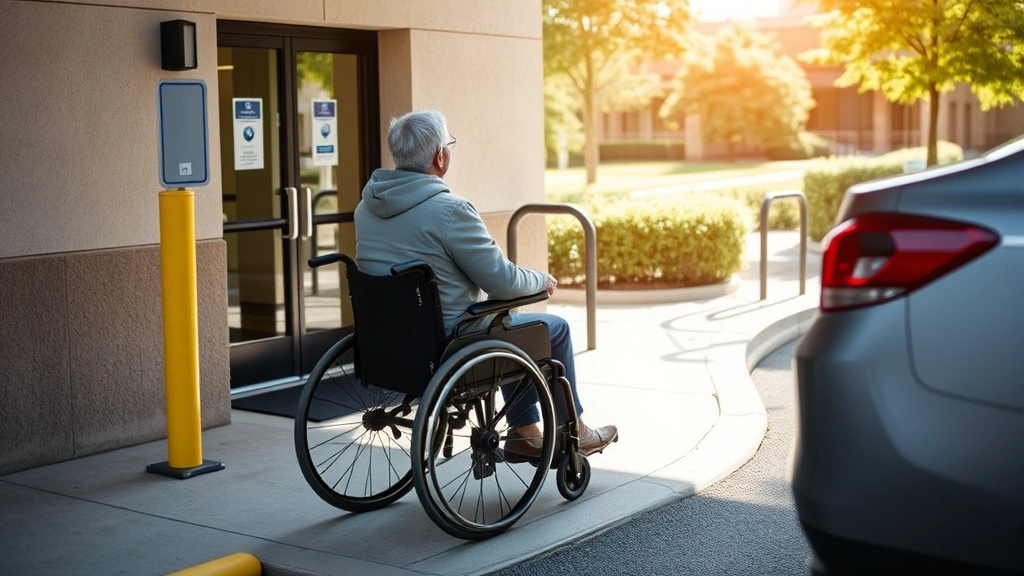
Disability Parking Permit: Doctor’s Approval Guide
A disability parking permit is one of the most practical accommodations available to people with mobility challenges, chronic pain, respiratory conditions, and other disabilities that affect walking or standing. Unlike many other accommodations that require extensive documentation or workplace negotiation, obtaining a disability parking permit hinges on a single critical document: your doctor’s certification. This medical letter serves as the official gateway to accessible parking spaces, reducing physical strain and enabling greater independence.
The process of securing doctor’s approval for a disability parking permit involves understanding what your physician needs to evaluate, what documentation they must provide, and how to present your medical condition in the clearest way possible. Whether you have arthritis, cardiac disease, pulmonary conditions, neurological disorders, or invisible disabilities, your doctor plays the essential role in determining your eligibility. This guide walks you through every step, from preparing for your appointment to submitting your completed permit application to your state’s Department of Motor Vehicles (DMV).
Navigating the medical certification process doesn’t have to be complicated. With the right preparation and understanding of what healthcare providers are evaluating, you can move through this process efficiently and get the accommodation you need.
Understanding Disability Parking Permit Requirements
Disability parking permits are governed by state and federal regulations, with the Americans with Disabilities Act (ADA) providing the foundational framework. Each state’s Department of Motor Vehicles maintains specific requirements for who qualifies and what documentation is needed. However, all states require physician certification as the core requirement—you cannot obtain a permit without a doctor’s written approval.
The purpose of the disability parking permit is to provide closer parking spaces to building entrances, reducing the distance individuals must walk or stand. This accommodation is essential for people whose disabilities significantly impact mobility, endurance, or pain levels. The permit is not a judgment about your overall health or capabilities; it’s recognition that your specific medical condition creates functional limitations that make standard parking distances challenging.
Most states allow permits for people who: have a permanent or temporary disability affecting mobility; use mobility aids such as wheelchairs, walkers, or canes; have severe respiratory or cardiac conditions; experience significant pain with walking; or have other conditions that substantially limit walking. The key phrase is “substantially limit”—your condition must create a genuine functional barrier, not merely cause inconvenience.
Understanding your state’s specific criteria is important before scheduling your doctor’s appointment. Visit your state’s DMV website to review the official requirements and obtain the certification form your doctor must complete. This form varies by state but typically asks your physician to confirm the diagnosis, describe functional limitations, and estimate the duration of the disability.
Medical Conditions That Qualify
Disability parking permits are available for a wide range of medical conditions. The common thread is not the diagnosis itself but the functional impact on mobility. Your doctor will evaluate whether your condition substantially limits your ability to walk or stand.
Permanent mobility conditions that frequently qualify include arthritis, especially when affecting the knees, hips, or spine; spinal cord injuries; cerebral palsy; multiple sclerosis; Parkinson’s disease; severe osteoporosis; and limb loss or congenital limb differences. These conditions typically result in permanent permits that may be renewed every 4-8 years depending on state regulations.
Cardiac and pulmonary conditions also commonly qualify. Chronic obstructive pulmonary disease (COPD), severe asthma, pulmonary hypertension, heart failure, and post-cardiac event recovery can all substantially limit walking capacity. Your doctor will assess how far you can walk before experiencing shortness of breath, chest pain, or severe fatigue.
Neurological conditions such as Parkinson’s disease, multiple sclerosis, amyotrophic lateral sclerosis (ALS), and post-stroke effects frequently qualify. These conditions may affect balance, coordination, or pain levels, all of which impact safe walking.
Chronic pain conditions including fibromyalgia, chronic regional pain syndrome, severe arthritis, and back injuries can qualify if they substantially limit walking. Your doctor must document that walking standard parking distances causes significant pain or functional deterioration.
Temporary disabilities also qualify for permits. Post-surgical recovery, severe sprains or fractures, chemotherapy side effects, or temporary mobility restrictions can warrant temporary permits lasting 3-6 months. These permits are particularly valuable during rehabilitation and recovery periods.
Invisible disabilities like autoimmune conditions, long COVID, severe fatigue disorders, and anxiety disorders can qualify if they substantially limit walking. Your doctor’s documentation of functional limitations is especially important here, as invisible disabilities require clear medical explanation of why walking is limited.
Preparing for Your Doctor’s Appointment
Success in obtaining doctor approval for a disability parking permit begins with thorough preparation. Your physician needs specific information to make an informed certification, and providing this information clearly and completely increases the likelihood of approval.
Gather your medical records. Before your appointment, compile relevant medical documentation including recent test results, imaging studies, specialist reports, and medication lists. If your disability parking permit request is based on a recent diagnosis or change in condition, bring documentation of this. Your doctor will reference these records when completing the certification form.
Obtain the correct state form. Download your state’s official disability parking permit physician certification form from your state DMV website. Bring this form to your appointment so your doctor can complete it accurately. Using the official form ensures it meets all regulatory requirements and will not be rejected by the DMV.
Write a clear summary of your functional limitations. Before your appointment, write a brief description of how your medical condition affects your ability to walk or stand. For example: “I can walk approximately 50 feet before experiencing severe pain that limits my mobility” or “I become short of breath with minimal exertion and require frequent rest periods.” This summary helps your doctor understand the specific functional impact they need to document.
Document your current walking capacity. Be prepared to describe realistically how far you can walk, how long you can stand, what pain or symptoms you experience, and what mobility aids you use. Your doctor will ask these questions, and accurate answers help them document the functional limitation clearly.
List any mobility aids you use. Bring documentation or be prepared to describe any assistive devices you use, such as wheelchairs, walkers, canes, or braces. This information helps establish the severity of your functional limitation.
Prepare questions about the permit duration. Ask your doctor whether your disability is likely to be permanent or temporary, and discuss how often you should plan to renew the permit. This helps you understand your long-term accommodation needs.
Discuss any recent changes in your condition. If your functional limitations have recently worsened, stabilized, or improved, mention this. Your doctor needs current information to provide accurate certification.
What Your Doctor Must Document
Your physician’s certification is the foundation of your disability parking permit application. Understanding what your doctor must document helps you provide the information they need and ensures the certification meets DMV requirements.
Medical diagnosis. Your doctor must document your specific medical condition or conditions. This is typically straightforward—for example, “Rheumatoid arthritis affecting bilateral knees and hips” or “Chronic obstructive pulmonary disease, moderate severity.” The diagnosis establishes the medical basis for functional limitations.
Functional limitations related to mobility. This is the critical element. Your doctor must describe specifically how your condition limits your ability to walk or stand. Rather than general statements, effective documentation includes measurable functional information such as: “Patient reports ability to walk approximately 100 feet before experiencing severe pain requiring rest” or “Patient experiences dyspnea with minimal exertion and requires frequent rest periods when walking.”
Duration of the disability. Your physician must indicate whether the disability is permanent or temporary. For temporary disabilities, they should estimate the expected duration—for example, “Expected recovery period of 6-8 weeks following surgical repair.” For permanent disabilities, they may note “Permanent disability with progressive course” or “Permanent disability, stable.”
Relevant medical history. Your doctor should reference any relevant tests, imaging, or specialist evaluations that support the functional limitation. For example: “Recent MRI shows significant degenerative disc disease at L4-L5 and L5-S1 levels” or “Recent pulmonary function testing shows FEV1 of 35% predicted.” This documentation strengthens the medical basis of the certification.
Current treatment and management. Your doctor should note current medications, therapies, or interventions being used to manage your condition. This demonstrates ongoing medical management and helps explain why functional limitations persist despite treatment.
Physician signature and credentials. The form must be signed by a licensed physician, nurse practitioner, or physician assistant in many states. Your doctor’s credentials and license number may be required. Ensure your healthcare provider is authorized to certify disability parking permits in your state.
Learn more about how to get disability documentation that meets official requirements.
The Doctor’s Certification Form
Each state’s DMV maintains a specific physician certification form for disability parking permits. This form is the official document that translates your medical condition into an accommodation request.
Standard form components. Most state forms include sections for: patient identifying information (name, date of birth, DMV ID number if available); physician information (name, license number, contact information); medical diagnosis; functional limitations; disability duration; and physician signature and date. Some states require the form to be notarized; others do not.
Completing the form accurately. Your doctor should complete all required fields legibly and thoroughly. Incomplete or vague forms are frequently rejected by the DMV, requiring resubmission and delaying your permit. Encourage your doctor to provide specific, measurable functional information rather than general statements.
Common form rejection reasons. Forms are often rejected because: the physician is not properly licensed or credentialed in that state; required fields are left blank; the functional limitation description is too vague; the physician signature is missing or illegible; or the form is outdated. Bringing the current official form to your appointment helps avoid these issues.
Form submission options. Some states allow physicians to submit forms electronically; others require mailed or in-person submission. Ask your doctor’s office about their submission process. Some practices may charge a small fee for completing disability documentation; confirm this before your appointment.
Timeline expectations. Once your doctor completes the form, ask how long it will take for their office to submit it or provide it to you. Some practices submit immediately; others may take several days. Plan accordingly if you need the permit urgently.
Understanding the process of doctor disability confirmation helps you navigate the certification requirements more effectively.
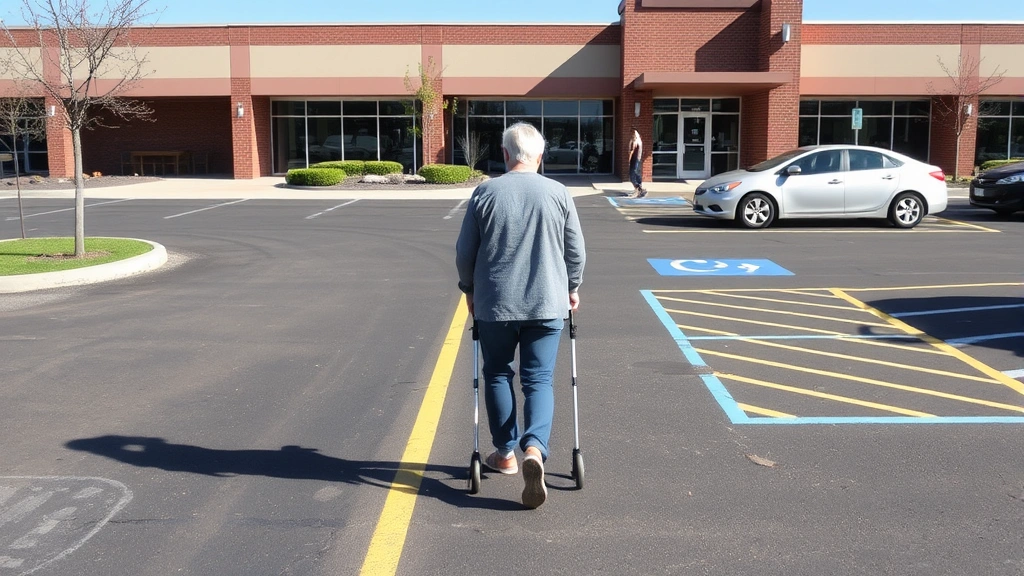
After You Receive Doctor Approval
Once your doctor has completed and signed the certification form, you’re ready to proceed with your DMV application. This stage involves submitting your completed form along with other required documents to your state’s Department of Motor Vehicles.
Required documentation. In addition to your physician’s certification, the DMV typically requires: a completed disability parking permit application form; proof of identity (driver’s license or state ID); proof of residency; and sometimes proof of vehicle registration. Some states also require proof of citizenship or legal residency. Check your state DMV website for the complete list.
Application submission methods. Most states allow you to submit your application online through the DMV website, by mail, or in person at a DMV office. Online submission is typically fastest. Keep copies of all submitted documents for your records.
Processing timeline. Most states process disability parking permit applications within 5-10 business days if all documentation is complete and correct. Some states offer expedited processing for an additional fee. Your state DMV website will provide specific timeline information.
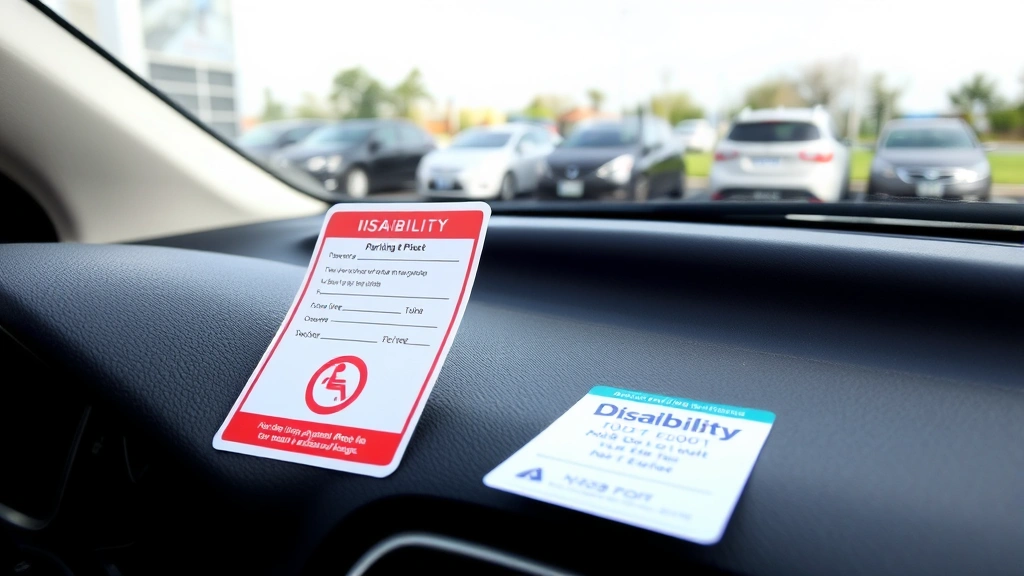
Permit receipt and use. Once approved, you’ll receive your disability parking permit, which displays your name, vehicle information, permit number, and expiration date. Some states issue hanging placards; others issue windshield decals or license plates. Use your permit only when you or an authorized passenger with a disability is in the vehicle. Misuse of disability permits is illegal and subject to fines.
Temporary vs. permanent permits. Temporary permits typically last 3-6 months and require renewal with updated doctor certification. Permanent permits usually last 4-8 years and require periodic renewal. Your physician’s certification will indicate which type you’re eligible for.
Multi-state use. If you travel to other states, your home state’s disability parking permit is recognized in all other states under the ADA. You can use your permit for accessible parking nationwide.
Learn more about disability documentation for various purposes including parking permits.
Renewing Your Permit
Disability parking permits have expiration dates, requiring periodic renewal. The renewal process is similar to the initial application but may be streamlined if your condition hasn’t changed significantly.
Renewal timeline. Most states notify permit holders 30-60 days before expiration. Watch for renewal notices from your state DMV. If your condition has remained stable, renewal is typically straightforward. If your condition has changed, you may need updated physician certification.
Renewal with unchanged condition. If your disability remains stable and your doctor confirms this, many states allow simplified renewal without extensive new documentation. You’ll complete a renewal application and provide updated physician confirmation, but the process is faster than initial certification.
Renewal with changed condition. If your condition has improved significantly, worsened, or changed in character, you’ll need updated physician certification describing current functional limitations. Your doctor should reassess your walking capacity and mobility restrictions to provide current documentation.
Temporary permit conversions. If you initially received a temporary permit and your condition has become permanent, you can apply for a permanent permit with updated physician certification. Conversely, if a permanent condition has improved significantly, your doctor may recommend permit modification or discontinuation.
Maintaining documentation. Keep copies of all renewal applications and physician certifications. These documents establish the continuity of your disability and can be helpful if your permit is ever questioned or if you need to apply for other disability accommodations.
Proactive renewal. Don’t wait until your permit expires. Begin the renewal process 60-90 days before expiration to ensure uninterrupted access to accessible parking. If your doctor needs time to complete renewal certification, early initiation prevents gaps in your accommodation.
Online renewal options. Many states now offer online permit renewal, which is faster and more convenient than mail-based renewal. Check your state DMV website to see if this option is available.
FAQ
What if my doctor refuses to certify that I need a disability parking permit?
If your doctor believes your functional limitations don’t warrant a permit, you have several options. First, ask your doctor to explain their reasoning. Sometimes miscommunication about functional impact can be clarified. Second, seek a second opinion from another physician, such as a specialist in your condition. Third, consider whether your condition truly limits walking substantially—the permit is designed for genuine functional limitations, not for convenience. If you believe your doctor is being unnecessarily restrictive, you can appeal to the DMV, though this is rarely successful.
Can I get a disability parking permit if I have an invisible disability?
Absolutely. Invisible disabilities including chronic pain, autoimmune conditions, cardiac disease, pulmonary conditions, neurological disorders, and mental health conditions can all qualify for disability parking permits if they substantially limit walking. Your doctor’s documentation of functional limitations is crucial for invisible disabilities. Be specific about how your condition limits walking—for example, “Pain increases significantly after walking 100 feet” or “Experiences severe fatigue limiting walking capacity.” Clear functional documentation helps overcome any bias against invisible disabilities.
How long does the doctor certification process take?
The time required depends on your doctor’s office. Some practices complete certifications immediately during your appointment. Others may need a few days to complete and submit the form. Call your doctor’s office in advance to ask their typical timeline. If you need the permit urgently, mention this when scheduling your appointment. Some practices offer expedited services for disability documentation.
Will my disability parking permit be recognized if I travel out of state?
Yes. Under the Americans with Disabilities Act, disability parking permits issued by any state are recognized nationwide. You can use your home state permit for accessible parking in all other states. This reciprocity ensures that people with disabilities can access accommodations while traveling.
What happens if my condition improves and I no longer need the permit?
If your condition improves significantly, you can voluntarily surrender your permit to your state DMV. Some people choose to keep their permits even if they don’t use them regularly, in case their condition worsens. There’s no requirement to surrender an unused permit. However, if your condition dramatically improves, surrendering the permit allows it to be available for someone else who needs it.
Can I use someone else’s disability parking permit?
No. Disability permits are issued to specific individuals and cannot be transferred or used by other people. Using someone else’s permit is permit fraud and is subject to significant fines and potential criminal charges. Each person with a disability should apply for their own permit using their own physician certification.
What if I’m denied a disability parking permit?
If your application is denied, the DMV should provide a reason. Common reasons include: incomplete documentation, physician not properly credentialed, or insufficient documentation of functional limitation. Review the denial reason carefully. If you believe it was issued in error, you can appeal the decision. Contact your state DMV for the appeals process. You may also seek physician recertification with more detailed functional limitation documentation if the original certification was vague.
Do I need a disability parking permit if I use a wheelchair?
If you use a wheelchair, you almost certainly qualify for a disability parking permit, as wheelchair use inherently indicates mobility limitations. However, you still need physician certification. The process is the same—your doctor documents that you use a wheelchair and describes your functional mobility limitations. Many people who use wheelchairs find the permit essential for accessing parking near building entrances.