
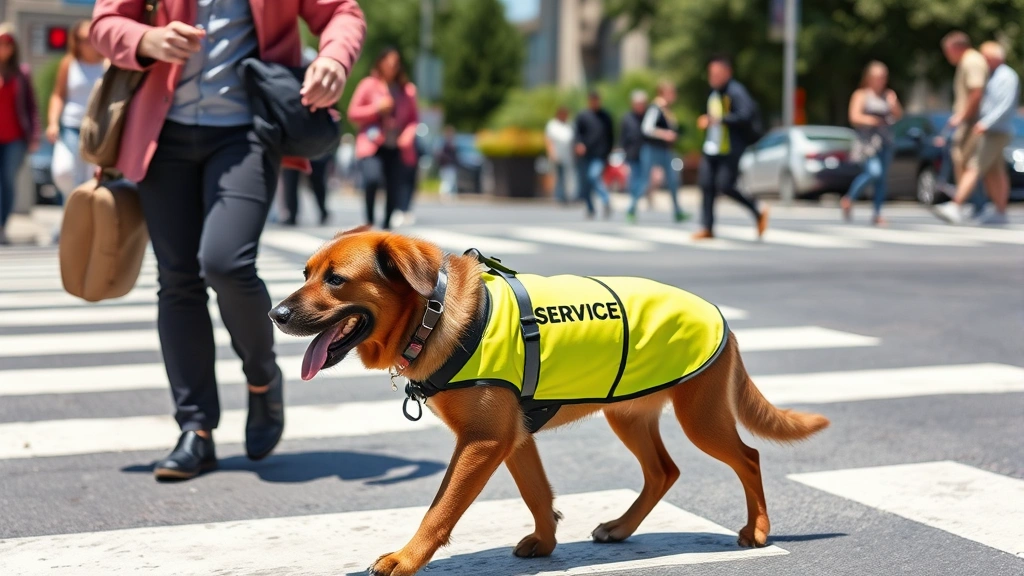
ADA Service Animal Documentation: Expert Insights
Service animals play a transformative role in the lives of individuals with disabilities, providing critical assistance that enables independence, safety, and access to public spaces. However, understanding what constitutes proper ADA service animal documentation remains confusing for many people—both handlers and organizations required to accommodate them. The Americans with Disabilities Act (ADA) establishes clear legal standards for service animals, yet misconceptions persist about documentation requirements, handler responsibilities, and organizational obligations.
This comprehensive guide explores the nuances of ADA-compliant service animal documentation, the distinction between service animals and emotional support animals, legal requirements for handlers and businesses, and practical steps for obtaining proper verification. Whether you’re a service animal handler seeking clarity on your rights, a business owner learning compliance obligations, or an organization developing accommodation policies, this resource provides expert insights grounded in ADA law and real-world application.

Understanding ADA Service Animals vs. Emotional Support Animals
One of the most critical distinctions in disability accommodation law concerns the difference between service animals and emotional support animals (ESAs). Many people use these terms interchangeably, but the ADA draws a sharp legal line between them—and this distinction directly impacts documentation requirements.
Service animals, under the ADA, are dogs (and in limited cases, miniature horses) that have been individually trained to perform specific tasks or do work directly related to a person’s disability. These tasks must be tied to the handler’s functional limitations. Examples include guiding individuals who are blind, alerting those who are deaf, pulling wheelchairs, alerting to seizures, reminding someone to take medication, or calming someone with PTSD during anxiety episodes. The critical element is that the animal performs trained work or tasks—not merely the comfort of the animal’s presence.
Emotional support animals, by contrast, provide comfort through companionship and emotional presence rather than trained task performance. While ESAs are protected under the Fair Housing Act (FHA) and may qualify for housing accommodations, they are not covered by the ADA’s public access provisions. An emotional support animal letter online documents an animal’s role in housing contexts but does not grant public access rights under the ADA.
Understanding this distinction is essential because it determines what documentation is legally required, where the animal has access rights, and what verification organizations can appropriately request. Service animals receive broader public access protections precisely because they perform trained work, whereas ESAs receive housing protections because of their therapeutic role in residential settings.

Legal Documentation Requirements Under the ADA
A fundamental principle of ADA service animal law is that handlers are not required to carry special documentation or identification for their service animal to be recognized. The ADA does not mandate service animal registries, official certificates, or government-issued documentation. This often surprises both handlers and business owners, but it reflects the law’s intent: to prevent discrimination based on disability while maintaining reasonable verification standards.
According to the ADA official guidance, businesses and public entities may ask only two questions when a service animal’s role is not immediately apparent:
- Is the dog a service animal required because of a disability?
- What work or task has the dog been trained to perform?
Businesses and organizations may not ask for documentation, proof of training, proof of certification, or identification cards. They may not require medical records, disability verification, or handler credentials. This is a critical protection against discrimination—it prevents gatekeeping based on the “right” paperwork rather than the animal’s actual function.
However, this does not mean documentation is irrelevant. Documentation becomes important in specific contexts: when handlers need to clarify their animal’s status with landlords, when traveling by air (which has additional TSA and airline requirements), when requesting housing accommodations under the Fair Housing Act, or when seeking to resolve disputes about public access. In these situations, general disability confirmation letters and service animal verification documents provide evidence of the disability and the animal’s trained role.
The ADA’s approach reflects a balance: handlers retain privacy and are protected from intrusive questioning in everyday public access scenarios, yet documentation remains available when needed for formal accommodations or disputes.
What Constitutes Valid Service Animal Verification
When documentation is necessary, what makes it valid and legally defensible? Valid service animal documentation should include several key elements, even though the ADA does not mandate specific formats.
Legitimate service animal documentation typically includes:
- Healthcare provider assessment: A statement from a treating healthcare provider (physician, psychiatrist, psychologist, or other licensed professional) confirming the handler’s disability and functional limitations
- Clear task description: Specific, detailed description of the trained work or tasks the animal performs in response to the handler’s disability—not vague references to “emotional support” or “comfort”
- Task-disability connection: Clear explanation of how the trained tasks mitigate the handler’s disability symptoms or limitations
- Training information: Documentation that the animal has received training for these specific tasks (though not necessarily from a certified organization—many legitimate service animals are trained by handlers or trainers without formal credentials)
- Handler information: Contact information and identifying details for the handler
- Professional credentials: The healthcare provider’s license number, contact information, and professional credentials
It is important to note that no federal service dog registry or certification is required or recognized by the ADA. Many online registries exist, but they provide no legal advantage and may indicate a scam if they promise guaranteed public access rights. Legitimate documentation comes from treating healthcare providers who can attest to both the disability and the animal’s trained role.
For housing-specific situations, handlers may seek a service dog letter for apartment housing that addresses Fair Housing Act protections and reasonable accommodation requests to landlords.
Handler Responsibilities and Documentation Standards
Handlers of service animals have important responsibilities that support both their rights and public confidence in the accommodation.
Behavioral and public conduct standards: The ADA permits businesses to exclude service animals that are out of control or pose a direct threat to health or safety. Handlers must ensure their animals are under control at all times, reliably respond to commands, and do not engage in disruptive behavior. While handlers are not required to carry documentation for routine public access, maintaining well-behaved animals is essential to preserving public trust and preventing unnecessary conflicts.
Truthful representation: While handlers are not required to disclose their disability status, misrepresenting a pet as a service animal to gain public access rights is unethical and potentially illegal in some jurisdictions. This misuse undermines the credibility of legitimate service animal handlers and contributes to discrimination against people with disabilities.
Documentation for complex situations: Handlers should consider obtaining formal documentation from healthcare providers when:
- Traveling by air (airlines require specific documentation for service animals)
- Requesting housing accommodations from landlords
- Seeking workplace accommodations through an employer
- Resolving disputes about public access
- Applying for disability benefits or services
- Obtaining a general disability confirmation letter for formal verification purposes
Having documentation readily available in these situations strengthens the handler’s position and reduces the likelihood of unnecessary conflict.
Organizational Compliance and Verification Practices
Businesses, public entities, and housing providers must understand their legal obligations regarding service animal verification to maintain ADA compliance while protecting legitimate operations.
Public accommodations (businesses, restaurants, stores, offices): Under the ADA, public accommodations must allow service animals to accompany handlers in all areas open to the public. The two-question rule applies: staff may only ask whether the animal is a service animal and what tasks it performs. Staff may not:
- Require documentation, certification, or ID cards
- Ask about the handler’s disability or medical history
- Demand proof of training
- Require special fees or deposits
- Exclude the animal based on breed, size, or appearance
The only exception is if the animal is out of control or poses a direct threat. If exclusion is necessary, the business must offer an alternative way for the person with the disability to access services.
Housing providers: Under the Fair Housing Act, housing providers must make reasonable accommodations for service animals and ESAs. Unlike public accommodations, housing providers may request reliable documentation of the disability and the animal’s role. A disability verification letter from a healthcare provider is appropriate in housing contexts. Providers should not ask intrusive questions about the disability itself but may verify the disability-animal connection through documentation.
Employers: Under the ADA’s employment provisions, employers must provide reasonable accommodations including allowing service animals in the workplace. Similar to public accommodations, employers may ask the two verification questions but should not require medical documentation unless the employee has not previously disclosed their disability.
Best practices for organizations:
- Train staff on ADA service animal rules and the limitations on verification
- Develop clear, written policies on service animal access
- Respond to documentation requests appropriately based on context (stricter in housing, minimal in public access)
- Address behavioral issues promptly and professionally
- Understand that handler privacy is protected—do not ask intrusive questions about the disability itself
Common Documentation Challenges and Solutions
Several recurring challenges affect both handlers and organizations in service animal documentation contexts.
Challenge: Conflicting information online
The internet is filled with misleading information about service animal registries, certifications, and documentation requirements. Many commercial sites profit by selling official-looking certificates that have no legal value. Handlers may become confused about what documentation is actually necessary.
Solution: Rely on official ADA resources from the U.S. Department of Justice ADA website and consult with disability rights organizations or legal experts when uncertain. Legitimate documentation comes from treating healthcare providers, not online registries.
Challenge: Businesses requesting excessive documentation
Some businesses, particularly those with past negative experiences, may attempt to require extensive documentation or identification. This violates the ADA and creates barriers for legitimate service animal handlers.
Solution: Handlers encountering this should politely but firmly explain the ADA’s two-question rule. If problems persist, document the interaction and contact the EEOC or state disability rights organizations. Businesses should review their policies with legal counsel to ensure ADA compliance.
Challenge: Distinguishing legitimate service animals from misrepresented pets
Organizations struggle to identify animals that are not actually service animals. While they cannot require documentation, staff need guidance on recognizing behavioral indicators of trained animals.
Solution: Train staff to observe whether animals are under control, respond to handler commands, and behave appropriately in public settings. The ADA permits exclusion of animals that are out of control or disruptive. Legitimate service animals are typically calm, attentive to their handlers, and do not initiate interaction with strangers or other animals.
Challenge: Housing discrimination and documentation disputes
Housing providers sometimes deny reasonable accommodation requests for service animals or ESAs by claiming insufficient documentation. Handlers may not know how to respond effectively.
Solution: Handlers should provide clear documentation from a treating healthcare provider establishing the disability and the animal’s role. If denied, handlers can file complaints with HUD (Fair Housing Act violations) or contact disability rights organizations for assistance. Organizations seeking disability accommodation support can consult professional resources for documentation guidance.
Obtaining Proper Service Animal Documentation
For handlers who need documentation for travel, housing, workplace, or dispute resolution purposes, the process involves working with healthcare providers to create legitimate, legally defensible documentation.
Steps for obtaining service animal documentation:
- Consult your treating healthcare provider: Meet with a physician, psychiatrist, psychologist, or other licensed professional who knows your disability and functional limitations. Discuss your service animal, the specific tasks it performs, and how those tasks mitigate your disability symptoms.
- Request a detailed letter: Ask the provider to write a letter on letterhead that includes their credentials, your disability diagnosis (if appropriate for the context), and detailed description of the animal’s trained tasks. The letter should explain the connection between your disability and the animal’s work.
- Ensure task specificity: The letter should describe concrete, trained behaviors—not vague references to emotional support. For example: “alerts handler to blood sugar changes by pawing and barking,” not “provides emotional support.”
- Obtain provider contact information: Include the provider’s phone number and license information so verification is possible if questioned.
- Keep documentation secure: Store the original letter securely and make copies for specific situations (housing requests, airline travel, workplace accommodation). Do not share unnecessarily.
- Consider professional documentation services: Organizations like Arvix Health can facilitate documentation by connecting handlers with licensed healthcare providers who assess the disability-animal connection and create formal letters for specific purposes.
For housing-specific needs, handlers can seek a formal service dog letter for apartment housing that addresses Fair Housing Act protections. For broader disability verification, a general disability confirmation letter establishes the handler’s disability status for various contexts.
The goal is to have documentation that clearly establishes both the disability and the animal’s trained role, prepared by a qualified healthcare provider, ready for situations where formal verification is appropriate.
FAQ
Do I need certification or registration for my service animal?
No. The ADA does not require or recognize any federal service dog registry, certification, or special ID. Legitimate service animals are identified by their trained behavior and task performance, not by documentation. However, having a letter from your healthcare provider is helpful for housing, travel, and workplace accommodations.
Can a business require me to show documentation for my service animal?
No. Businesses cannot require documentation, certification, or ID cards. They may only ask two questions: “Is this a service animal required because of a disability?” and “What work or task has the animal been trained to perform?” If the animal’s role is obvious, they cannot ask questions at all.
What is the difference between a service animal and an emotional support animal?
Service animals are dogs (or miniature horses) trained to perform specific tasks related to a disability. They have public access rights under the ADA. Emotional support animals provide comfort through presence but are not trained for specific tasks. They have housing protections under the Fair Housing Act but not ADA public access rights. Consult emotional support animal letter online resources for housing documentation.
Can I be asked about my disability in public?
No. Businesses and public entities cannot ask about your disability, medical history, or treatment. They can only ask the two ADA questions about whether the animal is a service animal and what tasks it performs.
What if my service animal is denied access?
If a business illegally denies your service animal access, document the interaction (date, time, location, staff names) and contact the ADA enforcement office at the EEOC or file a complaint with your state disability rights organization. The Job Accommodation Network (JAN) also provides resources for workplace-related issues.
Do I need documentation for airline travel with a service animal?
Yes. Airlines have specific requirements for service animal documentation that exceed the ADA’s public accommodation standards. Contact your airline for their documentation requirements, which typically include a letter from your healthcare provider on official letterhead describing your disability and the animal’s trained tasks.
Can a landlord require documentation for my service animal?
Yes. Under the Fair Housing Act, landlords may request reliable documentation of the disability-animal relationship if the disability is not obvious. A letter from your healthcare provider is appropriate. However, landlords cannot charge pet fees or deposits for service animals or ESAs.
What if someone is misrepresenting a pet as a service animal?
This undermines the credibility of legitimate service animal handlers. While the ADA does not grant businesses broad verification powers, they may exclude animals that are out of control or disruptive. Some states have laws penalizing false service animal claims. Legitimate service animals are identified by their calm, trained behavior.