
How to Verify Service Animals Online: Expert Advice
Service animals play a critical role in the lives of individuals with disabilities, providing essential mobility assistance, alerting to medical conditions, and offering emotional stability. However, the distinction between legitimate service animals and fraudulent documentation has become increasingly blurred in the digital age. Understanding how to verify service animals online is essential for landlords, businesses, healthcare facilities, and anyone responsible for ensuring compliance with the Americans with Disabilities Act (ADA) while protecting legitimate service animal handlers from discrimination.
The rise of online service animal verification has created both opportunities and challenges. While legitimate emotional support animal letters and service animal documentation can now be obtained through telehealth platforms, fraudulent schemes have proliferated simultaneously. This guide provides expert insight into recognizing legitimate verification, understanding legal requirements, and navigating the complex landscape of online service animal credentials.
Understanding Service Animal vs. ESA Distinction
The first step in service animal verification is understanding the fundamental legal difference between service animals and emotional support animals (ESAs). Under the ADA, a service animal is defined as a dog (or miniature horse in limited circumstances) that has been individually trained to perform specific tasks or do work for a person with a disability. These tasks must be directly related to the person’s disability and cannot include general comfort or emotional support.
Service animals are trained to perform concrete, measurable tasks such as guiding individuals who are blind, alerting to seizures, detecting blood sugar changes in diabetics, or retrieving items for people with mobility impairments. Emotional support animals, by contrast, provide comfort through their presence alone and do not require specialized training. This distinction is crucial because it determines legal protections and housing rights. An emotional support animal letter online is not equivalent to service animal documentation, yet many fraudulent websites conflate these categories to mislead consumers.
When verifying service animals online, you must determine whether the animal in question is truly a service animal performing trained tasks or whether the documentation represents an ESA. Legitimate service animal handlers can typically describe the specific tasks their animal performs and demonstrate this training. This distinction protects genuine service animal users from increased scrutiny while preventing misuse of ADA protections.
Legal Framework for Service Animal Verification
The legal authority for service animal regulations comes from the Americans with Disabilities Act (ADA), which establishes specific guidelines for service animal verification and handler rights. Under ADA regulations, only two inquiries are permitted when verifying whether an animal is a service animal: (1) Is the dog a service animal required because of a disability? and (2) What work or task has the dog been trained to perform?
Critically, you cannot ask for documentation, proof of training, special identification cards, or vest requirements. However, these restrictions apply to public accommodations and businesses. Housing providers under the Fair Housing Act (FHA) have slightly different verification standards and may request more comprehensive documentation, including a doctor-signed emotional support animal letter for ESAs in housing contexts.
Understanding these legal distinctions prevents both discrimination against legitimate service animal handlers and liability exposure for organizations that fail to verify documentation appropriately. The Equal Employment Opportunity Commission (EEOC) enforces workplace accommodation rights, while the Department of Housing and Urban Development (HUD) oversees housing-related service animal and ESA protections.
Red Flags in Online Service Animal Documentation
Fraudulent online service animal verification schemes share common characteristics that can help you identify illegitimate documentation. The most obvious red flag is websites offering service animal vests, ID cards, or registration with minimal verification. Legitimate service animals do not require federal registration, official ID cards, or special vests, though handlers may choose to use these items voluntarily. Websites promising instant online certification or same-day documentation without meaningful evaluation are almost certainly fraudulent.
Another critical red flag is websites that do not verify the “handler’s” disability or the animal’s training through qualified healthcare professionals. Legitimate online service animal documentation comes from licensed mental health professionals or physicians who conduct genuine evaluations and understand the legal requirements. If a website offers documentation without speaking to a licensed provider, it is fraudulent.
Pricing inconsistencies also indicate fraud. Legitimate legitimate emotional support animal letters from qualified providers typically cost between $150-$400, reflecting the professional time required for evaluation. Extremely cheap options (under $75) or suspiciously expensive packages (over $800) suggest either fraud or unreasonable pricing. Additionally, be cautious of websites using vague terminology, making unrealistic promises about legal protections, or guaranteeing housing or airline accommodations.
How to Verify Legitimate Service Animal Letters
Verifying a legitimate service animal letter requires a multi-step approach. First, identify the issuing healthcare provider and verify their credentials independently. For letters claiming to be from physicians, contact the medical board in their state to confirm licensure. For mental health professionals issuing ESA letters, verify licensing through your state’s licensing board for psychologists, social workers, or counselors, depending on the provider’s credential.
Second, examine the letter’s content carefully. Legitimate service animal documentation includes specific information about the handler’s disability (without disclosing unnecessary medical details), the specific tasks the animal performs, and confirmation that the animal is trained to perform these tasks. The letter should be on official letterhead, include the provider’s license number and contact information, and be dated and signed by the provider.
Third, contact the issuing provider directly to verify the letter’s authenticity. Ask whether they issued the documentation and whether it accurately represents their professional opinion. Many fraudulent letters bear forged provider signatures or are issued by providers who no longer practice. Legitimate providers are generally willing to confirm their documentation.
Fourth, assess whether the letter meets legal standards for the specific context. Housing providers can request documentation for ESAs but must follow Fair Housing Act guidelines. Employers can request documentation supporting workplace accommodations under the ADA. Airlines have specific requirements for service animals and emotional support animals under Department of Transportation regulations. The letter must address the relevant legal standard for its intended use.
Online Verification Resources and Databases
While no federal service animal registry exists (legitimate service animals don’t require registration), several resources can help verify documentation and provider credentials. State professional licensing boards maintain searchable databases of licensed healthcare providers. These boards’ websites allow you to verify a provider’s license number, specialty, and any disciplinary history. This is your most reliable verification tool.
The Job Accommodation Network (JAN) provides detailed information about service animal and ESA accommodations in employment settings, including guidance on legitimate verification procedures. Their resources help employers understand legal requirements and distinguish between appropriate and inappropriate verification requests.
The National Association of Service Animal Providers and similar professional organizations sometimes maintain directories of legitimate trainers and evaluators, though these are not official registries. The Better Business Bureau can help identify whether online documentation providers have complaints or fraud allegations. Consumer review sites and disability advocacy organizations often track and expose fraudulent service animal websites.
Additionally, the ADA National Network provides authoritative guidance on service animal requirements and verification procedures. Their regional centers offer consultation services for businesses, housing providers, and individuals seeking accurate information about service animal laws and appropriate verification practices.
Landlord and Business Verification Procedures
Landlords and businesses have different verification rights depending on the context. Under the FHA, landlords can request reliable documentation from a healthcare provider that an individual has a disability-related need for an animal. This documentation can include letters from physicians, mental health professionals, or other healthcare providers confirming the individual’s disability and need for the animal.
Landlords may ask specific questions about the animal’s behavior, whether it poses a threat, and whether it has bitten anyone. However, landlords cannot require proof that the animal has completed formal training programs or demand unnecessary medical details about the tenant’s disability. When requesting documentation, landlords should ask tenants to provide letters from their treating healthcare providers rather than accepting documentation from online certification services.
For businesses under the ADA, verification is more limited. Businesses cannot require documentation, ID cards, or vests. They can only ask the two legally permitted questions about whether the animal is a service animal and what trained task it performs. However, if behavior raises safety concerns, businesses can remove a service animal if it poses a direct threat or is disruptive.
Best practices for both landlords and businesses include documenting all verification requests and responses, training staff on appropriate inquiry procedures, and consulting with legal counsel before requesting documentation. Maintaining consistent verification procedures protects against discrimination claims while ensuring that legitimate accommodations are granted.
Healthcare Provider Credential Verification
The credibility of service animal documentation depends entirely on the issuing healthcare provider’s legitimacy and qualifications. When verifying provider credentials, start by confirming that the provider is licensed in the state where they claim to practice. Each state has professional licensing boards with searchable databases. Search by provider name, license number, or National Provider Identifier (NPI) number.
Verify that the provider’s specialty and credentials align with their role in issuing service animal documentation. Physicians, psychiatrists, psychologists, licensed clinical social workers (LCSWs), licensed professional counselors (LPCs), and other mental health professionals can legitimately issue ESA documentation. However, the provider must have an established treatment relationship with the individual requesting documentation. Online providers issuing documentation without any prior relationship or evaluation are fraudulent.
Check for any disciplinary history or complaints against the provider. Most state licensing boards publicly disclose sanctions, license suspensions, or restrictions. Be especially cautious of providers with histories of prescribing controlled substances inappropriately or issuing excessive documentation outside their specialty area. These patterns suggest the provider may prioritize profit over ethical practice.
Verify that the provider maintains a physical office address, phone number, and verifiable business registration. Legitimate healthcare providers have established practices with verifiable locations and can be reached through standard business channels. Providers operating exclusively through anonymous websites or email addresses are likely fraudulent. Additionally, confirm that any telehealth provider complies with state-specific regulations for remote healthcare delivery and maintains appropriate licensure in the relevant state.

” alt=”Healthcare professional in white coat reviewing documents at desk with computer, representing credential verification and professional documentation”>
Protecting Yourself from Fraudulent Service Animal Verification Scams
Individuals seeking legitimate service animal documentation should prioritize working with established healthcare providers they have an existing relationship with or those referred by disability advocacy organizations. Avoid websites promising instant certification or guaranteeing legal protections. Legitimate documentation simply confirms the provider’s professional opinion regarding your disability and accommodation needs; it cannot guarantee legal rights or housing approval.
Be cautious of websites charging exorbitant fees or offering service animal packages that include vests, ID cards, and documentation. Legitimate providers charge reasonable fees for professional services but do not package documentation with merchandise. Additionally, avoid providers who pressure you to misrepresent your animal’s training status or who encourage you to claim your pet is a service animal when it is actually an ESA.
If you have a legitimate disability and need a service animal or ESA, work with your treating healthcare provider to document your needs appropriately. If you don’t have an established relationship with a healthcare provider, seek referrals from disability organizations, your employer’s employee assistance program, or your insurance provider’s mental health resources. These legitimate channels connect you with qualified professionals rather than exploitative online services.
Understanding Online Telehealth Service Animal Evaluations
Legitimate telehealth providers have expanded access to healthcare services, including evaluations for service animals and ESA documentation. However, telehealth providers must be licensed, maintain appropriate professional relationships, and comply with state regulations. Legitimate telehealth evaluations involve detailed discussions about your disability, functional limitations, and how an animal would help address specific challenges.
Quality telehealth providers ask detailed questions about your current living situation, work environment, and specific ways an animal would improve your functioning. They verify that you have a disability qualifying for ADA protections or that your ESA request aligns with Fair Housing Act standards. They do not guarantee documentation; rather, they provide professional opinions based on genuine evaluation.
Before engaging with any telehealth provider, verify their licensing through your state’s professional board, confirm they maintain HIPAA-compliant systems for handling medical information, and ask about their credentials and experience with service animal evaluations. Legitimate providers can discuss their training and provide references or testimonials from other users. They also clearly explain what documentation they will provide and what legal protections it does or does not guarantee.
Moving Forward with Verified Service Animal Documentation
Once you have verified that service animal documentation is legitimate, the next step depends on your context. For housing accommodations, provide the verified documentation to your landlord according to FHA procedures. For employment accommodations, work with your employer’s human resources department and occupational health services. For travel, contact your airline or transportation provider with verified documentation well in advance of your travel dates.
Maintain copies of all documentation and keep records of your communications with providers and institutions requesting verification. This documentation protects your rights if disputes arise regarding your service animal accommodations. Understand that verification is a one-time process in most contexts; you should not need to repeatedly provide documentation to the same institution unless circumstances change significantly.
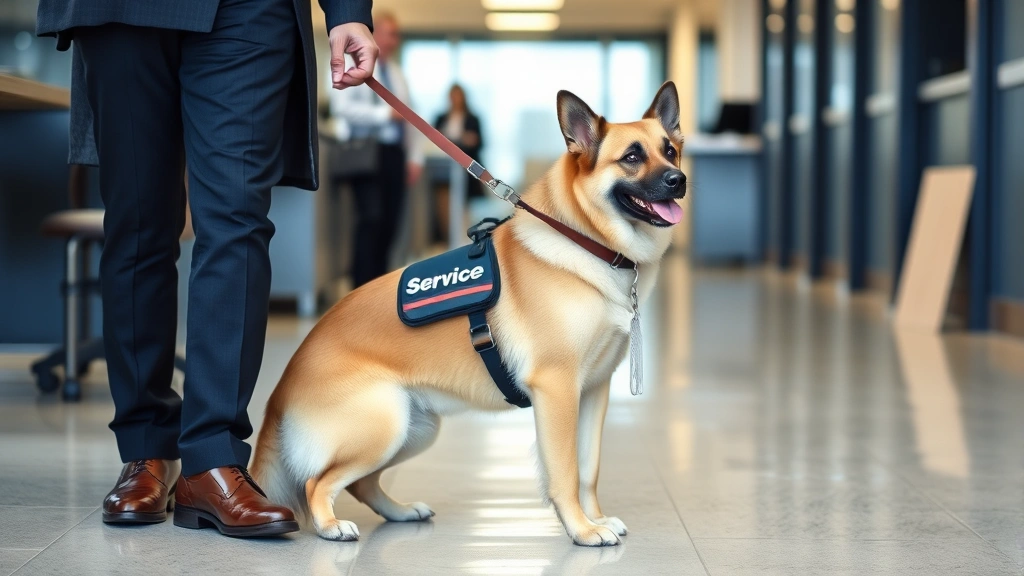
” alt=”Person with service dog in professional workplace setting, demonstrating legitimate service animal integration in daily activities”>
FAQ
Can service animals be registered online?
No. There is no federal service animal registry or official online registration system. The ADA does not require service animals to be registered, certified, or identified with special vests or ID cards. Websites offering online registration are fraudulent. Legitimate service animals are identified only by their trained tasks and their handler’s testimony about the animal’s training.
What should a legitimate service animal letter include?
A legitimate service animal or ESA letter should include the provider’s letterhead, license number, contact information, the date of issuance, the provider’s signature, confirmation of the individual’s disability, and specific information about how the animal assists with disability-related tasks. It should not include unnecessary medical details or make unrealistic legal guarantees.
How much does legitimate service animal documentation cost?
Legitimate service animal or ESA documentation from qualified healthcare providers typically costs $150-$400, reflecting the professional time required for evaluation. This cost varies based on provider location, specialty, and complexity of the evaluation. Extremely cheap options suggest fraud, while suspiciously high prices may indicate overcharging.
Can I request service animal documentation without a disability?
No. Fraudulently obtaining service animal documentation or misrepresenting a pet as a service animal is illegal under the ADA and can result in fines up to $2,500. Only individuals with disabilities qualifying under the ADA or Fair Housing Act can legitimately obtain service animal or ESA documentation.
What should I do if I suspect fraudulent service animal documentation?
Contact your state’s professional licensing board to report concerns about fraudulent documentation providers. You can also report fraudulent online services to the Federal Trade Commission, your state’s Attorney General, or disability advocacy organizations. Providing specific information about the fraudulent website helps authorities investigate and shut down scams.
Can employers require service animal documentation?
Under the ADA, employers cannot require documentation, ID cards, or vests for service animals. However, employers can ask the two legally permitted questions: Is the dog a service animal required because of a disability, and what work or task has the dog been trained to perform? If the answer to the first question is unclear, employers can require documentation confirming disability status.
What are the differences between service animals and emotional support animals?
Service animals are dogs (or miniature horses) trained to perform specific tasks related to a disability. ESAs provide comfort through their presence and do not require specialized training. Service animals are protected under the ADA in public accommodations and employment. ESAs have protections primarily in housing under the Fair Housing Act and in limited travel circumstances.
How do I verify a healthcare provider’s license online?
Visit your state’s professional licensing board website and search for the provider by name or license number. Most states maintain searchable databases showing licensure status, specialty, and any disciplinary history. The National Provider Identifier (NPI) database also allows verification of healthcare providers’ credentials and practice information.