
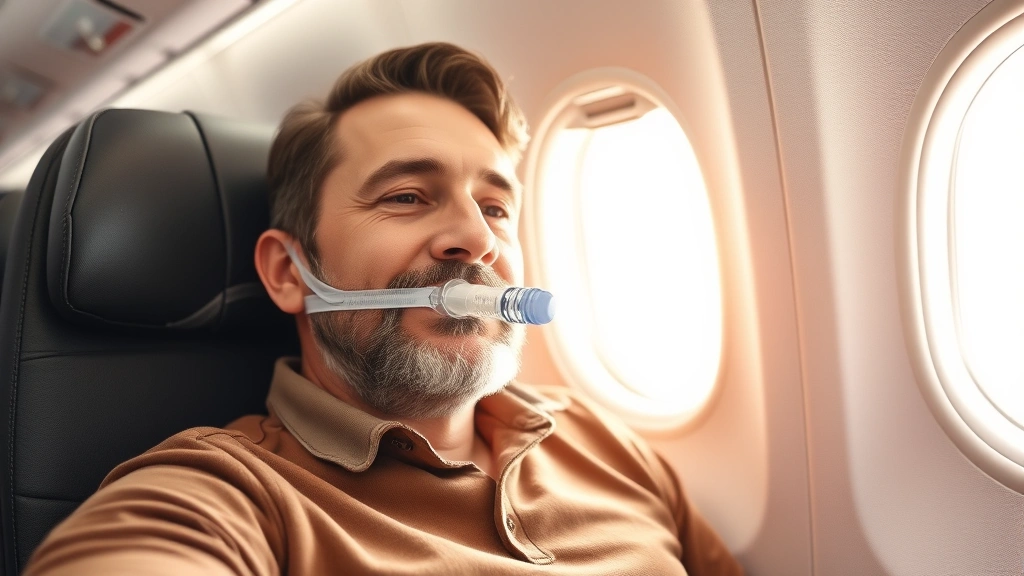
Doctor Note for Airline Oxygen: What Airlines Require
Traveling with supplemental oxygen can feel overwhelming, but understanding airline requirements and securing proper medical documentation makes the process manageable. Airlines have strict regulations governing oxygen use during flight, and a doctor note is often the first step toward approval. Whether you need continuous oxygen therapy or supplemental oxygen for high-altitude flights, knowing what documentation airlines require—and how to obtain it quickly—ensures your travel plans stay on track.
The Federal Aviation Administration (FAA) and individual airlines impose specific requirements for passengers traveling with oxygen. A comprehensive doctor note serves as your medical authorization, proving your condition necessitates oxygen therapy and that you’re medically cleared for air travel. This guide walks you through what airlines require, how to obtain the necessary documentation, and practical steps to ensure smooth travel.

FAA and Airline Oxygen Requirements
The Federal Aviation Administration strictly regulates oxygen use aboard commercial aircraft. Passengers cannot bring their own oxygen tanks onto planes due to safety regulations—compressed oxygen is classified as a hazardous material. However, airlines provide oxygen service through their medical oxygen systems, and the FAA permits this under specific conditions outlined in FAA passenger health and safety guidelines.
Airlines require advance notice—typically 48 to 72 hours—before your flight if you need oxygen. Most carriers demand a completed airline medical form and a doctor’s statement confirming your oxygen requirement. The doctor note must verify that you’re medically stable enough to fly and that your condition genuinely necessitates supplemental oxygen during flight.
Different airlines have varying policies. Some require oxygen only for flights exceeding a certain duration (often 3-4 hours), while others provide it for any flight if medically necessary. Cabin pressure at cruising altitude (typically 6,000-8,000 feet equivalent) can trigger hypoxia in passengers with respiratory or cardiac conditions, making supplemental oxygen essential for safe travel.
Understanding how to get disability documentation that meets airline standards helps prevent last-minute denials. Airlines have the authority to refuse boarding if documentation is incomplete or medically insufficient, so accuracy and completeness are critical.
What Must Your Doctor Note Include
A valid airline oxygen doctor note requires specific medical information. Airlines won’t accept generic letters; your note must address their particular requirements and demonstrate medical necessity. Here’s what your doctor note must contain:
- Diagnosis and clinical justification: Your specific medical condition requiring oxygen (COPD, pulmonary hypertension, heart disease, cystic fibrosis, etc.)
- Oxygen prescription details: Required flow rate (liters per minute), whether continuous or intermittent oxygen is needed, and duration of use
- Baseline oxygen saturation: Your resting blood oxygen level and what level triggers symptoms
- Fitness for air travel: Explicit statement that you are medically cleared to fly and can tolerate cabin pressure changes
- Medical stability confirmation: Assurance that your condition is stable and you’ve had no recent acute exacerbations or hospitalizations
- Physician credentials: Doctor’s full name, medical license number, specialty, contact information, and signature
- Date of examination: Recent evaluation date (typically within 30 days of travel)
- Airline-specific form completion: Many airlines provide their own medical forms that your doctor must complete
The note should clearly state that your condition meets the airline’s medical criteria for oxygen provision. Vague language like “patient may benefit from oxygen” won’t suffice; airlines need definitive statements: “Patient requires supplemental oxygen at 2 liters per minute during flight due to documented hypoxemia.”
Your doctor should also address emergency scenarios. Airlines want assurance that your condition won’t deteriorate unexpectedly during flight and that you understand the risks. If you have a history of anxiety or panic attacks, the note should clarify whether these are factors, as airlines may require additional psychological clearance in such cases.
How to Get a Doctor Note Fast
When you need a doctor note quickly, several options exist. Your primary care physician or pulmonologist can usually provide one within 24-48 hours if you schedule an urgent appointment. However, if your regular doctor is unavailable or you need faster turnaround, telemedicine services specializing in medical documentation can help.
Services like instant doctor letters for accommodation now extend to travel medical documentation. Online platforms connect you with licensed physicians who can review your medical history, conduct a telehealth evaluation, and provide airline-compliant oxygen documentation within hours. This is especially valuable if you’re traveling internationally or on short notice.
When requesting your doctor note, be specific about your timeline. Tell your doctor you need the note for airline travel and provide them with your flight dates. Include your airline’s medical form (if available) with your request—this saves time and ensures the note addresses all required elements. Some airlines post their medical forms online; downloading these in advance and sharing them with your doctor streamlines the process.
For urgent situations, consider having your doctor send the note directly to the airline’s medical department rather than to you first. Many carriers accept electronic submissions and can verify documentation before your travel date, giving you peace of mind.
Learning about proof of disability letters from doctors helps you understand what constitutes acceptable medical documentation across different contexts, including travel.
Airline-Specific Policies and Forms
Each major airline has its own medical clearance process for oxygen passengers. United Airlines, American Airlines, Southwest, Delta, and others all require advance notification and specific documentation.
United Airlines requires a completed “Special Service Request” form submitted at least 48 hours before departure. They provide a medical form that your doctor must complete, confirming oxygen need and medical stability. United supplies oxygen at no charge but limits it to specific flow rates.
American Airlines mandates notification through their “Assistance for Passengers with Disabilities” department. They require a physician’s statement on their specific form, addressing medical necessity and fitness for flight. American provides oxygen for flights exceeding 3 hours.
Southwest Airlines requires a “Passenger with Disability” form and doctor’s certification. Southwest provides oxygen but asks passengers to provide their own portable oxygen concentrator (POC) if medically feasible, as it’s more flexible than airline-supplied oxygen.
Delta Air Lines requires advance notification and submission of their “Medical Information Form” completed by your healthcare provider. Delta provides oxygen but may require you to use your own POC if you have one available.
International carriers like British Airways, Lufthansa, and Air France have similarly stringent requirements. Some international airlines require not just a doctor’s note but also a “fitness to fly” assessment from an aviation medicine specialist, particularly for long-haul flights.
Always contact your airline’s medical department directly—not just the reservations line—to understand their specific requirements. Medical departments have access to detailed policies and can answer nuanced questions about your situation.
Medical Equipment Documentation
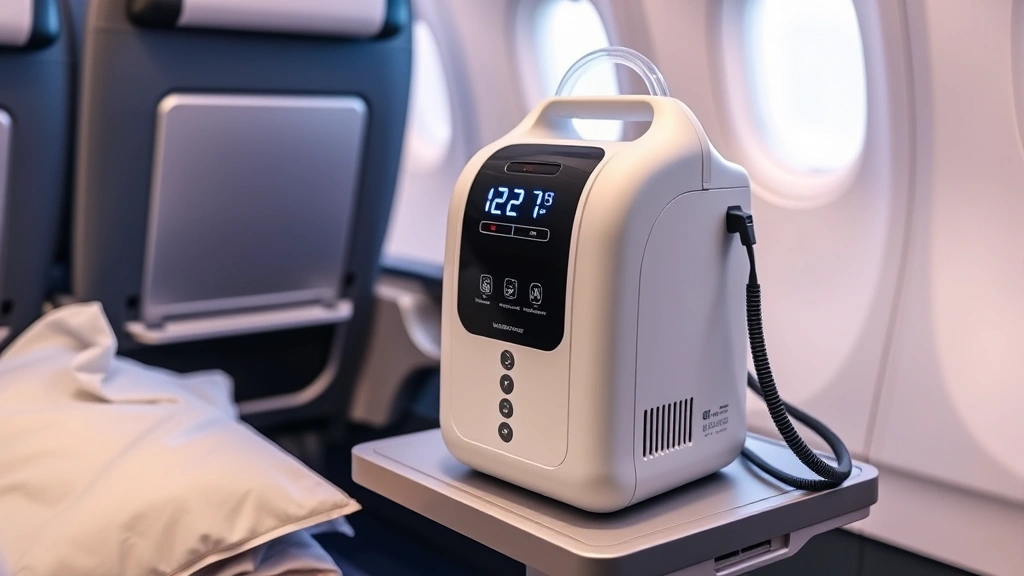
If you’re traveling with your own portable oxygen concentrator (POC) rather than relying on airline-supplied oxygen, you’ll need additional documentation. POCs are battery-powered devices that extract oxygen from ambient air, and airlines have specific approval requirements for them.
Your doctor note should specify that your POC is medically necessary and that you’re trained in its operation. The note should include the device model, manufacturer, and specifications (battery life, flow rate capability). Airlines need this information because they must ensure the device meets safety standards and won’t interfere with aircraft systems.
The FAA allows POCs in the cabin under specific conditions: the device must be FAA-approved, you must demonstrate knowledge of its operation, and you must carry documentation showing the device’s compliance. Manufacturers provide documentation proving their POCs meet FAA standards—gather this before traveling.
If you’re using liquid oxygen or other specialized oxygen delivery systems, coordination with your airline becomes even more critical. Some airlines prohibit certain oxygen delivery methods, requiring you to switch to their supplied oxygen or airline-approved alternatives. Your doctor note should acknowledge any such limitations and confirm you can safely transition to the airline’s oxygen system.
Traveling Internationally with Oxygen
International travel with oxygen requires additional layers of documentation and planning. Each country has different regulations governing medical oxygen, and international airlines follow International Air Transport Association (IATA) guidelines, which are stricter than FAA rules.
For international flights, your doctor note must be comprehensive and may need to be translated into the airline’s official language. European airlines, for example, may require notes in English or the carrier’s native language. Some international carriers request additional certification beyond a standard doctor’s note, including:
- Fitness to Fly Certificate: A formal assessment from an aviation medicine specialist (required by some airlines for certain medical conditions)
- Medical report in English: Even if your doctor practices internationally, airlines may require English translations with certified stamps
- Prescription documentation: Proof that your oxygen prescription is current and valid in your destination country
- Travel insurance medical certification: Some international travel insurance policies require separate medical clearance
When flying internationally, contact your airline at least two weeks in advance. International flights require longer notification periods, and coordinating with multiple airlines (if you have connections) adds complexity. IATA guidelines provide detailed information about international oxygen travel standards.
Common Mistakes to Avoid
Many travelers with oxygen needs encounter preventable problems. Understanding common pitfalls helps ensure smooth travel:
- Notifying too late: Airlines require 48-72 hours notice minimum. Last-minute requests are often denied. Notify your airline immediately upon booking if you need oxygen.
- Incomplete doctor notes: Generic letters stating “patient has COPD and may need oxygen” won’t suffice. Airlines need specific flow rates, medical justification, and fitness-for-flight statements.
- Using outdated documentation: Airlines want recent evaluations. A doctor’s note from six months ago may be rejected. Aim for documentation dated within 30 days of travel.
- Assuming all airlines have identical policies: Each airline differs. Don’t assume your previous airline’s approval applies to a new carrier. Submit documentation to each airline separately.
- Failing to coordinate POC documentation: If bringing your own concentrator, ensure you have manufacturer documentation proving FAA approval. Airlines won’t accept devices without proper certification.
- Not preparing for connections: If your itinerary includes connections, notify each airline separately. Some passengers have been denied boarding on connecting flights despite approval on the first leg.
- Overlooking international requirements: International flights have stricter standards. Don’t assume your domestic airline’s approval covers international travel.
Proactive communication with airlines and thorough documentation prevents most problems. When in doubt, over-communicate rather than under-communicate with your airline’s medical department.
Understanding ADA disability verification letters helps you grasp how medical documentation serves multiple purposes—from travel to workplace accommodations and beyond.
For broader context on medical documentation requirements, exploring medical disability documentation legal standards provides insights into what makes documentation legally sound and widely accepted.
If you’re seeking comprehensive medical documentation beyond travel, ESA letters and other accommodation documentation follows similar principles of specificity and medical necessity.
FAQ
Can I bring my own oxygen tank on an airplane?
No. The FAA prohibits passengers from bringing compressed oxygen tanks onto commercial aircraft due to fire and safety hazards. Compressed oxygen is classified as a hazardous material. You may bring a portable oxygen concentrator (POC) if it’s FAA-approved and you have proper documentation, but traditional oxygen tanks are not permitted.
How far in advance must I notify my airline about needing oxygen?
Airlines require 48 to 72 hours advance notice minimum. Some international carriers ask for longer notice periods (up to two weeks). Notify your airline immediately upon booking your flight if you know you’ll need oxygen. Last-minute requests are frequently denied due to logistical constraints.
Will my doctor’s note from last year work for my upcoming trip?
Probably not. Airlines prefer recent medical evaluations, typically dated within 30 days of travel. If your condition is stable and unchanged, your doctor may be able to write a brief letter confirming this without requiring a new full evaluation. However, it’s safer to obtain updated documentation to avoid boarding denials.
What if my airline doesn’t provide the oxygen flow rate I need?
Airlines have maximum flow rate limitations, typically 4 liters per minute. If you require higher flow rates, you may need to bring your own portable oxygen concentrator. Discuss this with your airline’s medical department before travel—they can advise whether they can accommodate your specific needs or if you must provide your own equipment.
Can I use my portable oxygen concentrator during the entire flight?
FAA-approved POCs can be used during flight, including during taxiing and takeoff. However, you’ll need to switch to airline-supplied oxygen during any periods when your POC isn’t permitted (varies by airline). Your doctor note should address your ability to use both airline-supplied oxygen and your personal device safely.
Do I need different documentation for connecting flights?
Yes. Notify each airline separately if your itinerary includes connections. While one airline may approve your oxygen request, another carrier may have different requirements. Submit your documentation to each airline to ensure approval across your entire journey.
What happens if my airline denies my oxygen request?
If denied, ask for specific reasons in writing. Common reasons include incomplete documentation, medical concerns, or logistical inability to provide oxygen on that specific flight. Address the stated concerns with updated medical documentation or consider alternative flights. You have the right to appeal airline medical decisions, and involving the Job Accommodation Network (JAN) or disability rights organizations may help resolve disputes.
Are there any costs associated with airline-supplied oxygen?
Most U.S. airlines provide oxygen at no additional charge if you’ve been approved medically. However, some airlines or international carriers may charge fees. Confirm cost details when submitting your oxygen request to avoid unexpected charges.
Can I fly if my oxygen saturation is borderline?
This depends on your specific condition and the cabin pressure altitude. Your doctor must assess whether you can safely tolerate cabin pressure changes (equivalent to 6,000-8,000 feet elevation). If your baseline oxygen saturation is very low, your doctor may recommend against flying or may recommend higher oxygen flow rates during flight. This is a conversation to have with your physician, not your airline.