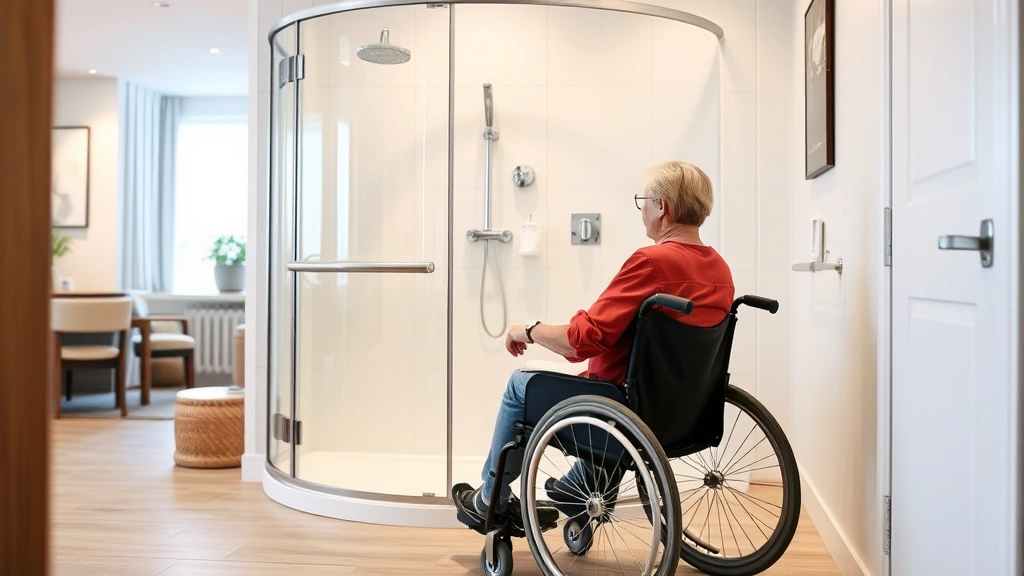
How to Request a Medical Rent Refund: Legal Tips & Documentation Guide
A medical rent refund request is a formal appeal to your landlord or property management company seeking financial compensation or rent reduction due to uninhabitable conditions that directly impact your health or disability. Whether you’re dealing with mold exposure, inadequate climate control, pest infestations, or other housing defects that aggravate a medical condition, understanding your legal rights and the proper documentation process is essential. This comprehensive guide walks you through the steps to submit a compelling medical refund request letter for your apartment.
Medical rent refunds fall under housing law protections that recognize tenants’ rights to safe, habitable living spaces. If your rental unit fails to meet these standards and causes or worsens health issues, you may be entitled to partial rent abatement, full refunds, or lease termination without penalty. The key to success is thorough documentation, professional medical evidence, and clear communication of how the housing defect directly affects your health and well-being.
Understanding Your Legal Rights to Medical Rent Refunds
Every tenant has the fundamental right to a habitable rental unit under the implied warranty of habitability, which is recognized across all U.S. states. This warranty requires landlords to maintain rental properties in a condition suitable for human occupancy, including adequate heating, cooling, sanitation, and freedom from hazards. When a housing defect violates this warranty and directly impacts your medical condition or disability, you gain grounds for a medical rent refund.
Medical rent refunds differ from standard habitability claims because they require demonstrating a causal link between the housing defect and your health deterioration. This means you need professional medical evidence—not just your personal testimony—showing that the apartment’s condition has caused or substantially worsened a diagnosed medical or psychiatric condition. Conditions commonly cited in medical rent refund cases include asthma, allergies, mold sensitivity, chemical sensitivities, mobility disabilities requiring accessible features, and mental health conditions exacerbated by housing instability.
State and local laws vary significantly in how they handle medical rent refunds. Some jurisdictions allow tenants to withhold rent, place funds in escrow, or sue for damages. Others require you to follow specific notice procedures before taking action. Understanding your jurisdiction’s tenant rights is critical before submitting your request. You can research your state’s habitability standards through HUD.gov or consult a local tenant rights organization.

Medical Documentation Requirements
The strength of your medical rent refund request hinges entirely on the quality of your medical documentation. A letter from your treating physician or mental health professional serves as the cornerstone of your case. This documentation must clearly establish three critical elements: your diagnosed condition, how the apartment’s specific defect affects that condition, and the functional impact on your daily life.
Essential components of medical documentation include:
- Healthcare provider letterhead: The letter must come from a licensed physician, psychiatrist, psychologist, nurse practitioner, or other qualified healthcare professional with direct knowledge of your medical history.
- Specific diagnosis: The letter should name your diagnosed condition(s) without vague language. “Respiratory issues” is insufficient; “chronic asthma exacerbated by mold exposure” is appropriate.
- Causal connection: The provider must explicitly state how the apartment’s defect (mold, lack of air conditioning, pest infestation, etc.) directly triggers, worsens, or aggravates your specific condition.
- Functional limitations: Document how the condition impacts your ability to work, attend school, sleep, or perform daily activities. For example: “Patient experiences severe asthma attacks requiring emergency room visits when exposed to apartment mold.”
- Provider signature and credentials: The letter must be signed by the healthcare professional and include their license number, credentials, phone number, and medical practice address.
- Timeline: Include when symptoms began or worsened relative to the housing defect, and how long the patient has been under the provider’s care.
If you need help obtaining official medical documentation from your healthcare provider, our guide on official doctor letters for housing accommodation provides detailed templates and strategies for requesting this critical documentation. For those seeking disability documentation, the process is similar but may involve additional functional limitation assessments.
Supplement the medical letter with photographs documenting the housing defect (mold growth, water damage, pest evidence), maintenance request records showing you reported the problem, and any communications with your landlord about the issue. Medical bills related to the condition (emergency room visits, prescriptions, specialist appointments) further strengthen your case by demonstrating financial harm.
Drafting Your Medical Refund Request Letter
Your medical rent refund request letter is a formal legal document that requires professional tone, clear structure, and compelling evidence. This is not the place for emotional appeals or angry language—instead, focus on factual documentation and legal rights.
Essential sections of your letter:
- Header with dates: Your name, address, phone number, email; landlord’s name and property address; today’s date.
- Clear subject line: “Formal Request for Medical Rent Refund Due to Uninhabitable Conditions.”
- Opening statement: Identify yourself as the tenant, the unit address, your lease term, and state your purpose: “I am writing to formally request a medical rent refund for the period of [dates] due to the landlord’s failure to maintain a habitable unit as required by law.”
- Description of defect: Provide specific, factual details about the housing defect. Instead of “the apartment is moldy,” write: “Black mold is visible in the master bedroom closet, under the bathroom sink, and along the kitchen window frame. I reported this on [date] and again on [date], and it remains unrepaired as of [date].”
- Medical impact: Reference your attached medical documentation and summarize how the defect affects your health: “As documented by Dr. [Name], my diagnosed asthma is triggered by mold exposure, causing frequent attacks that have required three emergency room visits since [month].”
- Legal basis: Cite your state’s habitability standards or local housing codes. Example: “Under [State] Residential Tenancy Act, landlords must maintain rental units free from conditions that pose health hazards. This mold infestation violates that requirement.”
- Refund calculation: Propose a specific refund amount or percentage of rent, with clear justification. You might request 25% refund for the period the defect existed, or full abatement if the unit was completely uninhabitable.
- Deadline: Give the landlord 14-30 days to respond in writing with their agreement or explanation of why they dispute your claim.
- Consequences: Mention your willingness to pursue legal action, file complaints with housing authorities, or exercise other tenant remedies if the request is denied.
- Closing: “I expect your written response by [specific date]. I am prepared to escalate this matter through legal channels if necessary.”
For additional guidance on crafting persuasive medical letters, review our resources on medical hardship letters, which follow similar documentation principles.
Keep your tone professional and factual throughout. Avoid accusations like “you deliberately ignored my complaints” and instead use neutral language: “Despite my written requests on [dates], the defect has not been repaired.” This approach is more likely to prompt a favorable response and strengthens your legal position if the matter escalates.
Step-by-Step Submission Process
Submitting your medical rent refund request requires careful attention to procedural requirements that vary by jurisdiction. Following the correct process is legally important—failure to do so may weaken your position if you eventually need to pursue formal remedies.
Step 1: Gather all documentation
Compile your medical letter, photographs of the defect, copies of all maintenance requests you submitted, text messages or emails communicating with the landlord about the problem, and medical bills or receipts related to your condition. Create a clear timeline showing when you first reported the issue and when it remains unrepaired.
Step 2: Send written notice
Deliver your request letter via certified mail with return receipt, email with read receipt, or hand delivery with a signed acknowledgment. Never submit your request verbally—you need written proof of delivery and the landlord’s receipt. Keep copies of everything you send.
Step 3: Document the delivery
Retain the certified mail receipt, email delivery confirmation, or signed acknowledgment. These prove you made the request and when. This documentation is critical if you later need to demonstrate the landlord received your request but ignored it.
Step 4: Allow reasonable response time
State law typically requires landlords to respond within 14-30 days. Do not take further action until this period expires. Track the deadline on your calendar.
Step 5: Follow up if necessary
If the landlord doesn’t respond or denies your request, send a follow-up letter via certified mail restating your request and indicating that you are prepared to pursue additional remedies (rent escrow, withholding, complaint filing, or legal action).
Step 6: Escalate appropriately
If the landlord remains unresponsive, contact your local housing authority, file a complaint with your state attorney general, or consult a tenant rights attorney. Some jurisdictions allow you to place contested rent in escrow or pursue damages in small claims court.
Common Challenges and How to Overcome Them
Landlords frequently contest medical rent refund requests using predictable arguments. Anticipating these challenges strengthens your initial submission.
Challenge 1: “You didn’t report the problem promptly.”
Overcome this by providing documentation of all maintenance requests, even if they weren’t acknowledged. If you reported the issue verbally, send a follow-up email confirming: “Per our conversation on [date], I reported mold in the bathroom. As discussed, this needs immediate repair.” This creates a written record.
Challenge 2: “The medical condition existed before you moved in.”
Your medical documentation should address this by stating that the apartment’s defect has caused a significant worsening of your pre-existing condition. Example: “While the patient had mild asthma prior to moving to the apartment, the mold exposure has escalated symptoms from occasional to daily, requiring new medications and emergency care.”
Challenge 3: “We offered to repair it; you refused.”
If the landlord offered repairs that wouldn’t adequately address the problem, your letter should explain why: “The landlord offered surface mold removal, but the underlying moisture problem requires professional remediation by a certified mold inspector. Surface treatment will not resolve the health hazard.”
Challenge 4: “Medical conditions are private; we can’t verify claims.”
Landlords cannot demand to see your full medical records, but they can request verification from your healthcare provider. Your doctor’s letter should be sufficient. If the landlord requests additional verification, provide a valid medical verification directly from your provider without disclosing private health information.
Challenge 5: “The defect doesn’t meet legal habitability standards.”
Counter this by citing specific housing codes and providing expert evidence. For mold claims, reference your state’s mold remediation standards. For accessibility issues, cite ADA requirements. For temperature issues, reference your state’s minimum habitability standards (often 68°F minimum heating).
When to Escalate Your Request
If your landlord denies your request or fails to respond within the legal timeframe, you have several escalation options depending on your jurisdiction and the severity of the housing defect.
Contact local housing authorities: File a complaint with your city or county housing inspection department. Inspectors can verify the defect and issue citations requiring repairs. This creates official documentation supporting your refund claim.
Consult a tenant rights attorney: Many offer free initial consultations. An attorney can review your documentation, advise on your state’s specific remedies, and determine whether pursuing legal action is worthwhile. Some tenant cases qualify for fair housing protections if the defect disproportionately affects people with disabilities.
File a complaint with your state attorney general: Housing complaint divisions can investigate landlord violations and may pursue enforcement on your behalf.
Pursue rent escrow or withholding: In many states, you can place contested rent in escrow with a court or third party while the dispute is resolved. This is a powerful leverage tool because landlords cannot evict you for non-payment when rent is properly escrowed.
File in small claims court: If the refund amount is within your state’s small claims limit (typically $5,000-$10,000), you can sue without an attorney. Bring all documentation, your medical letter, and photos as evidence.
Before escalating, ensure you have exhausted all reasonable attempts to resolve the matter directly with the landlord. Courts and housing authorities view good-faith negotiation attempts favorably.
FAQ
How much rent refund can I request for a medical condition?
The refund amount depends on how severely the housing defect affects habitability and your health. Courts typically award 25-50% rent abatement for partial defects (such as one room with mold) and 100% abatement if the unit is completely uninhabitable. Your letter should propose a specific percentage with clear justification.
Can I break my lease due to medical reasons related to housing?
Yes. If a housing defect causes serious health problems and the landlord refuses to repair it, you may have grounds to break your lease for medical reasons without penalty. Your medical documentation must establish that remaining in the unit poses a health risk.
What if my landlord claims the defect is my fault?
If you caused the defect through negligence or misuse, you may be responsible for repairs. However, if the defect is due to normal wear and tear or the landlord’s maintenance failure, the landlord remains responsible. Your medical letter should not address fault—focus on the health impact.
How long does the medical rent refund process typically take?
If your landlord cooperates, the process takes 4-8 weeks from initial request to payment. If you must escalate to housing authorities or court, the timeline extends to 3-12 months. Faster resolution is possible through settlement negotiations.
Can I request a refund for months when the defect has been fixed?
Yes. You can request refunds for the entire period the defect existed and caused health impacts, even if it has since been repaired. Your medical documentation should specify the dates when symptoms were worst and the defect was unrepaired.
Do I need a lawyer to submit a medical rent refund request?
No, you can submit a well-documented request yourself. However, consulting an attorney before submission can strengthen your case significantly. Many tenant advocacy organizations offer free or low-cost legal assistance.
What happens if my landlord retaliates after I request a refund?
Retaliation is illegal. If your landlord increases rent, decreases services, or threatens eviction after you request a medical refund, file a retaliation complaint with your housing authority immediately. Most states have strong protections against landlord retaliation.