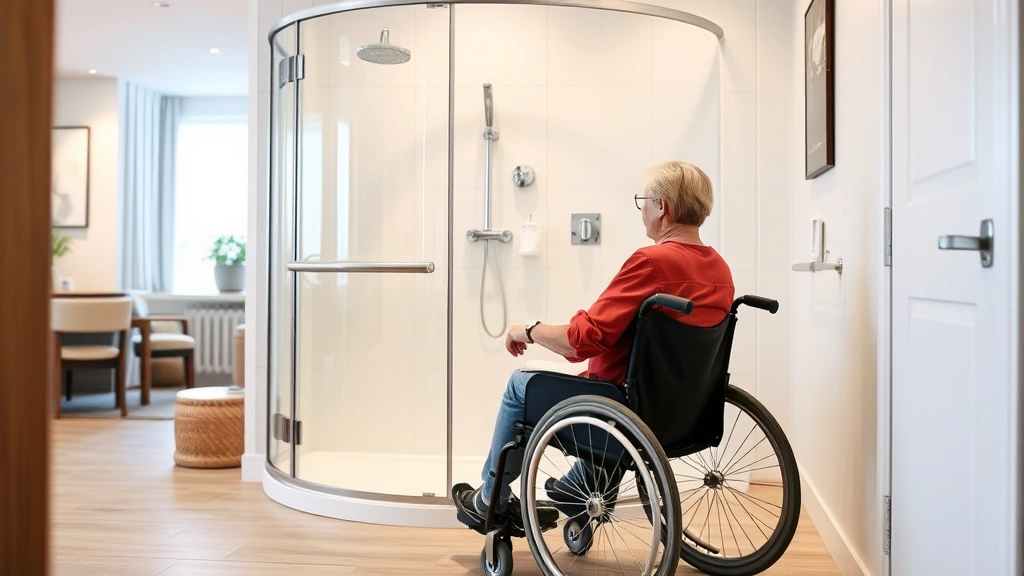

Get a Doctor Letter for Housing: Licensed MD Guide
A doctor letter for housing accommodation is a critical document that bridges your medical condition and your housing needs. Whether you require ground floor accessibility due to mobility limitations, need an allergen-free environment for respiratory conditions, or seek lease modifications for medical reasons, a letter from a licensed physician provides the legal foundation for your reasonable accommodation request. This guide walks you through obtaining a legitimate, legally sound doctor letter that landlords and housing authorities will respect.
Housing accommodations fall under the Fair Housing Act and similar state laws that protect individuals with disabilities and medical conditions. A properly written letter from a licensed MD establishes medical necessity, documents your functional limitations, and compels landlords to engage in the interactive process. Understanding what makes a doctor letter effective—and how to work with qualified healthcare providers—ensures your housing situation reflects your actual medical needs.
Unlike emotional support animal letters, which have specific regulatory requirements, housing accommodation letters require a broader assessment of how your condition impacts daily living and housing suitability. This comprehensive guide covers everything from finding the right doctor to understanding what your letter should contain.
What Is a Doctor Letter for Housing?
A doctor letter for housing accommodation is a formal document written by a licensed physician that verifies your medical condition and explains how it necessitates specific housing modifications or accommodations. This letter serves as medical evidence supporting your request for reasonable accommodations under fair housing laws.
The letter differs from casual medical notes or diagnoses. It is a deliberate, professional communication that specifically addresses your housing situation. It explains the nexus between your condition and your accommodation need—for instance, why someone with severe asthma requires a unit with HVAC upgrades or why a person with mobility impairment needs ground floor access.
Housing accommodation letters are used for:
- Ground floor unit transfers due to mobility, cardiac, or respiratory conditions
- Accessible parking space assignments
- Allergen-free or smoke-free unit placement
- Lease modifications or early termination due to medical hardship
- Modifications to unit layout or amenities (grab bars, ramps, widened doorways)
- Policy exceptions (extra occupants for live-in care, service animals beyond pet policies)
A licensed doctor’s involvement is essential because landlords cannot simply accept your word about medical necessity. They need professional verification from someone with medical authority and accountability.
Legal Framework and Fair Housing Rights
Your right to request housing accommodations is protected by federal and state law. The Fair Housing Act prohibits discrimination based on disability and requires landlords to provide reasonable accommodations in rules, policies, practices, or services when necessary to afford a person with a disability equal opportunity to use and enjoy a dwelling.
The Americans with Disabilities Act (ADA) and Section 504 of the Rehabilitation Act also protect your right to accessible housing. At the state level, many jurisdictions have enacted parallel protections or more expansive rights. Understanding your local fair housing laws strengthens your position when presenting a legally sound doctor letter for housing accommodation.
A licensed doctor’s letter carries legal weight because:
- Professional accountability: Doctors are licensed professionals bound by medical ethics and state regulations. Their credentials are verifiable and their statements carry presumptive reliability.
- Functional limitation assessment: Doctors can clinically assess how your condition limits major life activities—walking, breathing, seeing, hearing, self-care—which is the legal standard for disability under the ADA.
- Medical nexus: A doctor can explain the direct relationship between your condition and why a specific accommodation is medically necessary.
- Credibility in disputes: If a landlord challenges your accommodation request, a doctor’s letter is more defensible in administrative hearings or court than self-written documentation.
The EEOC guidance on disability laws emphasizes that reasonable accommodation requests require reliable medical evidence. A licensed MD provides that reliability.
Finding a Licensed Doctor to Write Your Letter
Not every doctor will write a housing accommodation letter, and not every letter written by a doctor is equally effective. You need a licensed physician who understands both your medical condition and fair housing law.
Where to find qualified doctors:
- Your current healthcare provider: Your primary care physician, specialist, or psychiatrist who has treated you for the condition requiring accommodation is ideal. They already have medical records documenting your condition.
- Telehealth platforms: Services like Teladoc, Doctor on Demand, or specialized platforms may offer licensed doctors willing to evaluate and write accommodation letters, though verify credentials carefully.
- Disability advocacy organizations: Local disability rights groups or condition-specific nonprofits (arthritis foundations, asthma allergy networks) sometimes maintain lists of sympathetic physicians.
- Fair housing organizations: Non-profits focused on fair housing often have relationships with doctors experienced in writing accommodation letters.
- Independent medical evaluators: Some licensed physicians work independently to provide medical evaluations and letters for accommodation requests.
Verifying a doctor’s credentials:
Before working with a doctor, verify their licensing. Use your state’s medical board website (search “[state name] medical board”) to confirm the doctor is currently licensed and in good standing. Check if there are disciplinary actions or complaints. Avoid any doctor or service that suggests they will write a letter without examining you or reviewing your medical history.
What to expect from a legitimate evaluation:
A licensed doctor should conduct a genuine evaluation before writing your letter. This may include:
- Review of your medical history and existing records
- Discussion of your medical condition and functional limitations
- Assessment of how the condition impacts housing and daily living
- Physical examination (depending on the condition)
- Questions about your specific accommodation needs
- Time to compose a thoughtful, detailed letter
Be cautious of services that promise instant letters or guarantee approval. Legitimate medical evaluation takes time and professional judgment.

What Your Doctor Letter Should Contain
An effective housing accommodation letter includes specific elements that satisfy legal requirements and leave no room for landlord doubt.
Essential components:
- Doctor’s credentials: Full name, medical license number, state of licensure, medical specialty, clinic or hospital affiliation, and contact information. This allows landlords to verify the doctor’s legitimacy.
- Patient identification: Your full name, date of birth, and the dates of your treatment with this doctor. This confirms the doctor-patient relationship and treatment history.
- Diagnosis and condition description: A clear statement of your medical condition or conditions. The letter should describe the condition in clinical terms (not just “I have anxiety” but rather “Major Depressive Disorder with anxiety features”).
- Functional limitations: Specific explanation of how your condition limits major life activities. For example: “Due to severe osteoarthritis affecting both knees and hips, the patient has significant difficulty with ambulation and stair climbing, restricting ability to access units above ground floor.”
- Nexus to accommodation: Direct connection between the functional limitation and the requested accommodation. Example: “Given the patient’s respiratory condition exacerbated by air quality, a unit with upgraded HVAC and air filtration is medically necessary to provide equal housing opportunity.”
- Permanence or expected duration: Whether the condition is permanent, long-term, or temporary, and any expected changes.
- Medical necessity statement: Explicit statement that the accommodation is medically necessary, not merely convenient or preferable.
- Professional opinion: Language like “In my professional medical opinion…” or “Based on my clinical assessment…” reinforces the doctor’s professional judgment.
- Signature and date: Original signature (not electronic signature alone, ideally) and date the letter was written.
Tone and language:
The letter should be professional, specific, and factual. Avoid emotional language or exaggeration. Landlords are skeptical of hyperbolic claims; clinical precision is more persuasive. The letter should not mention your specific landlord, property, or dispute—it focuses on your medical condition and functional limitations in general terms.
Compare these two approaches:
Weak: “My patient really struggles with stairs and needs ground floor housing.”
Strong: “The patient’s moderate-to-severe osteoarthritis in the bilateral knees and hips significantly impairs ambulation and stair climbing. Ground floor housing is medically necessary to ensure safe and independent access to the dwelling.”
Medical Documentation Requirements
A doctor letter is most effective when supported by solid medical documentation. Landlords may request proof that your condition exists and is as described in the letter.
Documentation to have ready:
- Medical records: Copies of your medical file from the doctor who wrote the letter, including notes from visits, test results, medication lists, and diagnoses.
- Treatment history: Documentation showing ongoing treatment for your condition (prescriptions, therapy sessions, specialist consultations) establishes the condition is real and significant.
- Test results: Lab work, imaging, pulmonary function tests, or other objective findings that support your diagnosis.
- Medication list: Current medications prescribed for your condition demonstrate active medical management.
- Prior accommodation letters: If you’ve received accommodation letters from other providers or in other contexts, these can corroborate your condition.
You do not need to provide your entire medical record to your landlord. Fair housing law permits you to provide only the specific documentation needed to support the accommodation request. However, having complete documentation available (kept private) strengthens your case if the landlord challenges the request.
Consult a fair housing organization or disability rights attorney if your landlord requests excessive medical information or appears to be fishing for reasons to deny your accommodation.
Presenting Your Letter to Your Landlord
How you present your doctor letter matters as much as the letter itself. Strategic presentation increases the likelihood of approval and creates a clear paper trail.
Timing: Submit your accommodation request and doctor letter in writing as soon as you know you need the accommodation. Do not wait until after a lease dispute or conflict. Proactive requests are easier to approve than reactive ones.
Format: Provide the doctor letter on the doctor’s official letterhead. Ensure the letter is an original signed document or a certified copy. Avoid informal scans if possible; provide a clear, legible copy.
Cover letter: Write a brief cover letter to your landlord that includes:
- Your name and unit/address
- A clear statement of the accommodation you’re requesting
- Brief explanation of why you need it (functional limitation, not diagnosis)
- Enclosed doctor letter as supporting documentation
- Request for written confirmation of receipt and timeline for decision
Example: “I am requesting a ground floor unit transfer due to a medical condition that significantly impacts my mobility. Please find enclosed a letter from my physician documenting the medical necessity of this accommodation. I look forward to working with you to facilitate this request and would appreciate written confirmation of receipt within 5 business days.”
Delivery method: Send the letter via certified mail with return receipt, or hand-deliver and request a signed receipt. This creates proof of delivery and timing, important if the landlord later claims they never received your request.
Follow-up: If you do not receive acknowledgment within one week, send a follow-up email or call requesting confirmation that your accommodation request was received. Document all communications.
Common Mistakes to Avoid
Many people undermine their own accommodation requests through preventable errors. Learning these mistakes helps you build a stronger case.
Mistake 1: Using an unlicensed or unverifiable doctor. If your landlord cannot verify the doctor’s credentials, they may dismiss the letter as fraudulent. Always use a doctor with verifiable state medical license.
Mistake 2: Generic or template letters. A letter that could apply to anyone is less persuasive than one specific to your condition and situation. Avoid services that use fill-in-the-blank templates without customization.
Mistake 3: Focusing on diagnosis instead of functional limitation. Fair housing law cares about functional impact, not diagnosis. “I have anxiety” is weaker than “My anxiety condition causes significant difficulty with social interaction and public spaces, requiring a quiet, private residential environment.”
Mistake 4: Requesting unreasonable accommodations. A doctor letter cannot compel a landlord to provide an accommodation that is unreasonable, creates undue financial burden, or fundamentally alters the landlord’s business. Requests must be reasonable and related to your functional limitation.
Mistake 5: Providing unnecessary medical details. You are not required to disclose your full medical history or specific diagnoses if not directly relevant. Oversharing can invite skepticism or discrimination. Stick to functional limitations.
Mistake 6: Waiting too long or acting reactively. Submit accommodation requests promptly, before conflicts arise. A request made after you’ve complained about the property or threatened legal action appears retaliatory and less credible.
Mistake 7: Not following up in writing. Phone calls and conversations are easily forgotten or disputed. Always follow up important conversations with written confirmation emails. This creates a documented record.
Mistake 8: Failing to understand your own request. Before asking for an accommodation, clearly understand why you need it and how it addresses your functional limitation. Vague requests are easy for landlords to deny. Be specific about what you’re asking for and why.
If your landlord denies your medical housing accommodation request despite a doctor letter, consult a fair housing attorney or contact your local fair housing agency. Many offer free or low-cost legal assistance.

FAQ
Do I need a specialist’s letter, or will my primary care doctor’s letter work?
Your primary care doctor’s letter is often sufficient if they know your medical history well. However, a specialist’s letter (cardiologist for cardiac conditions, pulmonologist for respiratory conditions, psychiatrist for mental health) may carry more weight because of their expertise. If possible, have both—a primary care letter confirming overall health and functional status, plus a specialist letter addressing the specific condition driving your accommodation need.
How much does a doctor letter cost?
Costs vary widely. Some doctors include a letter with your regular office visit at no extra charge. Others charge $50–$300+ for a standalone evaluation and letter. Telehealth evaluations may be $100–$200. Ask your doctor’s office about their fee structure before committing. Some disability advocacy organizations or legal aid offices may help cover costs or connect you with low-cost providers.
Can my doctor write a letter if they haven’t examined me in person recently?
It depends on the doctor and your situation. If the doctor has treated you within the past year and has detailed medical records, many will write a letter based on existing records plus a phone or video consultation. However, the more recent the in-person contact, the stronger the letter. Avoid doctors who will write letters without any evaluation or review of your medical history—that risks the letter being dismissed as illegitimate.
What if my landlord says they don’t accept doctor letters?
That is not a legal position. Landlords are required to accept reliable medical documentation supporting reasonable accommodation requests. If your landlord refuses to consider a letter from a licensed physician, that may constitute fair housing discrimination. Contact your local fair housing agency or a disability rights attorney. Many will send a demand letter to the landlord at no cost, which often resolves the issue.
Can I use the same doctor letter for multiple accommodations?
A single letter can address multiple related accommodations if they all stem from the same condition and functional limitation. For example, a letter about your mobility impairment could address both ground floor housing and accessible parking. However, if you later need an accommodation for a different condition, you’ll need a separate letter addressing that condition.
What if I don’t have a regular doctor?
If you don’t have an established relationship with a healthcare provider, you have options: urgent care clinics, community health centers, telehealth services, or independent medical evaluators. Some telemedicine platforms specialize in accommodation letters. However, the evaluation must be genuine—the doctor must review your medical history and conduct a real assessment. Ask about their process before paying.
Should I mention the specific accommodation I’m requesting in my letter to the doctor?
Yes, absolutely. When meeting with the doctor, explain what accommodation you need and ask them to address how it relates to your functional limitation. A doctor who understands your specific need can write a more targeted, persuasive letter than one who only knows your diagnosis.
Can my letter be typed, or does it need to be handwritten?
Typed letters on official letterhead are standard and preferred. The letter should be signed by the doctor (handwritten signature is ideal, though some electronic signatures are acceptable). A entirely handwritten letter may appear less professional. Ask your doctor to provide the letter on official clinic or hospital letterhead with their signature.